Alice Adams was based on the 1921 novel of the same name by Booth Tarkington. The closely observed study of a social climbing young woman in small town America was a hit with readers and critics and was subsequently awarded the prestigious Pulitzer Prize for fiction in 1922.
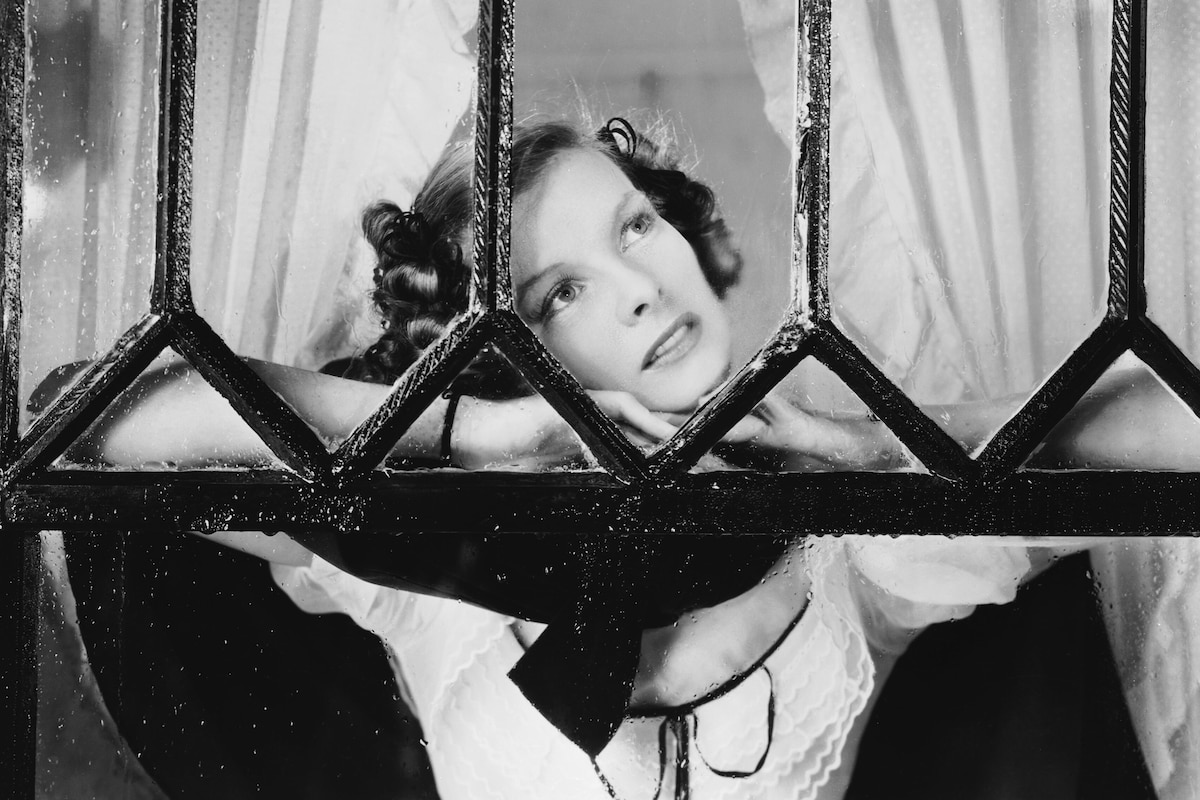
In 1935 actress Katharine Hepburn, then in her late 20s, was an important star in Hollywood. Working under contract for RKO Studios, Hepburn had made several hit films there, including Morning Glory (1933), for which she won her first Academy Award as Best Actress. However, after suffering a few missteps at the box office with flops such as Spitfire (1934), The Little Minister (1934) and Break of Hearts (1935), Hepburn's status as a top actress was in danger. Both she and RKO were eager for her to regain her footing.
Hepburn greatly admired Booth Tarkington's novel and thought that it would make an excellent modern production with her in the lead role as Alice. Excited at the prospect of playing such a complex and challenging part, she and RKO producer Pandro S. Berman began putting the new project together.
The most important order of business for Hepburn and Berman was to choose the right director to bring Alice Adams to life. Since Hepburn had considerable clout at the studio, she had a say in who RKO chose to put behind the camera. It was important to her that the director be interested specifically in the book--its rich story and characters--rather than just working with her--a big movie star--to make a name for himself.
In the beginning, there was talk of hiring William Wyler, a young up-and-comer, to direct. However, Pandro Berman tried to interest Hepburn in another young director, George Stevens, who had begun his career in Hollywood as a skilled cameraman; he had worked his way up directing comedy two-reelers. This background in comedy piqued Hepburn's interest. "I felt that Alice Adams could benefit by being directed by someone with a good sense of humor," said Hepburn in her 1991 autobiography Me. "Otherwise, it might be a bit of heavy sledding."
When Hepburn and Berman first sat down with Stevens to discuss Alice Adams, Hepburn, who described Stevens as "an odd duck," was concerned that he didn't have much to say while she and Berman chattered away at length about their ideas. In fact, Stevens was downright taciturn. Still, there was something intelligent and promising about the young director and he was hired for the job. Later Hepburn found out that Stevens' silence during that meeting was because he didn't want to admit at the time that he hadn't yet read the book--something he got around to later. Alice Adams would be Stevens' first major feature film directing assignment and a chance to prove himself in Hollywood.
With the approval of leading lady Katharine Hepburn, RKO borrowed actor Fred MacMurray from Paramount to play Alice's wealthy suitor Arthur Russell. MacMurray had just come off of a well-received part in The Gilded Lily (1935) opposite Claudette Colbert when he was tapped for the part.
The rest of the Alice Adams cast was filled out with fine supporting actors including Fred Stone and Ann Shoemaker as Alice's bickering parents, Frank Albertson as Alice's brother, Hattie McDaniel as a hilariously impertinent maid-for-hire, and future Hollywood gossip queen Hedda Hopper in a small role as a society matron.
by Andrea Passafiume
The Big Idea - Alice Adams
by Andrea Passafiume | December 30, 2011
SIGN UP FOR OUR NEWSLETTERS

CONNECT WITH TCM