Author Graham Greene had a professional relationship with producer Alexander Korda prior to working on this project. As a critic for The Spectator, the writer had taken many of Korda's films to task. So when Korda contacted him for a meeting not long after Greene's negative review of Rembrandt (1936), Greene assumed it was Korda's intention to confront his "enemy." Instead, Korda asked him if he had any story ideas suitable for film. Greene began to improvise a plot and within a half hour, he had been commissioned to further develop the idea into what eventually became The Green Cockatoo (1937). Greene was also one of the writers (along with director Basil Dean) on the Vivien Leigh-Laurence Olivier movie produced by Korda, 21 Days Together (1940).
In 1946, Korda made several moves to expand his film empire in Great Britain, resurrecting the old London Film Productions and buying controlling interest in both British Lion Film Corporation (giving him a distribution arm) and Shepperton and Worton Hall studios (providing substantial production facilities). He was interested in bringing Carol Reed into his new ventures. Reed had built a reputation as one of the finest young British directors in the years leading up to World War II, and following the war achieved international acclaim with his drama about an Irish nationalist on the lam, Odd Man Out (1947). Reed was eager to leave his previous studios, Two Cities and the Rank Organization, after disagreements over budget and final cut of Odd Man Out. Reed would find in Korda a producer willing to handle financial matters to his satisfaction while at the same time offering encouragement to create films of exceptional quality. Joining forces with Korda would give Reed a higher degree of security and independence than he had ever known.
Shortly after Reed signed on in 1947, he suggested to Korda England Made Me by Graham Greene as a potential film project. The idea got Korda thinking back to a Greene piece he read years before. He gave Reed a copy of the short story "The Basement Room," and retired to bed to nurse a bad cold. The story is told in a flashback by the aged Phillipe Lane, thinking back to his hero worship, at the age of seven, of his family's butler Baines. Left alone with Baines and his housekeeper wife in the family's Belgravia mansion, Phillipe becomes caught up in deception and suspicion between the married couple over Baines's relationship with his "niece" Emmy, in reality his secret mistress. Phillipe witnesses a struggle between Mr. & Mrs. Baines at the top of the stairs that results in her fatal fall. He also sees Baines move the body to make it appear an accident. Reed thought the story was a wonderful starting point for a film and went in to see Korda on his sick bed to tell him so. Korda picked up the phone, made a quick call to see if the story was available, and arranged a meeting between Reed and Greene for the following day.
Greene was surprised anyone wanted to make a film of his story. He had conceived it primarily to relieve the boredom of a ship's passage from Liberia to London many years earlier and thought it to be unfilmable. "A murder committed by the most sympathetic character and an unhappy ending...would certainly have imperiled the £250,000 that films nowadays cost." But he admired Reed and liked working with Korda, so the two set about to adapt the tale.
Graham Greene: "In the conferences that ensued, the story was quietly changed, so that the subject no longer concerned a small boy who unwittingly betrayed his best friend to the police but dealt instead with a small boy who believed that his friend was a murderer and nearly procured his arrest by telling lies in his defence. I think this, especially with Reed's handling, was a good subject."
Greene was particularly delighted with the extent of collaboration he was offered by Reed, quite different from what he had experienced on previous films. For his part, the director felt that it was his job "to convey faithfully what the author had in mind." The two developed a system in which they worked in a suite of rooms in a Brighton hotel with interconnecting doors and a secretary in the room between them. Greene wrote, then Reed revised and made suggestions, then Greene made revisions and further suggestions. In Reed's recollection, the script was finished in ten days, but several sources say it took considerably longer.
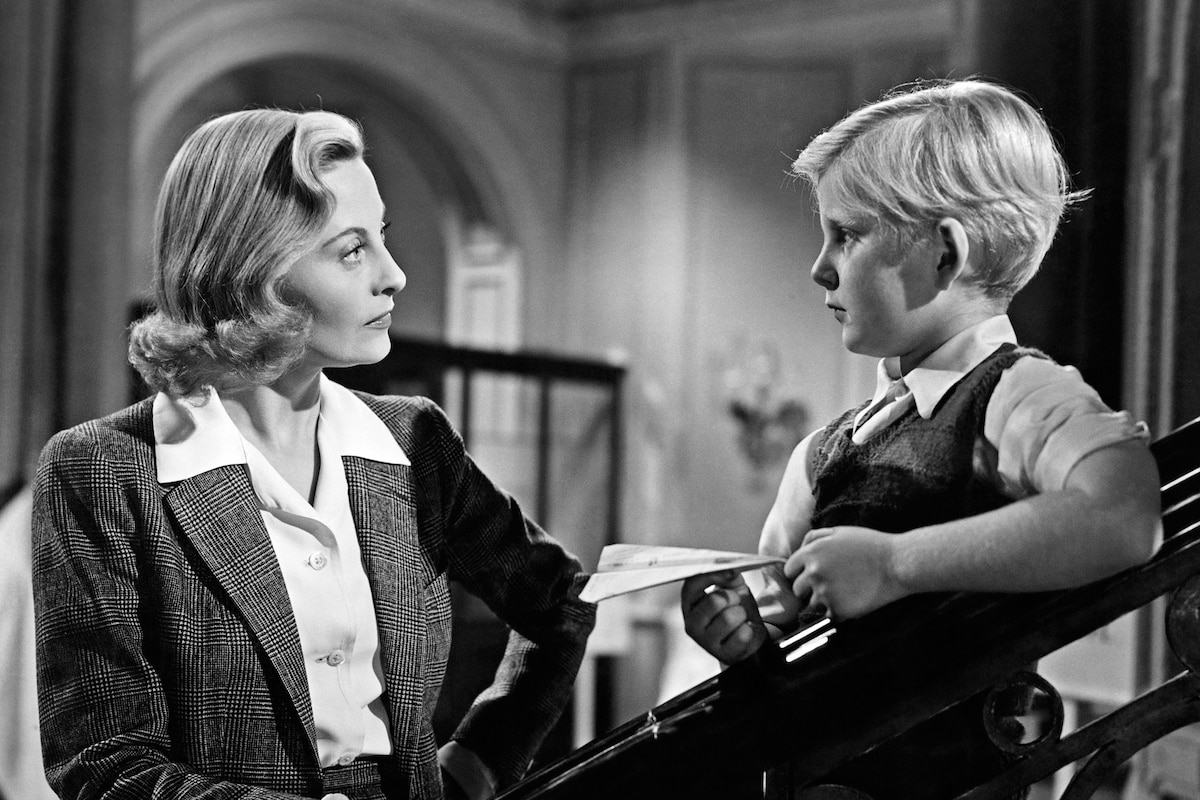
Several changes were made to the original story, largely for greater clarity and interest on screen, and Greene, who had not been convinced of the worthiness of the story as movie material anyway, gladly went along with the alterations Reed suggested. Both men felt the large Belgravia house was a bit dated and that it was not good form--not to mention unrealistic--to show a wealthy family in such an enormous house with a staff of servants in post-war austerity England. The setting was changed to the London embassy of a foreign country (although never made explicit, from the language spoken by several characters, it had to be France). Emmy, the girl with whom Baines carried on an affair, was changed to Julie and made an employee of the embassy. The greatest change was shifting the details of Mrs. Baines's death. In the new version, Baines is not present when she has her fatal fall, but his struggle with her just moments before leads the boy to believe his friend killed her, setting in motion the lies the boy tells to help Baines cover up the "truth," which only served to put the butler in more jeopardy. This allowed Reed to expand what was just a couple of pages at the end of the original story--Baines's downfall at the hands of the police inspector--into a Hitchcockian scene of suspense and offbeat humor as a cadre of police, doctors, and embassy staff buzz around the building trying to figure out what happened while Phillipe confuses the issue with his deceptions.
Each man contributed significant new details to the story. Greene added the bit in which Julie is questioned standing next to the bed she had shared with Baines. He also added the boy's pet snake MacGregor, which Reed initially opposed. Reed threw in the bit where an embassy staffer interrupts the investigation by insisting on his one duty, to keep the building's clocks wound.
Another change made from the original story was turning Rose from a sullen policewoman to a warm-hearted, cheerful prostitute who offers the boy motherly comfort after he's found wandering the streets at night.
Korda made one story suggestion for The Fallen Idol --changing Baines from butler to chauffeur because, he reasoned, children love to see the insides of cars and make heroes out of chauffeurs. And this, he said, would allow them to start the film with the boy and the chauffeur seeing the boy's father off at the airport in the film's first scene. Greene and Reed thought that starting a picture at an airport was a terrible cliché, so the idea was quickly dismissed.
The Fallen Idol was given a generous £400,000 budget by Korda.
by Rob Nixon
The Big Idea - The Fallen Idol
by Rob Nixon | December 29, 2011
SIGN UP FOR OUR NEWSLETTERS

CONNECT WITH TCM