Director Carol Reed wanted Ralph Richardson for the butler role. Richardson was already a stage actor of high reputation with a couple dozen pictures under his belt since his first screen appearance in 1933. He had most recently received highly favorable critical notices for his turn as the cold and vengeful Karenin in Anna Karenina (1948) opposite Vivien Leigh. And most conveniently, he was under contract to Korda.
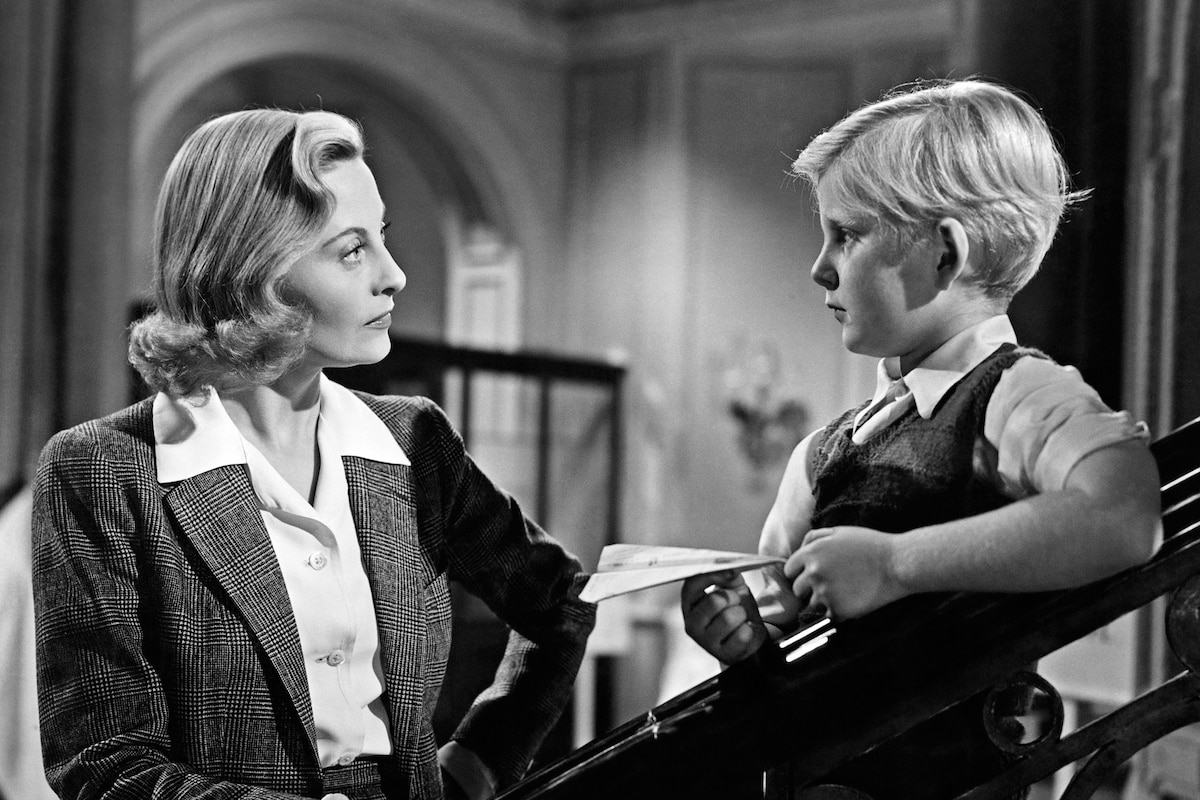
Reed wanted French star Michèle Morgan for the part of Julie. Korda offered her the job on one of his trips to Hollywood, where she had been living and working during the war.
The part of Mrs. Baines went to the distinguished stage and Shakespearian actress Sonia Dresdel, who had done only two prior movies.
With the major adult roles cast, Reed and company now turned to the crucial task of finding a young boy to play the lead role of Phillipe. They found the face they were looking for on the cover of a book, A Village in Piccadilly, part of a trilogy about the lives of French refugees from Nazism who had settled in London. The author, Robert Henrey, and his wife were two such people, along with their eight-year-old son Bobby, whose picture graced the cover. London Films production executive Bill O'Bryen contacted the Henreys to set up a screen test with Ralph Richardson. Madeleine Henrey, the mother, was reluctant, fearing the experience would spoil her son, but her husband thought it might be good character-building for him. She agreed it was a possibility but only if she could be present on set at all times and personally supervise him. Bobby was flown in for the test by Korda from Normandy, where he was visiting his grandmother.
Although the boy had no experience at all, Reed was delighted with his test and felt that he could work well with him. Bobby was smart and had a hint of a French accent, which fit very well with the role. He was also an only child, which meant he could get on well in the company of adults. The only problem Reed saw was that the boy had a black nail from using a hammer. Reed told Mrs. Henrey to not let the boy play with hammers, but to also encourage him to keep his accent and, above all, to not grow any bigger until shooting was completed. A governess was appointed to look after the child actor.
Bobby Henrey received £1,000 for his part in The Fallen Idol with the stipulation that if it were not completed in ten weeks, he would get an additional £100 per week.
Shooting took place at Shepperton Studios, which Korda had recently purchased, and on location at a large house at 13 Belgrave Square owned by the British Red Cross and St. John medical organization, who were pleased to have the company paint the exterior and fix all the windows. Other locations used for The Fallen Idol were in the same neighborhood, except for scenes shot at the London Zoo.
Graham Greene was not present on the film set during production. Two writers, Lesley Storm and William Templeton, were hired for additional dialogue where necessary.
For cinematography, Reed hired Georges Perinal, a favorite of Korda after his work on The Private Life of Henry VIII (1933), Rembrandt (1936), and the sci-fi fantasy Things to Come (1936), all Korda productions. Perinal frequently became impatient with Reed's insistence on shots that the cinematographer thought impossible to get, although in the end he always acceded to the director's demands. The result is some stunning photography, such as the sequence of Bobby running through the streets of London at night and the hide-and-seek game in the embassy.
Reed worked closely with his sound crew to pay particular attention to what was heard on screen. They were able to keep closely to the boy's point of view by muffling some of what the adults said, as if barely overheard (hence, misinterpreted) by the child.
In the book she wrote about the experience of filming The Fallen Idol, Madeleine Henrey noted Carol Reed's "infinite patience" with her son, adding, "[Reed's] authority was tremendous. Nobody ever questioned what Carol said, but there was no blowing through a megaphone or shouting angry words. Probably his strength was due in part to the fact that he was such an adept at hiding it." Assistant director Guy Hamilton later echoed the thought, saying Reed, in his own understated way, kept "absolute control of everybody."
The biggest challenge, of course, was getting such an amazing central performance out of Bobby Henrey, who had no experience or much acting ability yet was on screen almost the entire picture. Assistant director Guy Hamilton noted that the boy "couldn't act his way out of a paper bag" and had "the attention span of a demented flea." He also remarked that things got more difficult when Bobby got bored after 12-14 weeks of shooting.
Bobby Henrey, as an adult, could offer no explanation for his highly praised performance except to say he remembered it only as a magical experience.
The key to getting a performance from the boy was the remarkable relationship between the young actor and his director. Reed welcomed the challenge, knowing that if he worked well with Bobby he would get something not always easily achieved with an adult actor, the sense of uninhibited connection with a role, without any self-consciousness. "But with the right sort of child such as Bobby, there is nothing in the way," Reed said. "There is absolutely no resistance. He will do everything you tell him."
Reed constantly watched the boy, noting how he moved, how he stood or sat, how he listened to adults, what he did with his hands. He then adjusted every scene to incorporate the boy's natural actions and reactions. Reed would also take in whatever the boy did, show Bobby how to do the scene by imitating it, then Bobby would imitate Reed mimicking him. When asked how he could sob so heartbreakingly when his pet snake died, Bobby responded rather indignantly, "Well, he showed me. What's the producer for?"
Reed used all kinds of tricks to get the results he wanted. In the opening scene, when Phillipe is supposed to be looking over the banister at Baines with affection and interest, Reed had a magician perform for Bobby off camera to get the facial expression he needed.
An article about the making of The Fallen Idol by Frances Levinson described the working relationship between the two: "Carol Reed crouched beside the child hour after hour, month after month. He created a separate world for himself and the child, and the vast superstructures of the cinema, the lights, cameras, actors, and technicians, were shut out."
Between constantly observing and coaching the boy and all his other directorial duties, Reed ended up working 16 hours a day and talking so much he developed laryngitis.
Because the boy was not used to working with other actors, Reed had to shoot him primarily in reaction shots. He also had to keep his dialogue down to small bits, so the film was planned to be very cut heavy. In its 95-minute running time there are more than 1,000 edits.
In order to protect the boy from the adult themes and plot points, including adultery and violent death, most of the story was kept from him. Initially, Reed just had Bobby do the basic actions needed for each scene. Gradually, he told him more and more about what was happening, and halfway through, Bobby was given the script to read.
In scenes showing the boy in close-up next to Baines, whose face is not visible in the shot, the man walking or standing beside him is actually Reed himself.
For continuity's sake over the course of a long shoot, Reed restricted Bobby's access to the cake trolley during tea breaks on set so he wouldn't gain weight. Continuity was also the issue in Reed's only disagreement with Madeleine Henrey. A scene with Bobby running up the stairs was left half-completed at the end of the week's shooting on a Friday evening. Over the weekend, Madeleine decided the boy needed a haircut, and when he returned to the set on Monday, it was impossible to match the remaining shots they needed to the ones taken a few days before. The makeup department tried attaching hair pieces to him, but it didn't look right. Reed was furious and had no choice but to rearrange the shooting schedule to complete the stair scene after Bobby's hair grew out. "It's the most expensive haircut in the world!" Reed groused. "Thousands of pounds! That's what it will cost!" The incident was the only delay in an otherwise smooth shoot, which ended up completing on schedule.
by Rob Nixon
Behind the Camera - The Fallen Idol
by Rob Nixon | December 29, 2011
SIGN UP FOR OUR NEWSLETTERS

CONNECT WITH TCM