Awards & Honors
Academy Award nominations: Best Director (Carol Reed), Best Screenplay (Graham Greene)
British Academy (BAFTA) Award for Best British Film; nomination for Best Film from Any Source
Bodil Award (Denmark) for Best European Film
Golden Globe Awards nomination for Best Foreign Film
National Board of Review awards for Best Actor (Ralph Richardson, also for The Heiress, 1949) and Best Screenplay
New York Film Critics Circle Award for Best Director
Venice Film Festival Award for Best Screenplay; Golden Lion nomination for Reed
The Critics' Corner: THE FALLEN IDOL
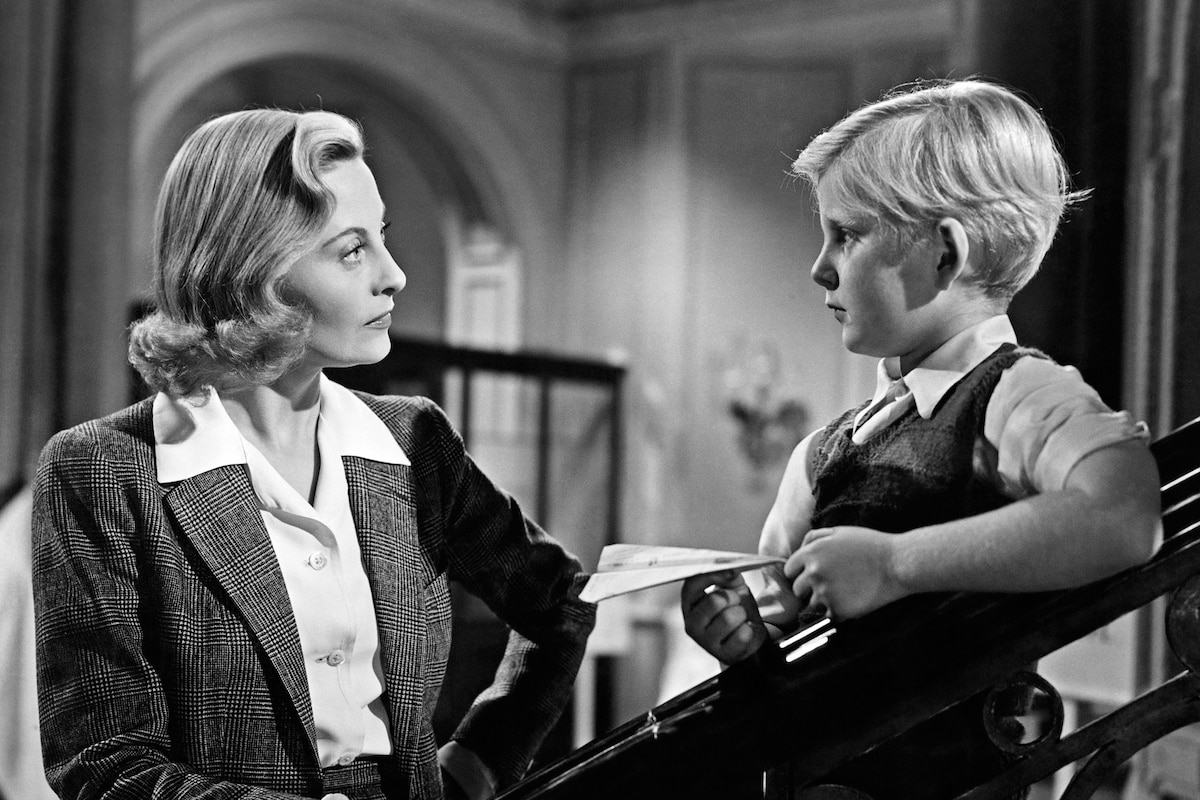
"A fine sensitive story, a brilliant child star and a polished cast, headed by Ralph Richardson and Michele Morgan, combine to make The Fallen Idol a satisfying piece of intelligent entertainment." - Variety, 1948
"Not only has [Carol Reed] got excitement of a most sharp and urbane sort in this film, but he has also got in it one of the keenest revelations of a child that we have ever had on the screen. ... It is freighted with sly and salient humors, very tender understandings of humankind and some truly blood-tingling surprises that Mr. Reed has directed in brilliant style. Everyone knows that his camera is one of the most fluent in use today. In this film, it is also one of the smartest in the revelation of personality." - Bosley Crowther, New York Times, November 16, 1949
"All that is so deeply satisfying in the best British pictures, the subtlety, intelligence, unforced humor and tragedy free of theatrical posture, is on view in The Fallen Idol. Here again director-producer Carol Reed demonstrates why he is generally regarded as Great Britain's best and one of the world's most consistent makers of movie masterpieces." - New York Post, 1949
"The film is directed with skill and cunning by the masterly Carol Reed, one of the great names of the film industry and comparable to the best Europe has ever had." - Boston Globe, 1949
"The plot is just about perfect.... There are terrifying, tense moments, too; the whole movie is very cleverly worked out." - Pauline Kael, 5001 Nights at the Movies (Henry Holt & Co., 1982)
"You might be tempted to see The Fallen Idol as ur-Masterpiece Theatre--the kind of ostentatiously understated thing the British do so terribly well, as what's been referred to as 'the Laura Ashley school of filmmaking.' And you'd be dead wrong. Because what all this honeyed veneration fails to describe is just how damn much fun the The Fallen Idol is. And, for all its quality and craft, how little it has lost its power to disturb--and to haunt." - Howard A. Rodman, essay on Criterion Collection site, December 22, 1992
"The Fallen Idol has been overshadowed by the noir comedy, giddy style, and Cold War thematics of Reed and Greene's subsequent The Third Man [1949], but (in similarly dealing with the nature of betrayal), The Fallen Idol is actually a superior psychological drama. ... Richardson is quietly splendid. His buttoned-up butler is an amiable fabulist, roguish yet decent, understated but passionate. The yearning with which he regards the radiant Morgan fuels the movie." - J. Hoberman, The Village Voice, January 31, 2006
"The film itself exemplifies the extraordinary craftsmanship of British cinema in the late forties, both behind the camera and in front of it. ... The whole cinematic apparatus is enlisted to convey what Phile sees and what spaces he moves through, in the process creating as close an impression of a child's perception as any film has managed." - Geoffrey O'Brien, essay on Criterion Collection site, November 6, 2006
by Rob Nixon
Critics' Corner - The Fallen Idol
by Rob Nixon | December 29, 2011
SIGN UP FOR OUR NEWSLETTERS

CONNECT WITH TCM