Best known in America as the Academy Award-winning director of One Flew Over the
Cuckoo's Nest (1975) and Amadeus (1984), Milos Forman originally gained
recognition as part of the Czech New Wave. In the early 1960s, Forman directed a series of
films in his native Czechoslovakia (now the Czech Republic), including Black Peter
(1964), Loves of a Blonde (1965), and The Firemen's Ball (1967), that helped
establish the movement. Eastern Europe was still under control of the Communist Party when
the Czech New Wave was launched, and filmmakers suffered censorship or worse if they
disappointed or upset Party bureaucrats with their films. The Firemen's Ball
aggravated authorities, and Forman's experiences with the film reflect this turbulent era
of Czech film history.
Forman graduated from the scriptwriting program of FAMU, Czechoslovakia's state-supported
film school, in 1954, but the doors to a film career were not opened until the early 1960s,
when he directed two semi-documentaries about young musicians and singers. The slight
stories served as an excuse for depicting the musical milieus that provided the backdrop
and charm for the films. Forman used documentary techniques such as location shooting,
deglamorized lighting, and nonactors in key roles to capture the milieus, and these
documentary techniques would become hallmarks of his style. The two films were packaged
under the title If Only They Ain't Had Them Bands.
Forman was 30, but he had a keen interest in the generation behind him. Rock 'n' roll had
been introduced in Czechoslovakia in 1961, which helped galvanize the nation's teenagers
into a generation decidedly different from its predecessors. The gap between generations
was the central thread in Black Peter, his first feature film as a director.
Black Peter aligned the young director with others who had caught the wave of
liberalization surging through Czechoslovakia in the mid-1960s that allowed them to make
films of daring and innovation. Influenced by the subjectivity of the French New Wave and
the documentary objectivity of cinema verite and Italian Neorealism, Czech directors worked
within the bounds of these two influences. They used documentary techniques to create
fresh-looking fictional narratives. Nonprofessional actors, improvised dialogue, gritty
camera work, and keen observations of everyday life were combined with allegory and
metaphor to produce highly personal filmmaking styles.
The acceptance of Black Peter into several film festivals, including the Locarno and
New York Film Festivals, ensured that Forman would have a higher profile at Barrandov, the
state-supported film studio. His next two efforts, Loves of a Blonde and The
Firemen's Ball, expanded the style of Black Peter in combining documentary
techniques with ironic comic moments and a keen eye for the lives of ordinary people.
The Firemen's Ball was conceived when Forman and his co-scriptwriters Ivan Passer
and Jaroslav Papousek went to the mountain village of Vrchlabi so they could relax and
concentrate on their next script. Taking a break one evening, they ended up at a
celebration organized by the local firemen. Forman began to play cards regularly with the
firemen on duty, and from these interactions, a new idea for a script was formed based on a
firemen's ball.
The Firemen's Ball was shot in color, because financial backing by the highly
respected Italian producer Carlo Ponti enabled Barrandov Studios to afford color film
stock. Taking place in one location during the course of one day, The Firemen's Ball
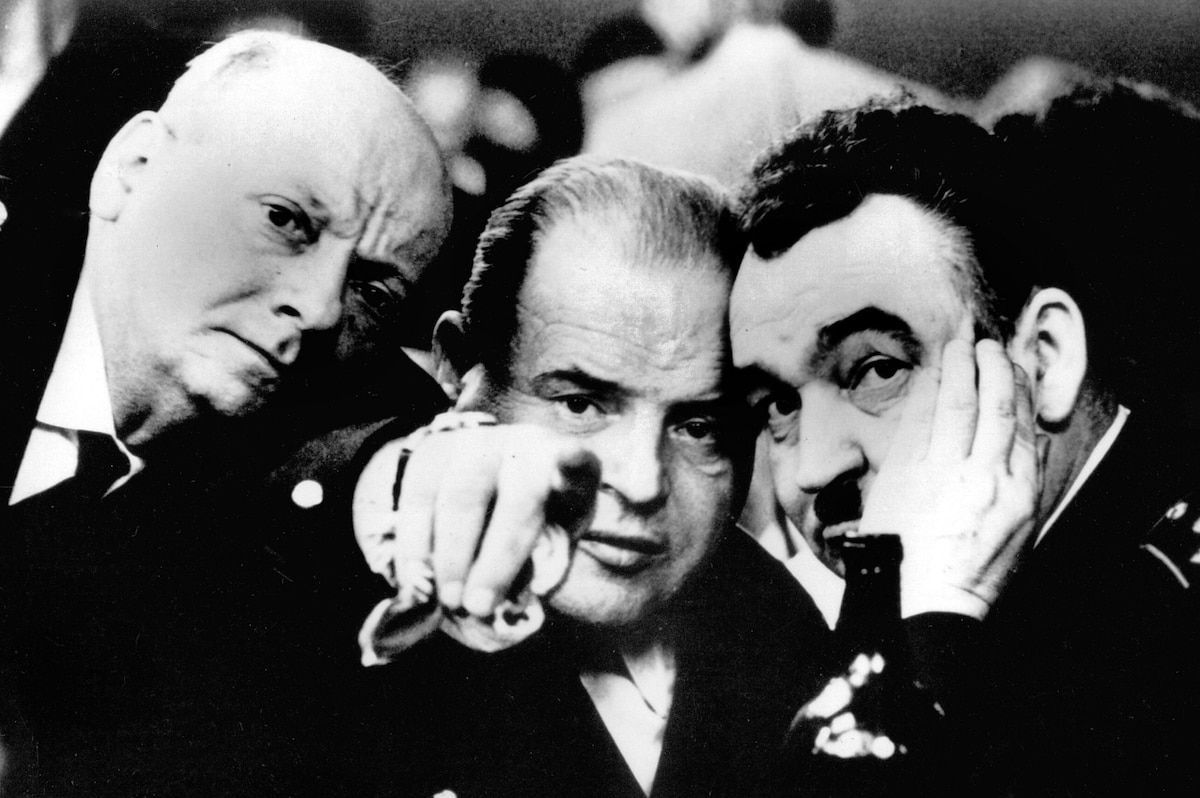
chronicles a local celebration in a small mountain village in Bohemia. The aging firemen's
brigade decides to honor one of their long-standing members with a golden hatchet because
he is dying of cancer. The hatchet will be awarded to him during a ball that includes a
live band, an auction, and a beauty contest. While decorating the tatty ballroom with a
beautiful, hand-painted sign, the young artist is knocked from the ladder by two doddering
members of the fire brigade, destroying his unique handiwork in the process. The scene
provides a hint of what is to come as the aging group of hapless, corrupt, and officious
firemen cause more harm than good for their community.
The firemen and their brigade have been interpreted as a metaphor for the Communist Party,
which was mired in self-serving bureaucracy. The firemen, who are the authority figures in
the village, are old, sick, and corrupt. Nothing is accomplished because they argue among
themselves, steal from their own organization, or establish absurd rules that hinder
progress rather than facilitate it. Favoritism plays a role in the beauty contest, because
some of the contestants are the daughters of prominent members of the brigade. Theft was
rampant in Czechoslovakia under communism, which is illustrated in the film by brigade
members who pilfer the items meant for the auction. As in Black Peter, a generation
gap exists between the youth and the older generation in the village. The young men and
women seem in a world of their own as they dance among themselves and paw at each other
under the tables or in the corners. This is not an environment that is thriving or
productive.
While the political climate in Czechoslovakia had opened up sufficiently to allow films
like these to be produced and released, Forman and his fellow filmmakers still faced
official disapproval and controversy, even as they attracted international attention and
acclaim. For the film's original release, Forman shot an introduction in which he explained
that the movie was not about firemen or any other specific group. However, certain lines of
dialogue are clearly reflective of hard-line communist ideology, such as: "All the people
are under suspicion." And, when the lack of honesty is brought up in relation to the theft
of all the auction items, one brigade leader retorts, "The idea of the brigade is more
important than my idea of an honest man," suggesting that the idea of communism is more
important than its actual reality. Years later in an interview, Forman admitted that the
firemen were indeed a metaphor for the Communist Politbureau.
The Firemen's Ball was first shown to the studio's censors and then to the top
echelon of the Communist Party, including Czech President and Party leader Antonin Novotny.
Party leaders were unhappy with the film but reluctant to ban it outright in the more
enlightened environment of the mid-1960s. When it was shown to Carlo Ponti, he became
furious and demanded that his initial investment of $65,000 be returned to him. Forman
claims he was angry because he felt that the movie ridiculed the working man, but some have
suggested that he was acting for the benefit of Novotny. Supposedly, Ponti was trying to
negotiate a cultural treaty with Novotny and did not want The Firemen's Ball to sour
the deal. Others claim that Ponti pulled out because the film was two minutes shorter than
the running time stated in the contract. Whatever the case, the Party held Forman
responsible for the money, and he was charged with sabotaging the socialist economy of
Czechoslovakia. The director faced ten years in prison if convicted. Forman showed a print
of the film to Francois Truffaut and Claude Berri, who graciously came up with $65,000 and
gave it to Ponti.
The Communist Party then decided to screen the film to the public in the hopes that the
citizens of Czechoslovakia would complain. If any of the Czech public were offended, the
Party had a concrete reason to ban it. They screened the film in the village where it was
shot, believing the nonactors used in the key roles would feel humiliated and ridiculed.
According to Forman, the Party even arranged for a plant in the audience to raise an
objection at the appropriate time. During the film, the man stood to declare that the
characters of the firemen were offensive because they were not real. However, one of the
actual firemen who had been in the film stood up to defend it, though that did little to
help. According to the Party, 40,000 firemen had felt insulted by The Firemen's
Ball, and they were forced to remove it from distribution.
In 1968 after reform leader Alexander Dubcek replaced Novotny, and the political climate
softened further during what became known as the Prague Spring, The Firemen's Ball
was finally released to theaters in Czechoslovakia. The film was shown in London and Paris,
and it was also chosen to close the New York Film Festival. It would also be nominated for
an Academy Award for Best Foreign Language Film. However, later that year, Soviet tanks
entered Prague to squelch Dubcek's reform movement. When Soviet Communist Party leaders
viewed the film, they banned it for life. According to Forman, The Firemen's Ball
could not be completely destroyed, because Truffaut owned part of the film.
Forman wanted to make a film in America, and, based on the international acclaim of
Black Peter, Loves of a Blonde, and The Firemen's Ball, Paramount
Pictures offered him the chance to do so. Forman was in Paris working on a script when the
Soviets invaded Czechoslovakia. After the Soviet invasion, conditions in the Czech film
industry tightened considerably. The Czech film industry was reorganized, centralized, and
rigidly controlled.
Forman remained in Paris and the following year, he came to New York with Ivan Passer. The
Paramount deal fell through, but Universal backed his first Hollywood film, Taking
Off (1971). The film flopped at the box office, and Forman had some difficulty
adjusting to Hollywood moviemaking, but his career was secured when he directed One Flew
Over the Cuckoo's Nest in 1975. That was also the year he became an American citizen.
Forman did not return to Czechoslovakia until the early 1980s, when he shot Amadeus
there.
Producers: Rudolf Hajek; Carlo Ponti (uncredited)
Director: Milos Forman
Screenplay: Milos Forman, Jaroslav Papousek, Ivan Passer (screenplay); Vaclav Sasek
(story)
Cinematography: Miroslav Ondricek
Art Direction: Karel Cerny
Music: Karel Mares
Film Editing: Miroslav Hajek
Cast: Jan Vostrcil (Head of Committee), Josef Sebanek (Committee Member #2), Josef Valnoha
(Committee Member), Frantisek Debelka (Committee Member #1), Josef Kolb (Josef), Jan Stockl
(Retired Fire Chief), Vratislav Cermak (Committee Member), Josef Rehorek (Committee Member
#4), Vaclav Novotny (Committee Member), Frantisek Reinstein (Committee Member).
C-71m.
by Susan Doll
The Firemen's Ball (1967) - The Firemen's Ball
by Susan Doll | September 09, 2011
SIGN UP FOR OUR NEWSLETTERS

CONNECT WITH TCM