The Red Shoes (1948) is often cited as the film that first inspired a love for ballet
in many young girls; but before there was The Red Shoes, there was The Unfinished
Dance (1947), and if it has fewer devotees than Michael Powell's stunner, it could be
because it is less well-known. The Unfinished Dance's performance sequences may be less
classical and more Hollywood, but both films have many of the same dramatic elements:
passionate devotion, melodrama, guilt, great production values, Technicolor--and The
Unfinished Dance also has MGM's soon-to-be prima ballerina, Cyd Charisse, and one of the
best child actors of all time, Margaret O'Brien.
The Unfinished Dance was based on Jean Benoit-Lévy's 1937 French film, La mort du
cygne (released in the U.S. as Ballerina). In her study of ballet on film, Dying
Swans and Madmen (2008), Adrienne McLean writes that MGM bought the rights to La mort
du cygne and pulled the original from circulation when they decided to make The
Unfinished Dance, which sets the action at the Ballet School of the Metropolitan Opera in
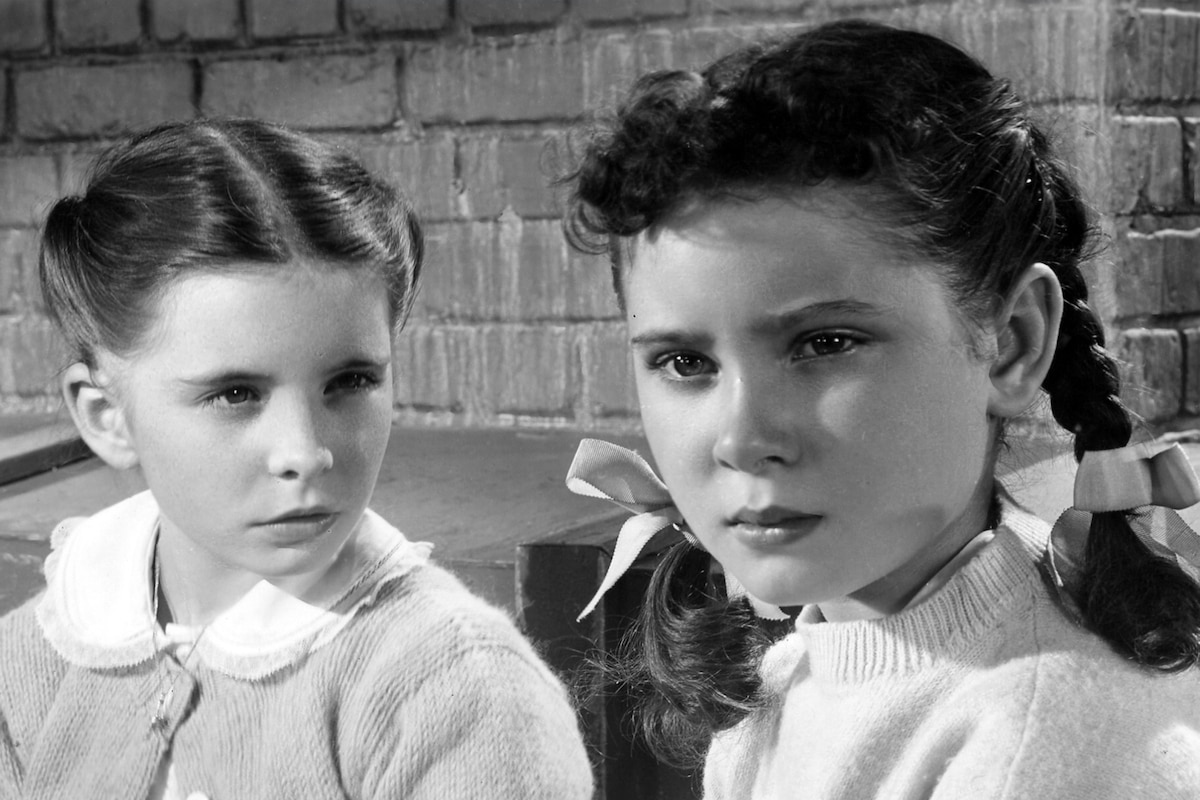
New York. Student Meg Merlin (Margaret O'Brien) idolizes ballerina Ariane (Cyd Charisse). When
Meg learns that the famous ballerina La Darina (Karin Booth) is joining the company, she
mistakenly believes La Darina will replace her idol. Meg's obsessive devotion to Ariane and
hatred for La Darina lead to disaster, and she is tortured by the consequences of her actions.
According to O'Brien, her mother, a former dancer, had seen the French film and brought the
idea of remaking it to MGM. The 9-year old Margaret trained for six months with Russian ballet
teachers, and did her own dancing in the film. Director Henry Koster had experience working
with young performers--the German émigré had begun his American career directing Deanna Durbin
musicals at Universal for producer Joe Pasternak--and had gone with Pasternak to MGM. Koster
thought O'Brien was talented, and liked working with her. His problem was with O'Brien's
mother, who sat behind him during takes, and gave Margaret signals when she wanted another
take. But overall, Koster was happy with O'Brien's performance. He was less impressed with
Karin Booth, a former model who was playing her first leading role after years of playing bit
parts. Booth couldn't dance, and Koster had to use a double for her dancing wide shots. For
the close-ups, he built a rotating platform to spin her around. Koster also thought Booth
lacked acting ability, and her subsequent career appears to support his judgment. She appeared
mostly in b-pictures for the rest of her career, and retired in 1959. But in The Unfinished
Dance, her impassive beauty and uninflected emoting lend an appropriate remoteness and
hauteur to her character.
Cyd Charisse's acting skills were also limited, but she more than made up for it with her
spectacular terpsichorean talent. Trained in classical ballet, Charisse danced with the Ballet
Russe de Monte Carlo while still a teenager. Ballet Russe dancer and choreographer David
Lichine gave Charisse her first film dancing role in the 1943 musical Something to Shout
About, and MGM signed her in 1945. Lichine was the choreographer for The Unfinished
Dance, and his ballets are a great showcase for Charisse. Throughout the late 1940s,
Charisse played supporting roles, but most of the films she appeared in featured dance numbers
that gave her an opportunity to shine. By the early 1950s, she was one of MGM's top musical
stars.
Comedian Danny Thomas made his film debut in The Unfinished Dance, playing O'Brien's
guardian. It was a warm and appealing performance, and the two would be reunited the following
year in Big City (1948). But Thomas's film career never really took off. When he turned
to television in the early 1950s he became a huge star.
Critics compared The Unfinished Dance unfavorably to the French original. Bosley
Crowther of the New York Times called it "a big splash of show-off theatre, in which
the story is as slickly decorative as are the elaborately staged ballets," and sniped at
O'Brien, "trotted out often to poise on her hastily tutored toes to add her particular brand
of cuteness to some specially manufactured ballets." Time magazine, after a snarky plot
summary that gave away all the film's twists, concluded the review with one more bit of snark:
"All ends with little Margaret, wistful as a hand-painted freckle, watching Cyd & company
execute what seems to be a ballet interpretation of the Birth of the Universe." Highbrow
critics could sneer all they liked, but lowbrow (and even middlebrow) movie fans liked it just
fine. Seen more than sixty years later, The Unfinished Dance is definitely not High
Art, nor does it pretend to be. It is a high-gloss example of another kind of art, that of the
MGM musical, and an opportunity to see one of the era's finest young actresses giving one of
her most emotional performances.
Director: Henry Koster
Producer: Joe Pasternak
Screenplay: Myles Connolly, from the story by Paul Morand
Cinematography: Robert Surtees
Editor: Douglass Biggs
Costume Design: Irene, Helen Rose
Art Direction: Cedric Gibbons, Daniel B. Cathcart
Music: Herbert Stothart
Principal Cast: Margaret O'Brien (Meg Merlin), Cyd Charisse (Mlle. Ariane Bouchet), Karin
Booth (La Darina), Danny Thomas (Mr. Paneros), Esther Dale (Olga), Thurston Hall (Mr.
Ronsell), Harry Hayden (Murphy), Mary Eleanor Donahue (Josie), Connie Cornell (Phyllis).
C-101m.
by Margarita Landazuri
The Unfinished Dance
by Margarita Landazuri | June 07, 2011
SIGN UP FOR OUR NEWSLETTERS

CONNECT WITH TCM