The popular plot device of a poor but honest working girl meeting and falling in love with a wealthy tycoon or aristocrat was already a film cliché before the sound era but that didn't prevent Hollywood studios from putting their top actresses in these formulaic movies that continued to please the women in the audience. Joan Crawford certainly paid her dues in this genre in such films as Our Modern Maidens (1929) and Possessed (1931) but so did Barbara Stanwyck in Ladies of Leisure (1930), Shopworn (1932) and numerous others. The main thing that distinguished them from each other was the cast and the tone. It could be played for laughs with Carole Lombard as a lowly manicurist hoping to hook a rich husband in Hands Across the Table (1935) or it could be played as an urban morality tale for impressionable young women as it is in The Reckless Hour (1931) with Dorothy Mackaill as a department store model from the slums.
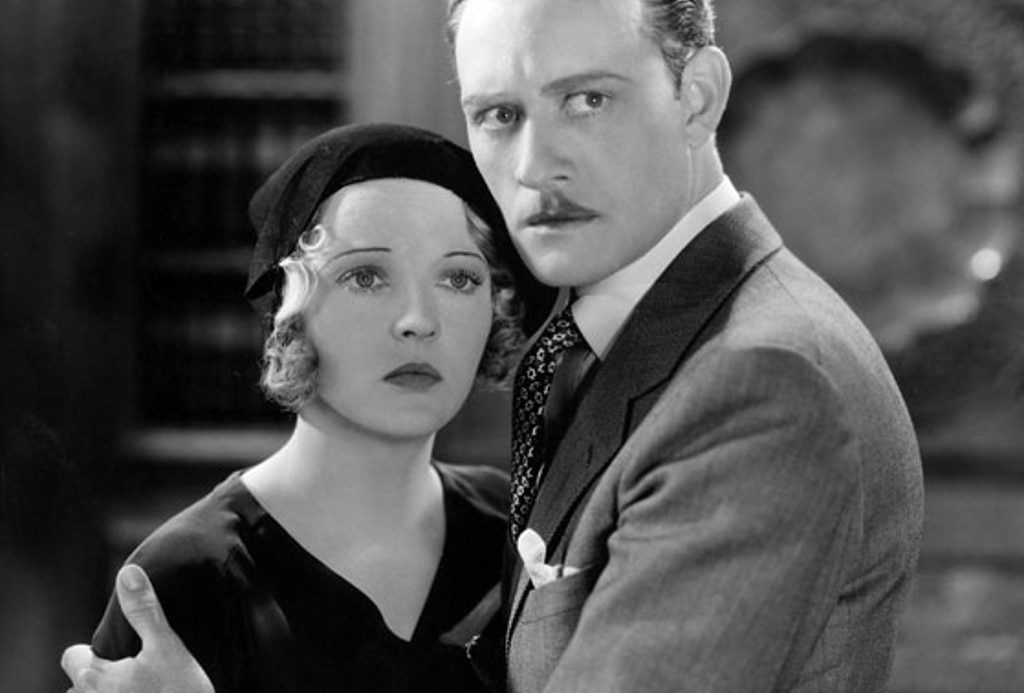
Based on the play Ambush by Arthur Richman, this Pre-Code melodrama has a static, stage-bound quality and a storyline that yields few surprises. Yet it is worth watching for Mackaill's fully committed performance as the charming but victimized heroine and for Joan Blondell's vivacious presence as her wisecracking younger sister Myrtle. It also has a cleverly deceptive opening scene in which Mackaill, playing a character named Margaret Nichols, appears to be some affluent lady of the manor with a maid in attendance. In reality, she's just a model being dressed by an assistant for a fashion show in the adjacent salon. Her appearance sparks the interest of Allen Crane (Walter Byron), the playboy son of a millionaire, who pursues her relentlessly and eventually seduces Margaret. When she is abandoned by Allen, her father pays a visit to his father to demand that his son marry her but Margaret interrupts their meeting and vehemently refuses to accept a proposal. It looks like she is fated to be just another unmarried single mom when she accepts a modeling job from artist Edward Adams (Conrad Nagel), a friend of Allen's who had previously met her and was smitten. Despite the fact that Edward is married, the artist and his model have an affair that blossoms into something much deeper but there are some problems that simply can't be ignored such as Margaret's pregnancy and a stock market crash that spells financial ruin for the family.
While The Reckless Hour is not much more than a routine programmer from First National/Warner Bros., it has a brisk running time of barely 71 minutes and holds the interest by serving up the occasional odd detail. Margaret's father, for instance, is the owner of an unprofitable bookstore specializing in rare first editions that is situated in a slum neighborhood. There is also a sequence in which the Nichols sisters meet up with their respective dates at Luna Park, the fairground at Coney Island that was closed down in 1944. Best of all is the snappy patter that usually occurs whenever Myrtle (Blondell) and her blue collar beau Harry (Joe Donahue) are together. When Joe drops in on the family during dinner hour, Myrtle asks, "Would you have a bite?" to which he responds with the timing of a vaudeville comedian, "I just did and I scratched it."
Dorothy Mackaill would follow The Reckless Hour with William Wellman's lurid and compelling Pre-Code melodrama Safe in Hell (1931), arguably her finest sound era performance. She also had memorable roles in Love Affair (1932) opposite Humphrey Bogart and No Man of Her Own (1932) with Clark Gable and Carole Lombard. Yet she retired from filmmaking in 1937 and is not well known today which is a shame. On the basis of her surviving films, she was not only gorgeous and talented but with the right management and luck could have been as popular as Lombard, Harlow or Stanwyck.
Producer: John Francis Dillon
Director: John Francis Dillon (uncredited)
Screenplay: Florence Ryerson (adaptation); Robert Lord (adaptation, uncredited); Arthur Richman (play "Ambush")
Cinematography: James Van Trees
Art Direction: John J. Hughes
Music: David Mendoza (uncredited)
Film Editing: Harold Young
Cast: Dorothy Mackaill (Margaret 'Margie' Nichols), Conrad Nagel (Edward 'Eddie' Adams), H.B. Warner (Walter Nichols), Joan Blondell (Myrtle Nichols), Walter Byron (Allen Crane), Joe Donahue (Harry Gleason), Dorothy Peterson (Mrs. Susie Jennison), Helen Ware (Harriett Nichols), William House (Seymour Jennison), Claude King (Howard Crane).
BW-71m.
by Jeff Stafford
The Reckless Hour (1931) - The Reckless Hour
by Jeff Stafford | May 13, 2011
SIGN UP FOR OUR NEWSLETTERS

CONNECT WITH TCM