SYNPOSIS
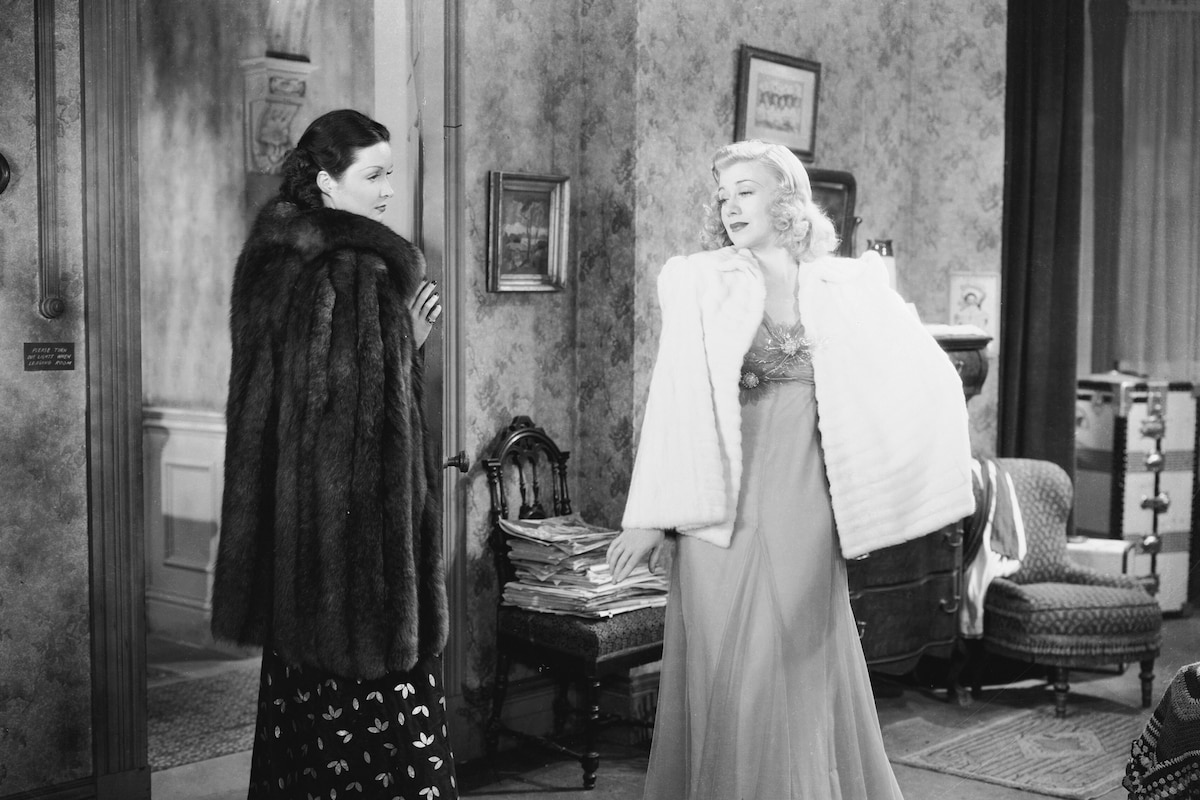
Terry Randall, daughter of a wealthy Midwest businessman, goes against her father's wishes to pursue a career in the theater. Although she can afford better, she rents a shared room in a boarding house for young women hoping to break into show business. Her roommate, Jean, is a sassy blonde dancer who, like most of the other girls in the house, doesn't think much of Terry's high-toned speech and superior attitude. Terry, in turn, thinks their banter and sarcasm prevent them from being serious about pursuing their careers. Only sweet, sensitive Kay seems to have made any real inroads into a life as a serious actress. Once a promising newcomer, Kay now struggles to survive. Terry's father pays a callous, womanizing producer to give Terry a leading role so she'll fail miserably in public and come back home, but it turns out to be the role Kay was hoping to get, leading to tragic circumstances that teach Terry, and all the girls, important lessons about acting and friendship.
Director: Gregory La Cava
Producer: Pandro S. Berman
Screenplay: Morrie Ryskind, Anthony Veiller, based on the play by Edna Ferber and George S. Kaufman
Cinematography: Robert De Grasse
Editing: William Hamilton
Art Direction: Van Nest Polglase
Original Music: Roy Webb (uncredited)
Cast: Katharine Hepburn (Terry Randall), Ginger Rogers (Jean Maitland), Adolphe Menjou (Anthony Powell), Gail Patrick (Linda Shaw), Constance Collier (Miss Luther), Andrea Leeds (Kay Hamilton).
BW-91m.
Why STAGE DOOR is Essential
One of the most sparkling, entertaining movies to come out of a decade known for films full of witty repartee and fast-paced character interaction, Stage Door also has a justly deserved high reputation as a film about women--their relationships with each other being more important and real than anything going on with men.
RKO took a gamble pairing its two biggest female stars-- Katharine Hepburn, a dramatic actress whose career was on the decline and Ginger Rogers, half of the studio's hit musical team--in a picture that required both sharp comic timing and serious dramatic skills. Using a personal antagonism that existed between them to inform their on-screen verbal duels, the two proved themselves to be more than up to the task. Hepburn displayed an appeal that had dimmed over the course of a handful of unpopular roles and garnered her best reviews in years, while Rogers wowed the critics with her acting skills instead of her dancing talent (although the story was tailored to give her at least a few minutes of hoofing for good measure). It was not quite the turnaround Hepburn needed (that would come later at another studio), but Rogers's career was given a big boost that finally got her greater opportunities and recognition as more than just Fred Astaire's partner.
What really makes Stage Door work, however, and what makes it hold up through the years, is not just a double star turn. With a large cast of unknowns, second-stringers, and expert character actresses, this is ensemble work at its finest. Director Gregory La Cava's off-the-cuff, improvisational methods may have given producers and studio executives a bad case of nerves, but it worked to keep the story crackling and moving briskly. A few years before Howard Hawks's much-lauded use of rapid overlapping dialogue in His Girl Friday (1940) and decades before Robert Altman turned it into his trademark style, La Cava and company created a symphony of wisecracks, laughter, bursts of song and incidental sounds that had a greater impact than mere comic shtick. It also limned a portrait of ambitious, struggling, cynical yet hopeful young women trying to keep their spirits up and the wolf from the door, sometimes at odds with each other but ultimately all in it together.
As if all that weren't enough to land Stage Door a spot in cinema history, there is another remarkable feat. The script was adapted from a hit play by two of the leading lights of American letters at this time, Edna Ferber and George S. Kaufman. RKO bought the screen rights for a considerable sum, then blithely threw most of it away, keeping only the basic premise and bare sketches of the main characters. What came from the efforts of La Cava and writers Anthony Veiller and Morrie Ryskind (a noted scripter for the Marx Brothers), boosted by dialogue taken down from an improvising cast, was something highly unusual for Hollywood--a film widely acknowledged to be head and shoulders above its original source material.
by Rob Nixon
The Essentials - Stage Door
by Rob Nixon | February 22, 2011
SIGN UP FOR OUR NEWSLETTERS

CONNECT WITH TCM