City Lights has remained in the public consciousness as one of Charlie Chaplin's greatest works of cinema for 80 years since its release and still enjoys regular showings around the world in Chaplin retrospectives.
Other filmmakers have attempted to make silent films in the sound era since City Lights using only visual narration and sound effects and/or music such as Russell Rouse's The Thief (1952) starring Ray Milland, Luc Besson's Le Dernier Combat (1983), and writer/director/star Charles Lane in Sidewalk Stories (1989).
Many of Chaplin's visual gags in City Lights have been repurposed by other filmmakers in such films as The Producers (1968) - champagne is poured into a violin player's pants - and Ken Russell's The Boyfriend (1971) - a Charlie Chaplin lookalike appears with a pooper scooper. The score from City Lights has also been used in other films such as All Night Long (1981) and Scent of a Woman (1992).
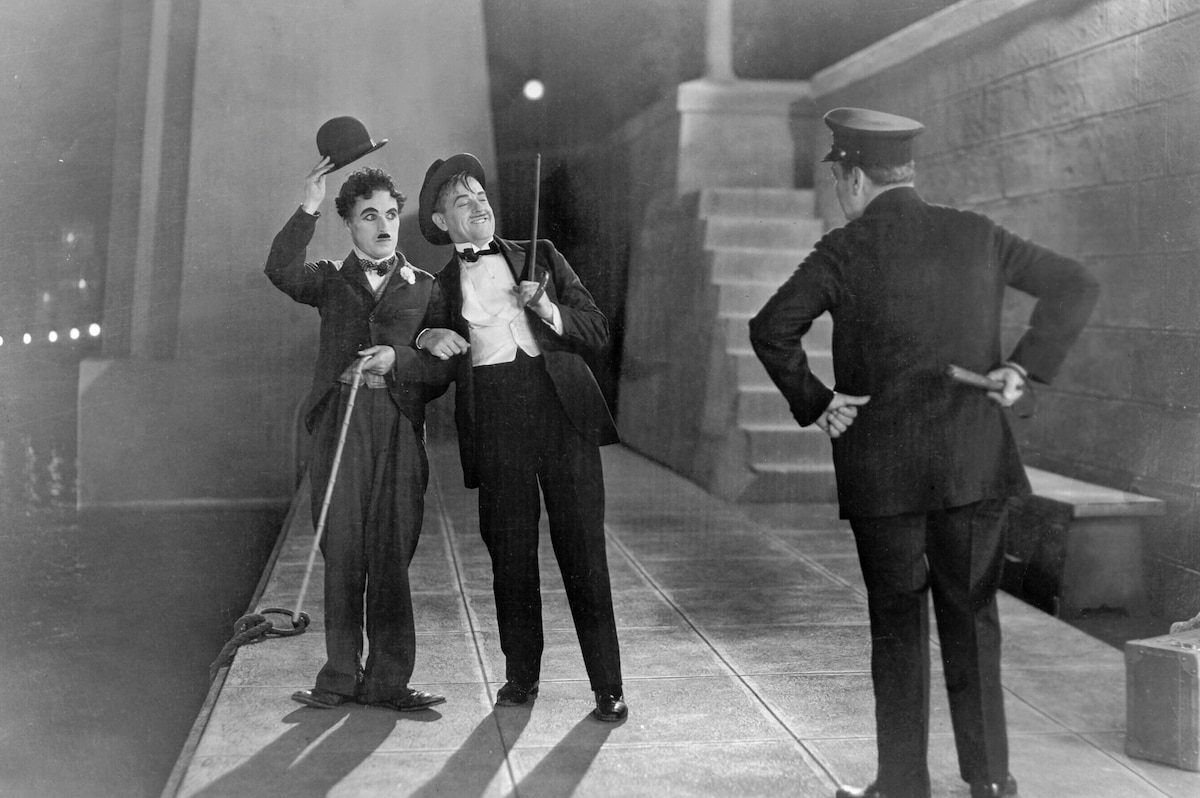
Initially Chaplin's subplot about the eccentric millionaire who befriends The Tramp
was based on an old story idea he had in which two rich members of a gentlemen's club conduct an experiment with a tramp. The rich men pick up the tramp when he is sleeping, lavish him with luxurious treatment, and then promptly return him to the street where they found him. Although this idea was abandoned for City Lights, it later became the basic concept for the 1983 comedy Trading Places. It is not known whether this was a coincidence or an intentional homage by the screenwriters.
Home movie footage shot on the set by Ralph Barton, one of Chaplin's friends, can be glimpsed in the 1983 documentary, The Unknown Chaplin.
by Andrea Passafiume
Pop Culture 101 - City Lights
by Andrea Passafiume | January 27, 2011
SIGN UP FOR OUR NEWSLETTERS

CONNECT WITH TCM