Four months after the Japanese attack on Pearl Harbor, which brought the U.S. into World War II, the Army Air Force launched a series of retaliatory strikes against Yokohama and Tokyo. The bombing raids served primarily as a morale boosting maneuver at home and an attack on Japan's confidence. All the planes were lost, but only three men died in the crashes, and the Japanese executed another three. Aside from eight others held prisoner by the Japanese, the rest of the men escaped through China or were interned in the Soviet Union. One of the pilots who flew in the raids, Captain Ted. W. Lawson, joined forces with newspaper columnist Bob Considine in January 1943 to set down his personal account of the mission. They wrote Thirty Seconds Over Tokyo over four nights and two days while staying at the Mayflower Hotel in Washington, D.C, and the book was out before the year's end. It originally appeared as a serial in Collier's Magazine.
Like most Hollywood studios during the war years, MGM was doing its part by making films about the major campaigns. In the days when movie attendance was at an all-time high, such films served the function television would in later years in giving viewers on the home front a sense of what was going on overseas. Through friends in Los Angeles, Lawson got in touch with producer Sam Zimbalist and worked out a deal to sell the film rights to MGM for $100,000.
MGM notified the War Department that they had three goals in making the film: to improve public morale, to dispel rumors that the Army and Navy were not working together effectively during the war and to generate support for China's part of the war effort by showing how the Chinese Army and peasants helped downed U.S. flyers escape the Japanese. The studio did not, however, mention that the Chinese helping the downed flyers were Communist guerillas.
To make the details of the raid as accurate as possible, screenwriter Dalton Trumbo interviewed Lawson and other men who had flown the mission. Wartime censorship prevented him from mentioning the name of the aircraft carrier from which they flew or the fact that one of the planes had crashed in the U.S.S.R. However, the War Department let Trumbo fly on B-25s for research. The screenwriter also incorporated a real detail into the film: Like the real-life carrier, the USS Hornet, there was a dried hornet's nest on the deck of the film's plane.
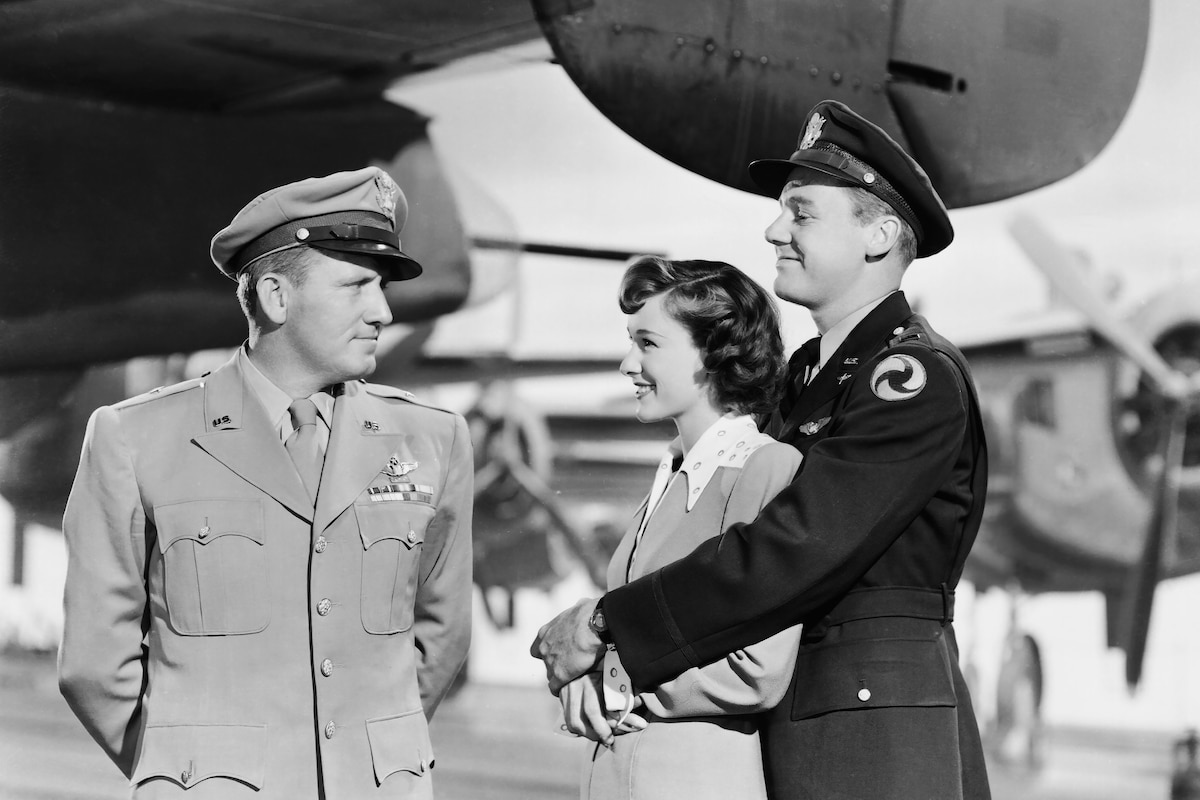
Believing that his performances as heroic wartime figures in A Guy Named Joe (1943) and The Seventh Cross (1944) were typecasting him, Spencer Tracy initially turned down the role of Lieutenant Colonel James H. Doolittle. At one point, MGM was set to cast Brian Donlevy in the role, with Doolittle's blessing. Tracy finally agreed to accept the part when his friend Van Johnson was cast in the film's lead; the senior actor wanted to help boost the young actor's career.
Robert Mitchum won his supporting role on the strength of a strong performance in the B-movie film noir When Strangers Marry (1944) and the urging of his agent, a friend of director Mervyn LeRoy's. The director tested him for 30 different roles, then told him, "You're either the lousiest actor in the world or the best. I can't make up my mind which." LeRoy tried to convince MGM to sign him to a contract and even considered signing him personally for a projected film version of The Robe. Instead, he sent Mitchum to the head of RKO Pictures, where he was hoping to make the biblical epic. That studio signed him, and one year later, Mitchum became a star in Story of G.I. Joe (1945).
by Frank Miller
SOURCES:
The Tough Guys by James Robert Parish
The Big Idea - Thirty Seconds Over Tokyo
by Frank Miller | January 22, 2011
SIGN UP FOR OUR NEWSLETTERS

CONNECT WITH TCM