Synopsis
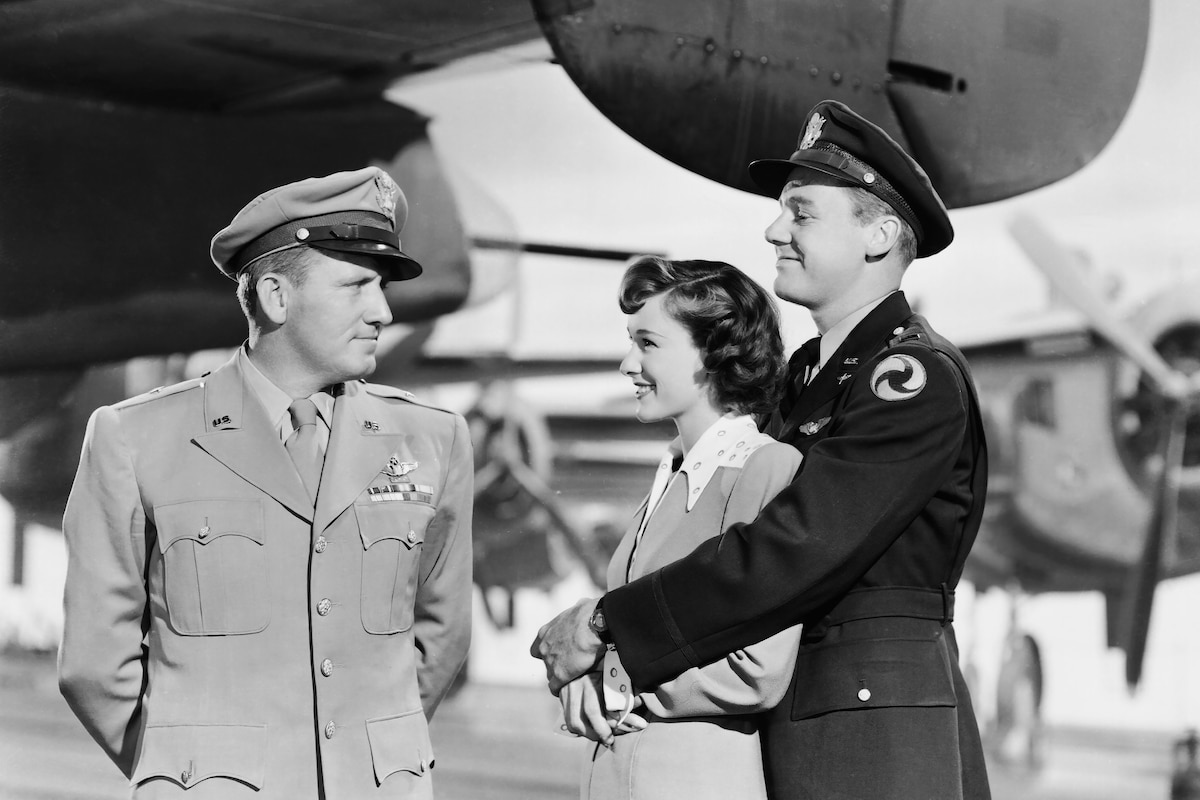
To pay the Japanese back for their sneak attack on Pearl Harbor, 16 B-25s undertake a risky takeoff from the deck of an aircraft carrier on a one-way trip to bomb Tokyo and Yokohama (this was the first time a plane this large had attempted such a takeoff). But first Ted Lawson (Van Johnson), captain of a bomber nicknamed The Ruptured Duck, and his men are put through intensive training before embarking on their perilous mission. With no fuel to return home, they set a course to crash on the Chinese mainland, behind enemy lines, in hopes that the peasants there will sneak them to safety in the North.
Director: Mervyn LeRoy
Producer: Sam Zimbalist
Screenplay: Dalton Trumbo
Based on the book by Ted W. Lawson and Robert Considine
Cinematography: Harold Rosson, Robert Surtees
Editing: Frank Sullivan
Art Direction: Cedric Gibbons, Paul Groesse
Music: Herbert Stothart
Cast: Van Johnson (Ted Lawson), Robert Walker (David Thatcher), Don DeFore (Charles McClure), Phyllis Thaxter (Ellen Lawson), Stephen McNally ('Doc' White), Robert Mitchum (Bob Gray), Scott McKay (Davey Jones), Louis Jean Heydt (Lieut. Miller), Paul Langton (Captain 'Ski' York), Leon Ames (Lieut. Jurika), Benson Fong (Young Dr. Chung), Alan Napier (Mr. Parker), Ann Shoemaker (Mrs. Parker), Selena Royle (Mrs. Reynolds), Spencer Tracy (Lieutenant Colonel James H. Doolittle), Morris Ankrum (William F. Halsey), Karin Booth (Girl in Officer's Club), Steve Brodie (MP Corporal), John Dehner (Lieutenant Commander), Blake Edwards (Lieut. Smith's Crewman), Leatrice Joy Gilbert (Girl)
BW -138 m.
Why THIRTY SECONDS OVER TOKYO is Essential
Like many Hollywood films about World War II made between 1942 and 1944, Thirty Seconds Over Tokyo was based on an actual wartime campaign, Lieutenant Colonel James H. Doolittle's 1942 bombing raid on Japan; it gave audiences back home a sense of how the war was going. Many critics have credited the film with playing a major role in bringing home the realities of World War II to domestic audiences.
Contemporary reviewers hailed Thirty Seconds Over Tokyo as the finest aviation film made during World War II.
In a long career including such classics as I Am a Fugitive from a Chain Gang (1932), Gold Diggers of 1933 (1933) and Random Harvest (1942), Mervyn LeRoy's simple, straightforward work on Thirty Seconds Over Tokyo is considered his best direction.
Dalton Trumbo's screenplay is considered the best of his work before he was blacklisted in 1947.
Thirty Seconds Over Tokyo brought Van Johnson his first starring role in an A picture, after getting a career build-up in supporting roles and low-budget films. It also marked the screen debuts of Phyllis Thaxter, cast as his wife, and the last minor supporting role for Robert Mitchum, then a freelance actor; he would graduate to leading men roles in his next feature, Nevada (1944).
by Frank Miller
The Essentials - Thirty Seconds Over Tokyo
by Frank Miller | January 22, 2011
SIGN UP FOR OUR NEWSLETTERS

CONNECT WITH TCM