Tom Courtenay became a star with The Loneliness of the Long Distance Runner and his next, Billy Liar (1963), but in the years since, he has chosen to work primarily on stage. In fact, he once stated he really didn't care much for film acting: "The film business is absurd. Stars don't last very long. It's much more interesting to be a proper actor." His 1960 professional debut at the Old Vic in Chekhov's The Seagull drew immediate attention, followed by Shakespearian roles. He then took over for Albert Finney in the lead of Billy Liar. The Loneliness of the Long Distance Runner was his film debut. Courtenay, Finney, and Alan Bates became the leading stars of the "kitchen sink" dramas of the early 60s, although these days Courtney won't discuss the period in much depth. Among his most notable films are Doctor Zhivago (1965), which earned him a Best Supporting Actor Academy Award nomination, and The Dresser (1983), in which he co-starred with Finney. Both actors received Best Actor Oscar® nominations for that film. Courtenay was knighted in 2001.
"When I saw The Runner I was surprised just how sloppy and modern it looked." - Tom Courtenay, 1962
About a month before the film was released, Tony Richardson married Vanessa Redgrave, daughter of actor Michael, who stars in this movie as the borstal governor. The marriage produced two daughters, actresses Joely and Natasha Richardson. Richardson and Redgrave were divorced in 1967 over his involvement with French actress Jeanne Moreau. He died in 1991 from AIDS complications. His daughter Natasha, who was once married to producer Robert Fox, brother of James Fox, a cast member in this movie, died of injuries sustained in a ski accident in 2009.
Michael Redgrave was knighted in 1959 in recognition of his distinguished career on stage and film. Among the most notable works in his 40-year film career were his Academy Award-nominated role in Mourning Becomes Electra (1947), which won him the National Board of Review Best Actor prize; his Cannes Festival Best Actor role in The Browning Version (1951); Alfred Hitchcock's The Lady Vanishes (1938); the thriller Dead of Night (1945), in which he played a ventriloquist taken over by his dummy; and the title character in Uncle Vanya (1963). He was married to actress Rachel Kempson from 1935 until his death in 1985, and their three children Vanessa, Lynn, and Corin all became actors.
German-born Walter Lassally is one of the most prominent cinematographers in the British film industry. He began his career in the early 1950s, and he gained international attention with his work on The Loneliness of the Long Distance Runner and two other Tony Richardson movies, A Taste of Honey (1961) and Tom Jones (1963). He won an Academy Award for his work on Zorba the Greek (1964).
This was not, as is sometimes stated, the film debut of James Fox, although it is the first time he was credited under this name instead of his birth name, William Fox. His first picture was The Miniver Story (1950) with Greer Garson, when he was 11 years old. He became an important young star of the 1960s: The Servant (1963), The Chase (1966), Thoroughly Modern Millie (1967), Isadora (1968). After co-starring with Mick Jagger in Performance (1970), a cult hit since its release, Fox left pictures, reportedly suffering from a nervous breakdown. Some have credited it to his drug use during production of that picture, but Fox later said, "My mind was blown long before that." He did note, however, that Performance marked a turning point for him, giving him doubts about his way of life, which was "completely involved in the more bawdy side of the film business." He quit acting for nine years and joined a Christian missionary group. Since returning to the screen, he has had notable roles in A Passage to India (1984), The Remains of the Day (1993), as Mr. Salt in Charlie and the Chocolate Factory (2005), and Sherlock Holmes (2009). His brother is actor Edward Fox.
Alec McCowen, who plays Brown, the young House Master who tries to reach Colin through psychology, has been in more than 30 films and dozens of television shows. A classically trained actor, he was in Kenneth Branagh's Henry V (1989), played the chief inspector in Alfred Hitchcock's Frenzy (1972), co-starred with Maggie Smith in Travels with My Aunt (1972), and appeared in the Martin Scorsese films The Age of Innocence (1993) and Gangs of New York (2002).
Topsy Jane, who played Colin's girlfriend Audrey, was poised on the brink of stardom after The Loneliness of the Long Distance Runner. She was slated to appear in two John Schlesinger pictures. She could not do the first, A Kind of Loving (1962), with Alan Bates, because she became pregnant. She then suffered a nervous breakdown, either during or shortly before production on Billy Liar, which also starred Tom Courtenay. The part was given to Julie Christie, who followed it up with roles that catapulted her to international stardom in Doctor Zhivago and her Oscar®-winning Darling (1965), also directed by Schlesinger. Topsy Jane appeared a few more times on television before disappearing from screens big and small in the late 60s. In 2002, a Daily Mail reader replied to a query about the actress's whereabouts with an anecdote about running into her in a cafe in Cornwall, where few people believed her story about having appeared in The Loneliness of the Long Distance Runner.
The Loneliness of the Long Distance Runner opened in London in September 1962 and a month later in New York.
The film was reissued as part of the British New Wave season at London's Barbican Centre on October 11, 2002, along with A Taste of Honey, directed by Richardson, and Saturday Night and Sunday Morning (1960), which he produced.
Memorable Quotes from THE LONELINESS OF THE LONG DISTANCE RUNNER
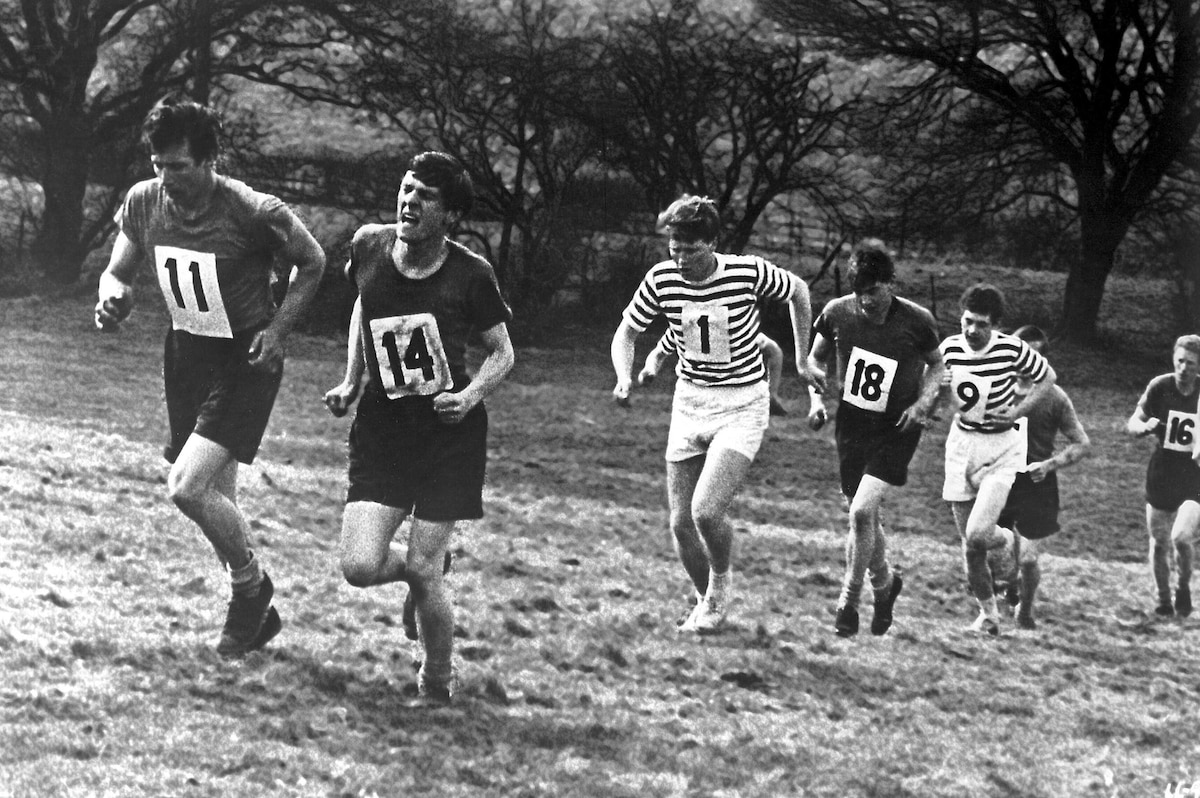
COLIN (Tom Courtenay): Running's always been a big thing in our family, especially running away from the police. It's hard to understand. All I know is you've got to run, run without knowing why through fields and woods, and the winning post's no end, even though barmy crowds might be cheering themselves daft. That's what the loneliness of the long distance runner feels like.
GOVERNOR (Michael Redgrave): You are here for us to try to make something of you, to turn you into industrious and honest citizens. ... We want you to work hard and play hard--good athletics, sports, inter-house competition. We believe in all that.
COLIN: You know what I'd do if I had the whip hand? I'd get all the coppers, governors, posh whores, army officers and members of parliament and I'd stick them up against this wall and let them have it 'cause that's what they'd like to do to blokes like us.
BROWN (Alec McCowen): Now when you broke into this, um, what was it?
COLIN: Bakery
BROWN: Bakery, yup. What were you thinking about at the time?
COLIN: I wasn't thinking about anything, I was too busy breaking in.
BORSTAL BOY: If he thinks he can make you win that cup, he'll make you his favorite.
COLIN: I'm nobody's favorite.
BOY: If I could run as fast as you, I'd be out of this place.
COLIN: What's the point of scarpering? The best thing to do is be cunning and stay where you are. You see, I'm gonna let them think they've got me house trained, but they never will, the bastards. To get me beat, they'll have to stick a rope around my neck.
BROWN: How do we tackle the basic aggression which these lads obviously feel?
GOVERNOR: By channeling it in the right direction.
BROWN: I was just wondering whether life wasn't a little more complicated than a football match.
TORY POLITICIAN (Robert Percival): I believe our young people have never been infected by the disease of continental existentialism. Unlike the Americans, our cousins in affluence, we have shown ourselves strong in the face of the virus of the state.
GOVERNOR: The Olympics. I still think that's one of the best ideas that civilization ever had.
Compiled by Rob Nixon
Trivia - The Loneliness of the Long Distance Runner - Trivia & Fun Facts About THE LONELINESS OF THE LONG DISTANCE RUNNER
by Rob Nixon | January 21, 2011
SIGN UP FOR OUR NEWSLETTERS

CONNECT WITH TCM