The term Neorealism was first used in Italy in reference to literature and studio arts. It was first applied to film by Mario Serandrei, the editor of Luchino Visconti's 1943 Ossessione. After the war, it came to be applied to all realistic Italian films depicting life during and after World War II. It was characterized by social criticism, the use of real locations and casting non-actors or actors directed to act as naturally as possible.
Director Vittorio De Sica had begun his association with writer Cesare Zavattini on 1944's The Children Are Watching Us, followed by Shoeshine (1946). The Bicycle Thief was their third film. In all, they would collaborate 22 times, including De Sica's two competitive Oscar®-winners for Best Foreign Language Film, Yesterday, Today and Tomorrow (1963) and The Garden of the Finzi-Continis (1970).
Zavattini brought Luigi Bartolini's novel to De Sica with the suggestion they could turn it into a good movie. This required major changes to the original, whose protagonist is an artist who hates the poor and hunts for his stolen bicycle on a second one he had in reserve. Working with a large team of writers, De Sica and Zavattini transformed it into the story of an unemployed working man who loses his first job in years because of the theft.
To research the script's background, De Sica and Zavattini visited both a psychic's apartment and a brothel.
Independent U.S. producer David O. Selznick offered to back The Bicycle Thief if De Sica would cast Cary Grant in the lead. The director turned him down.
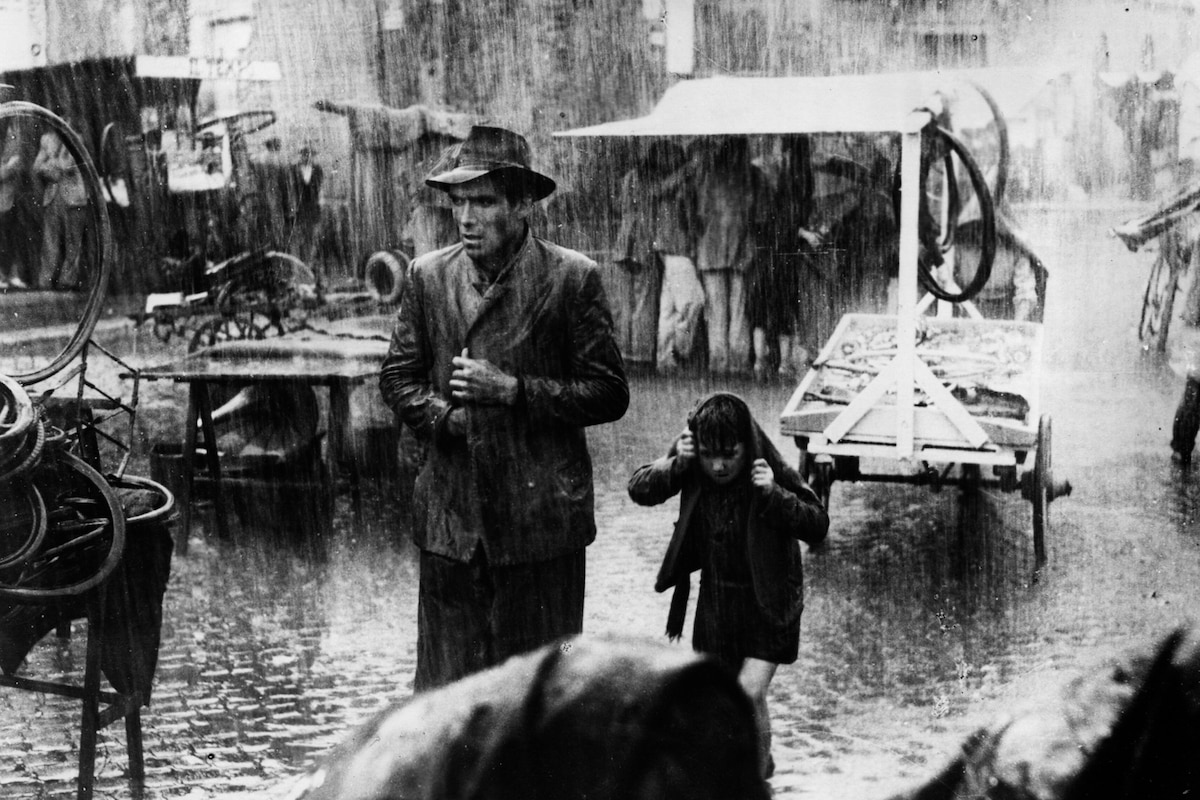
Fearing that trained actors would be unable to truly convey the reality of the poor, working class characters, De Sica filled the cast with non-actors he thought he could mold. Leading man Lamberto Maggiorani was a 39-year-old steelworker who accompanied his son to the auditions, hoping the child would land a role. Lianella Carell, a journalist who had tried to interview the director, played Antonio's wife. The only exception was Vittorio Antonucci, a professional actor cast as the thief.
De Sica's biggest casting challenge was the role of Bruno, Antonio's son. He went into production with the role uncast, then discovered Enzo Staiola when he showed up to watch the location shooting.
De Sica chose his nonprofessional cast based on mannerisms he observed that he thought would best fit what the characters were experiencing in the film.
by Frank Miller
The Big Idea - The Bicycle Thief
by Frank Miller | January 21, 2011
SIGN UP FOR OUR NEWSLETTERS

CONNECT WITH TCM