The inspiration for Miracle on 34th Street came when writer Valentine Davies was standing in line at a big department store during the Christmas season. The realization that Christmas was becoming more commercialized sparked the first broad strokes of the story that would eventually become Miracle on 34th Street.
Davies took his story idea to writer/director George Seaton who in turn hammered out a solid screenplay from it that he titled The Big Heart. The story about a disillusioned woman, her skeptical daughter and a mysterious man who believes he is the real Santa Claus was about love, Christmas spirit, generosity, and the magic of believing "when common sense tells you not to."
20th Century Fox Studios loved the script and decided to move forward with production on it. There was only one potential problem, however, and it was a big one. Macy's department store and its real-life rival Gimbels figured prominently in the story, and the script used the stores' real names. In order to get away with it, Macy's and Gimbels would both have to eventually grant their approval. 20th Century Fox made Macy's and Gimbels aware that the film was going into production, but representatives from neither store would be allowed to see anything until it was completed. It was a big risk on Fox's part to make the film without either store signing off on it ahead of time. A rejection from them--especially Macy's--would mean major re-structuring of the film once it was already done. However, Fox had faith that the stores would ultimately be pleased with how they were represented and decided to move forward with optimism.
Meanwhile, in October of 1946 actress Maureen O'Hara had just arrived in her homeland of Ireland to visit family members she hadn't seen in seven years. O'Hara, who had dual citizenship in both the United States and Ireland, had been prevented from traveling there because of World War II, and she was elated to finally be back for the first time in so long.
When O'Hara received word from her home studio of 20th Century Fox just a few days into her trip that she was to report back to the U.S. immediately to begin work on a new film, she was furious. "After waiting seven years, my reunion had been cut short by the studio," said O'Hara in her 2004 autobiography 'Tis Herself. "I was heartbroken, furious and reduced to tears. I almost refused to go back, but knew I had no choice. I was madder than a wet hen the whole flight back. 'How dare they,' I fumed. 'How dare they force me back just to make a silly little movie about Santa Claus!'"
When O'Hara was back on American soil and finally had a chance to read the script, however, her whole attitude changed. "I knew the movie was going to be a hit...It was warm, charming, and sentimental, but more than anything, it captured the spirit of Christmas."
O'Hara discovered that the reason Fox had called her back from Ireland so urgently was because the studio wanted to move quickly on the production. The story opened with the Macy's Thanksgiving Day Parade, an annual New York City tradition since 1926, and writer/director George Seaton wanted to capture real shots from the upcoming 1946 parade with his actors in the middle of the action. The parade was coming up in a matter of weeks, and the studio had to prepare quickly. Macy's had granted them permission to film the parade, with the one caveat being that the parade could not be stopped to accommodate the filming.
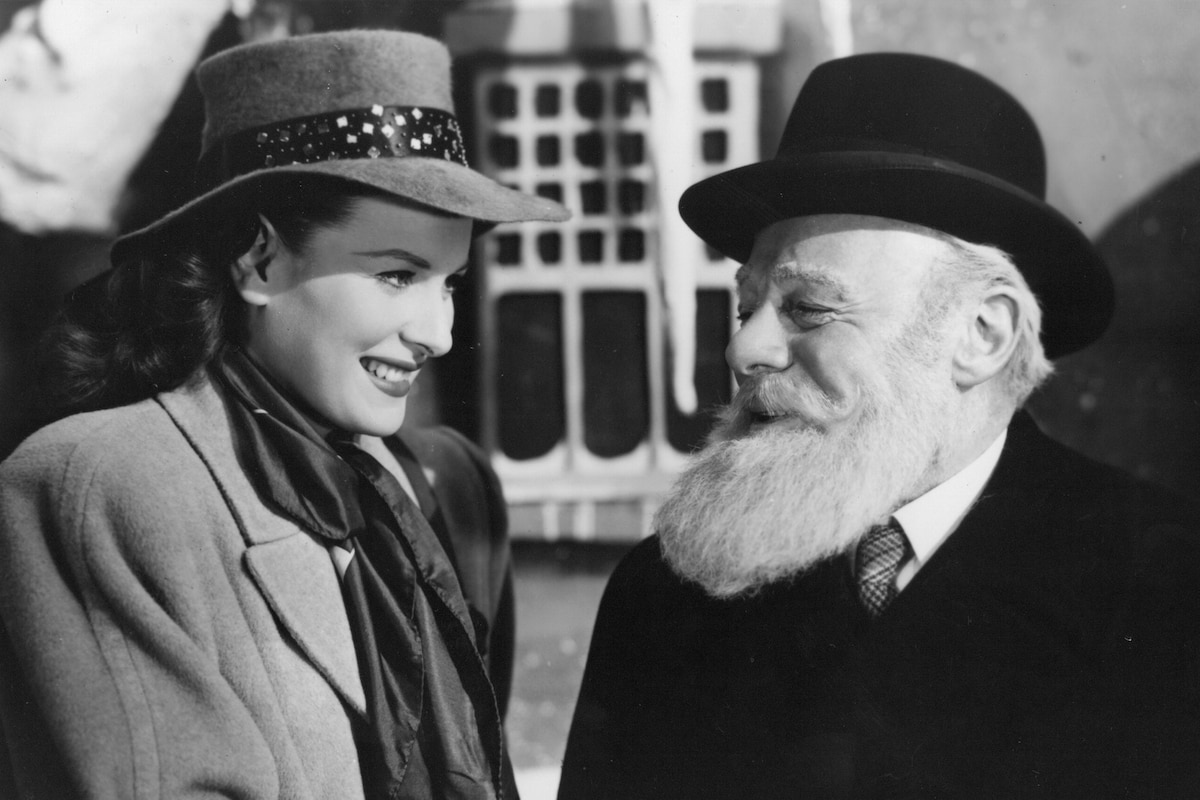
With shooting set to begin in November on The Big Heart, the rest of the cast was quickly assembled. John Payne was hired to play O'Hara's love interest, aspiring lawyer Fred Gailey. It would be the third film in which O'Hara and Payne co-starred. To play O'Hara's daughter, the studio chose young up-and-coming child actress Natalie Wood whom O'Hara called "a remarkably endearing eight-year-old." British character actor Edmund Gwenn would portray the film's central character, the is-he-or-isn't-he Santa Claus, Kris Kringle. While the cast and production team knew that the film they were about to make would be good, no one had any idea they were about to become part of a timeless holiday classic.
by Andrea Passafiume
The Big Idea - Miracle on 34th Street
by Andrea Passafiume | January 18, 2011
SIGN UP FOR OUR NEWSLETTERS

CONNECT WITH TCM