SYNOPSIS
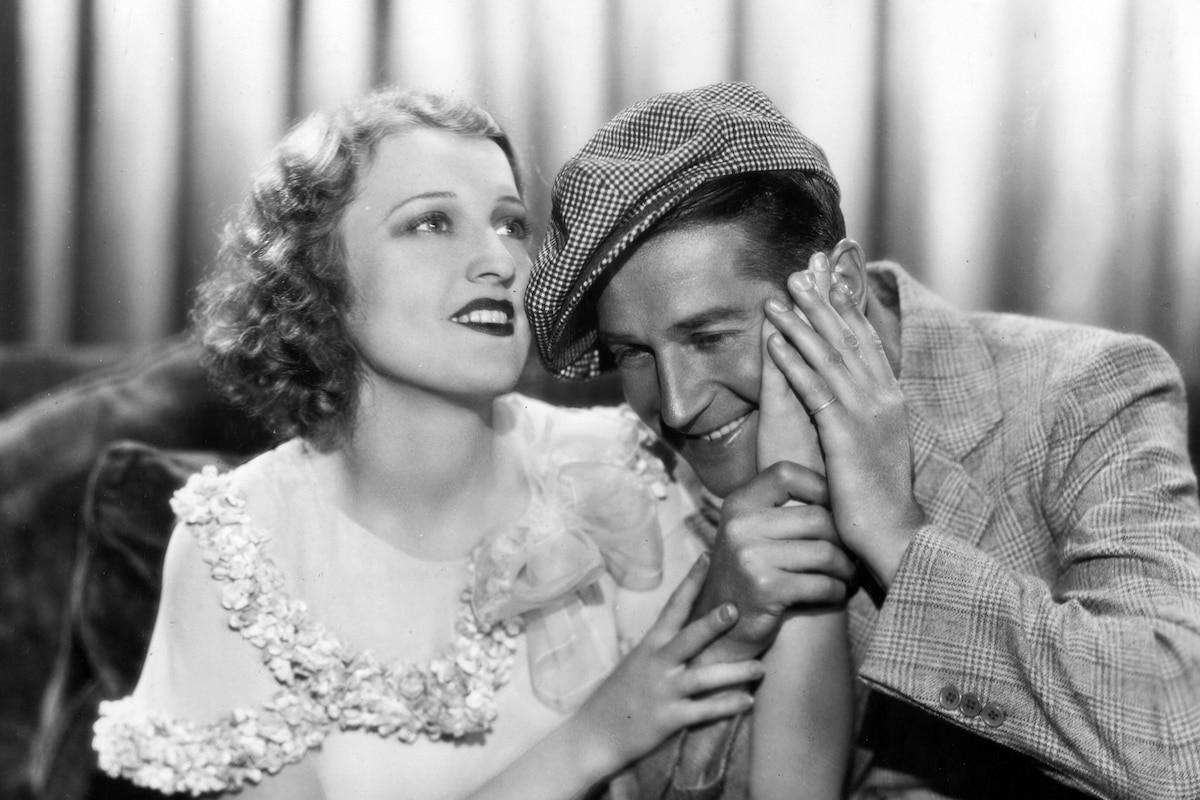
Masquerading as royalty leads to a romantic encounter between a tailor, Maurice 'Baron' Courtelin and Princess
Jeanette in France. Tired of extending credit to Viscount Gilbert de Varéze, a womanizing aristocrat, Courtelin
pursues him to a remote chateau, where he's mistaken for one of the man's friends. Desperate not to have his
philandering and bad debts exposed, the viscount begs the baron to go along with the charade, which he's only too
happy to do once he falls in love with the Princess.
Producer-Director: Rouben Mamoulian
Screenplay: Samuel Hoffenstein, Waldemar Young, George Marion, Jr.
Based on the play Tailor in the Chateau by Leopold Marchand and Paul Armont
Cinematography: Victor Milner
Editing: William Shea
Art Direction: Hans Dreier
Music: Nathaniel Finston, Richard Rodgers
Cast: Maurice Chevalier (Maurice Courtelin), Jeanette MacDonald (Princess Jeanette), Charlie Ruggles (Viscount
Gilbert de Vereze), Charles Butterworth (Count de Savignac), Myrna Loy (Countess Valentine), C. Aubrey Smith (The
Duke), Elizabeth Patterson, Ethel Griffies, Blanche Frederici (Aunts), George "Gabby" Hayes (Grocer), Mary Doran
(Madame Dupont), Cecil Cunningham (Laundress).
BW-104 m.
Why LOVE ME TONIGHT is Essential
Critics and industry members like director Vincente Minnelli and composer Kurt Weill have hailed Love Me
Tonight as the perfect screen musical because of its tight integration of music and story.
Love Me Tonight is considered the screen's first integrated musical, in which script and musical numbers
are so closely related that every number serves a dramatic purpose. As such, it was actually the precursor to the
stage's first integrated musical, Oklahoma!, by a decade. Among the film's innovation were the use of
rhyming dialogue and blank verse to connect songs and the use of song to define character and bridge scenes. One
number in particular, "Isn't It Romantic," is carried through a variety of locales as different characters hear it
and pick it up, starting with leading man Maurice Chevalier and ultimately ending up being sung by Jeanette
MacDonald, who will become his love interest later in the film.
This was director Rouben Mamoulian's first screen musical. He would go on to direct some of the greatest musicals
in American theatre history -- including Porgy and Bess, Oklahoma! and Lost in the Stars.
His big screen musicals included The Gay Desperado (1936), for which he won the New York Film Critics Award
for Best Director, and Silk Stockings (1957).
Composer Richard Rodgers considered Love Me Tonight his finest work in motion pictures, in a career that
included the original screen musicals Hallelujah, I'm a Bum (1933), Evergreen (1934) and State
Fair (1945).
Love Me Tonight gave Maurice Chevalier his signature song, "Mimi," by Rodgers and Lorenz Hart. Many
critics consider it his best Hollywood film.
This is one of the first films to display Myrna Loy's gift for comedy. At the time, her home studio, MGM, was
putting her into a string of roles as either colorless ingénues or villainesses, often of Asian heritage. Her
role in Love Me Tonight as a man-crazy countess not only gave her an elegant wardrobe, but the chance to
show what she could do with polished comic dialogue.
by Frank Miller
The Essentials - Love Me Tonight
by Frank Miller | January 18, 2011
SIGN UP FOR OUR NEWSLETTERS

CONNECT WITH TCM