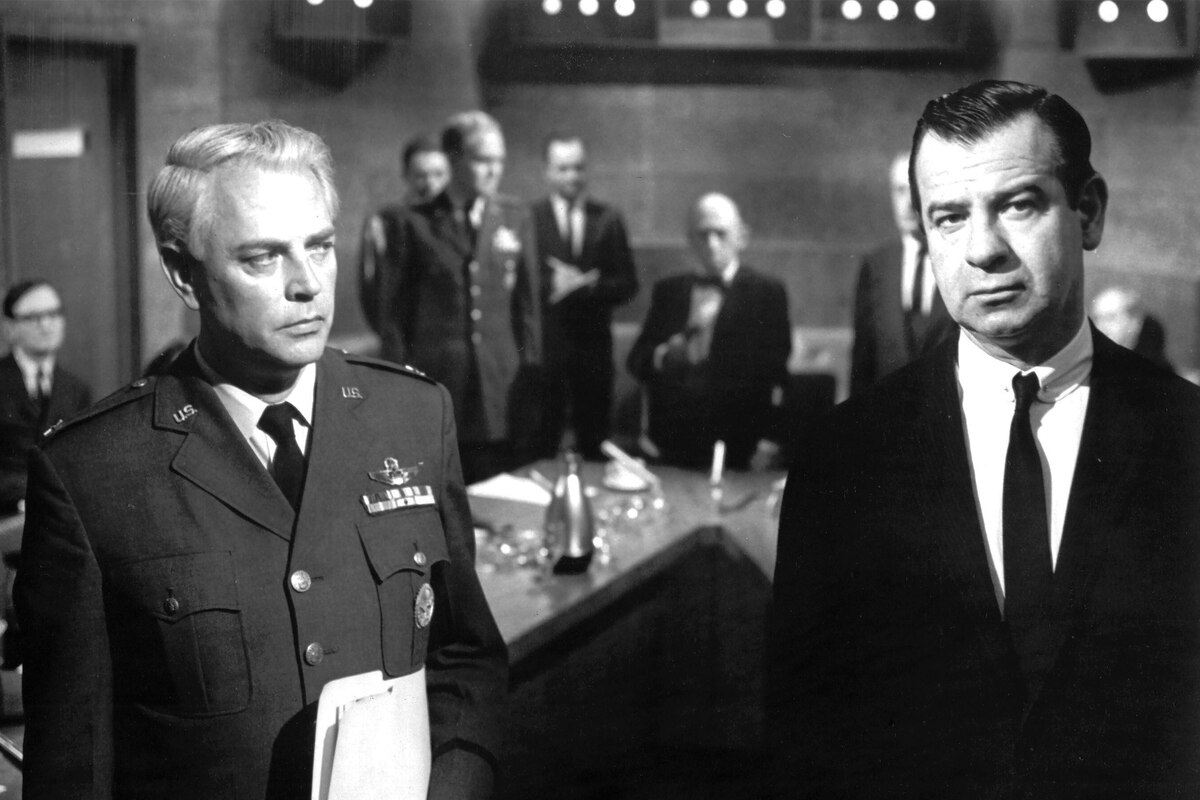
Political science scholars Eugene Burdick and Harvey Wheeler's novel Fail Safe first appeared in 1962, at about the same time as the Cuban Missile Crisis was pushing the U.S. to the brink of nuclear war. It was originally serialized in The Saturday Evening Post before coming out as a book. Their taut writing, the story's timeliness and the controversy over nuclear disarmament then raging, helped propel it to best-seller status, with more than two million copies sold.
Peter George, who had written the 1958 anti-nuclear novel Red Alert, saw so many similarities between the two books he sued for plagiarism. Although the suit was settled out of court, the earlier book would return to haunt Fail Safe as it made its way to the screen.
With the book's best-seller status and timely topic, Fail Safe seemed a natural for the movies. But any bidding war over the rights was squashed by a rumor that President Lyndon B. Johnson did not want a film made (this was not true but a falsehood that was generated by Henry Fonda, who had friends in the administration). Ultimately, Sidney Lumet and producer Max E. Youngstein secured the rights and arranged distribution through Columbia Pictures.
Stanley Kubrick, who was directing a film version of Red Alert, also for Columbia, threatened a plagiarism suit of his own. To settle the matter, Columbia agreed to release the Kubrick film, Dr. Strangelove or: How I Learned to Stop Worrying and Love the Bomb, first.
Henry Fonda had starred in Lumet's first two films, 12 Angry Men (1957) and Stage Struck (1958). In the former he had helped Lumet maintain tension in scenes largely set in a single room, which would be a challenge again when Lumet cast him as the President, who plays all of his scenes in a fallout shelter.
The Department of Defense declined to participate in Fail Safe, so shots of planes carrying the bombs had to be taken from archival footage.
by Frank Miller
The Big Idea - Fail Safe
by Frank Miller | January 18, 2011
SIGN UP FOR OUR NEWSLETTERS

CONNECT WITH TCM