The cameras rolled on Cat People in July of 1942. It was to be a briskly paced 18-day shoot that ran smoothly and stuck to its shoestring budget.
One of the ways in which Val Lewton saved money on the production was to utilize already existing sets from previous RKO films throughout Cat People. Among those he used was a Central Park Zoo set that had been used in numerous RKO pictures including Fred Astaire and Ginger Rogers musicals, and a giant, magnificent staircase built for Orson Welles' The Magnificent Ambersons (1942). One director/producer who was mentored by Lewton commented on this practice in a 1973 interview. "I learned a great secret about film producing from Val," he said. "He always told me not to spread a small budget over five or six sets - instead pick the location where most of the action will be played and make that a real showpiece. Then make do with the rest of the scenes. One elaborate set makes a film look much richer than it deserves to look. Val was a very careful man; he knew how to spend money and how to put it on the screen."
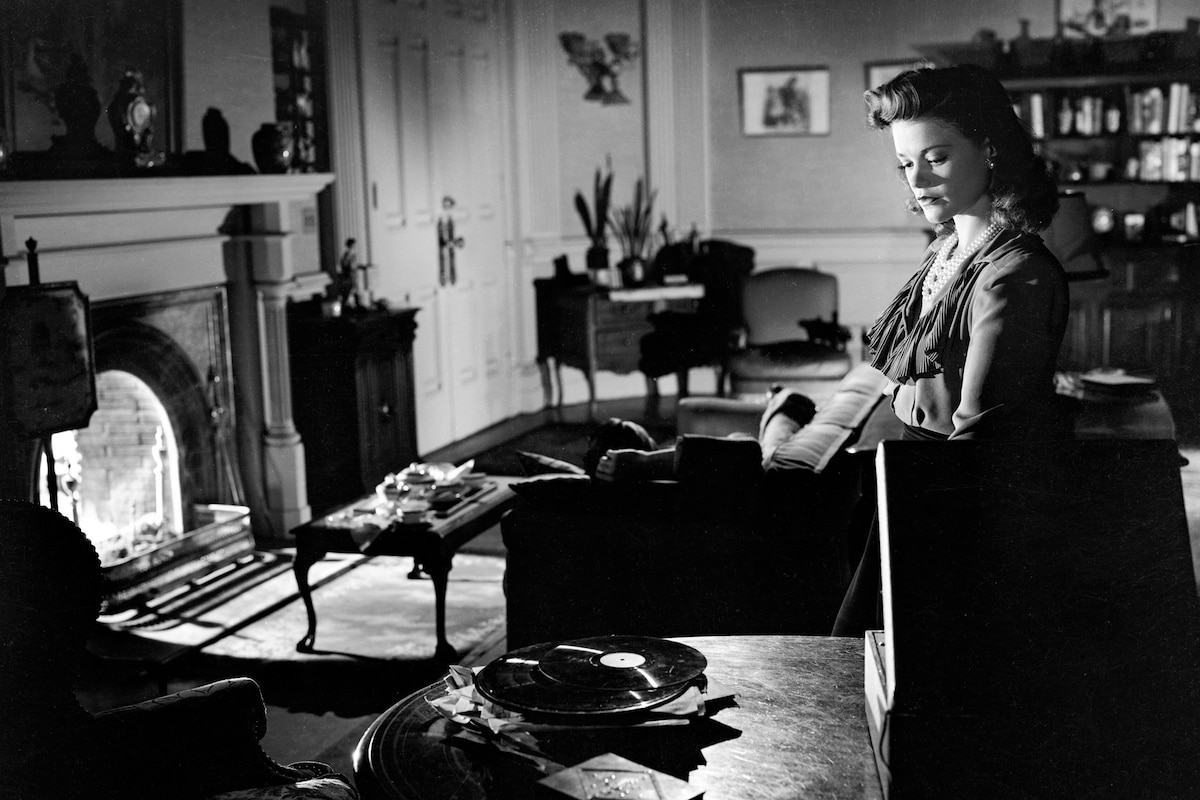
The budgetary restrictions on Cat People always forced Lewton and director Jacques Tourneur to be more creative. The presence of a murderous cat was mostly suggested through nothing more than sound effects and stylish visual shadowplay. The scenes were decorated with a number of feline-themed props in the background such as statues, paintings, tiger lilies, and a claw-footed bathtub, all of which helped to symbolically convey the constant looming threat of Irena's secret.
One of Lewton's best suggestive "tricks" that he used in Cat People was the "bus," and it became a staple in his filmmaking style. The term "bus" grew out of the scene in which Alice is stalked through Central Park by an unseen presence at night. The tense scene had Alice walking more and more quickly with the sound of clicking heels following her in the darkness. Whenever Alice stopped, the clicking stopped. There was a conscious decision on Lewton's part to have no music in the scene to help emphasize the dead silence that underscored Alice's fear. As she rushes to a lamp post, a huge bus suddenly pulls into frame with the shrieking sound of its brakes bringing it to a stop in front of her. The unexpected jolt broke the tension of the scene and would later have audiences jumping a mile out of their seats.
"To find ever new 'busses' or horror spots, is a horror expert's most difficult problem," said Lewton in a later interview. "Horror spots must be well planned and there should be no more than four or five in a picture. Most of them are caused by the fundamental fears: sudden sound, wild animals, darkness. The horror addicts will populate the darkness with more horrors than all the horror writers in Hollywood could think of."
In an interview with the Los Angeles Times Lewton expanded on this "less is more" philosophy of psychological horror: "I'll tell you a secret: if you make the screen dark enough, the mind's eye will read anything into it you want!" he said. "We're great ones for dark patches. Remember the long walk alone at night in Cat People? Most people will swear they saw a leopard move in the hedge above her - but they didn't! Optical illusion; dark patch."
Despite his best efforts, Val Lewton came very close to being fired after only three days of shooting on Cat People. Lew Ostrow, the head of RKO's B-unit, had looked at the first three days of rushes and was not happy with what he saw. Ostrow wanted Lewton out, but was ultimately overruled by RKO chief Charles Koerner who was happy with Lewton's work and wanted him to continue.
The Cat People production wrapped in August 1942, and the film ended up costing a total of $134,000. The suits at RKO were reportedly dubious about the finished film. It was too subtle and possibly not overt enough to compete with Universal's brand of horror.
by Andrea Passafiume
Behind the Camera - Cat People
by Andrea Passafiume | January 06, 2011
SIGN UP FOR OUR NEWSLETTERS

CONNECT WITH TCM