Producer-director Howard Hawks was immersed in script and casting
problems with Gunga Din (1939) when he decided he needed a change of pace
in 1937, so he started looking around for something different. He found it
when someone in RKO's story department recommended a Collier's
magazine story by Hagar Wilde called "Bringing Up Baby." The story dealt
with a couple who lose a tame panther in the wilds of Connecticut. He
picked up the rights for just $1,004.
After working with Wilde for a few weeks to flesh out the story, Hawks
realized he would need a more experienced screenwriter, so he called in
Dudley Nichols, better known for such dramatic films as The
Informer (1935), and asked him to work with her. It would be Nichols' only
real comedy.
The property was always planned as a vehicle for Katharine Hepburn. In
fact, it would be her first pure comedy. Up to that point, Hepburn had been featured
mostly in period romances, but audiences had tired of her work in those
films, so the studio was trying to resuscitate her career with more
contemporary roles. At the time RKO picked up the story, she was filming
Stage Door (1937), a contemporary backstage story, and reports from the set
indicated that the film might turn her box-office decline around. It didn't,
scoring only a small profit, but Bringing Up Baby was an attempt to
move her career further in what seemed to be the right
direction.
Nichols modeled the character of Susan Vance on the Hepburn he had seen
on the set of John Ford's Mary of Scotland, which he had written.
The director and star had forged a close friendship while working on the film,
with Hepburn's playfulness constantly tweaking Ford's more serious nature.
Some historians even think Ford was the model for Bringing Up Baby's
leading man, David Huxley.
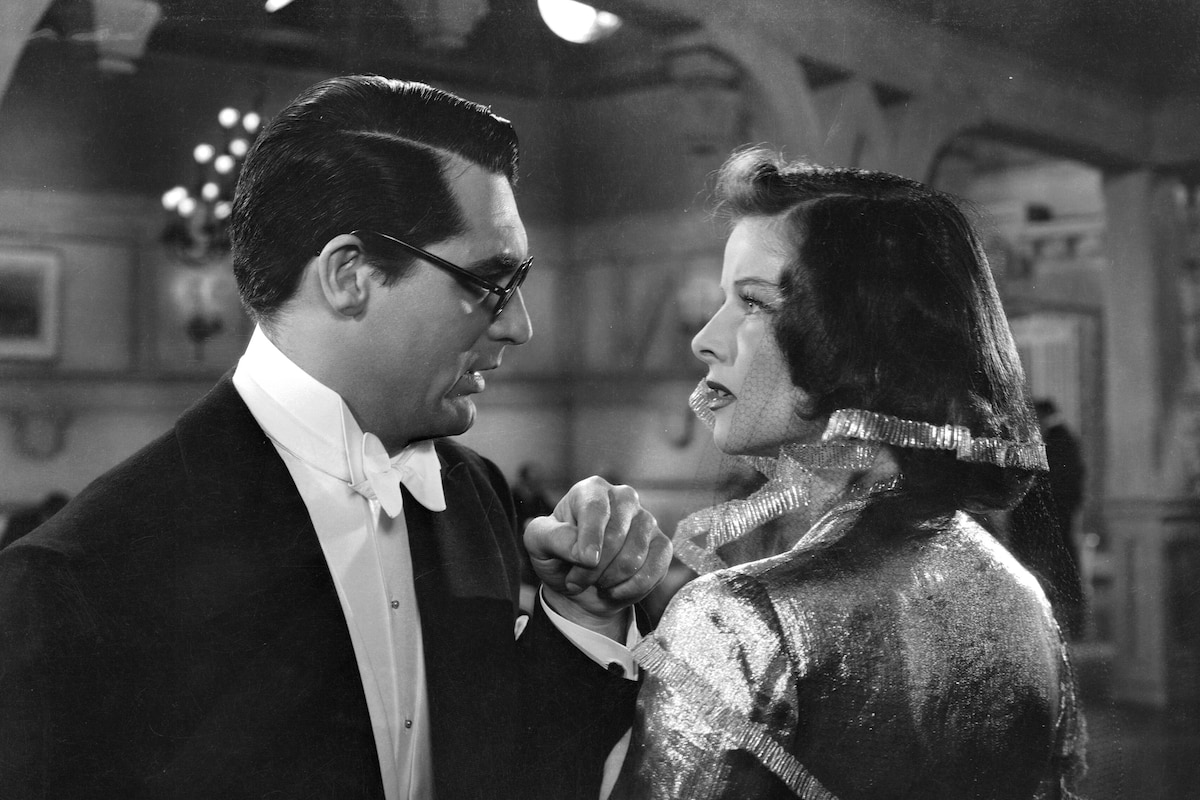
The male lead was turned down by Leslie Howard, Fredric March, Robert
Montgomery, Ronald Colman and Ray Milland before Hawks turned to Cary
Grant, who had previously worked with Hepburn in Sylvia Scarlett (1935).
Grant didn't want to do the film either, claiming that he didn't understand
the character. Hawks said, "You've seen Harold Lloyd, haven't you?" and
counseled the actor to play the role in the manner of the noted silent
screen clown as a total innocent caught up in insane events. He even had
Grant wear horn-rimmed glasses like Lloyd's.
To flesh out the cast, RKO borrowed Charles Ruggles from Paramount to
play the big game hunter and Barry Fitzgerald from Mary Pickford's
production company to play the drunken groundskeeper. Virginia Walker, who
played Grant's fiancee was the first actress to be placed under personal
contract by Hawks, who loaned her to RKO. She would end up marrying his
brother Bill.
The origin of one gag in particular was based on an actual occurrence. According to Jack Haley, Jr., who heard the story first hand from Cary Grant, "It was the scene in which Cary steps on the tail of Katharine Hepburn's dress and tears out the rear panel. He based it on a real-life happening. He went to the Roxy Theatre in New York. Sitting next to him were the head of the Metropolitan Museum and his wife. At some point he gets up to go to the men's room and returns. A little while later the woman gets up and crosses in front of him. They're right at the edge of the balcony, he starts to stand, and he sees that his fly is open. So he zips his fly shut and catches her frock in it. They had to lock step to the manager¿ office to get pliers to unzip his fly from her dress. He told Howard Hawks the story, and Hawks used it. He couldn't use the fly joke, but he used the lockstep."
by Frank Miller
The Big Idea - Bringing Up Baby
by Frank Miller | January 06, 2011
SIGN UP FOR OUR NEWSLETTERS

CONNECT WITH TCM