During the early sound era, film biographies proved to be a popular genre with audiences who enjoyed dramatic
depictions of some of the most famous historical figures in the world. And foremost among the actors who helped
popularize this trend and specialized in biopics was British actor George Arliss. Often considered the greatest
stage actor of his day by theatre critics - and by his own admission - it was inevitable that Arliss would be
recruited by Hollywood to make motion pictures. One of his earliest successes was the 1921 silent film biography
of Disraeli, based on the play by Louis N. Parker and, curiously enough, when he starred in the 1929 sound
remake of Disraeli, he won the Best Actor Oscar® (in that same Academy Award race, he ran against
himself in The Green Goddess, yet another remake of his earlier silent hit in 1923). Disraeli was
just the beginning of a long line of historical figures Arliss portrayed on the screen; Among them were
Alexander Hamilton (1931), Voltaire (1933), the Duke of Wellington in The Iron Duke (1934)
and Cardinal Richelieu (1935). But one of his most ambitious performances and one that was a personal
project for him was the dual roles of Mayer Rothschild and his son Nathan Rothschild in the 1934 biographical
portrait, The House of Rothschild.
The story of the creation and rise of Europe's most powerful banking establishment and the five brothers who
guided it to international success from their separate cities of operation in Frankfort, Paris, London, Naples
and Vienna was a fascinating topic for Depression era audiences who were curious about the rich and powerful.
Arliss found the story of the Rothschild family an irresistible screen subject as well but for different reasons;
he saw the family's struggle from their early years of abject poverty to their legacy of owning the largest
private fortune in the world as an indictment of anti-Semitism but also as an inspirational tale of perseverance
and faith.
Arliss first became interested in the project when he read George Hembert Westley's play Rothschild in
1931 and urged Warner Bros., where he was under contract, to buy it. The studio complied but did nothing with the
property and when Arliss completed his contract with Warner Bros., he signed a new contract with 20th Century
Fox, where he convinced studio mogul Darryl Zanuck to purchase Rothschild from his former studio. Although
Nunnally Johnson is credited with the screenplay for The House of Rothschild, an early draft of the script
was penned by Maude T. Howell and Sam Mintz (both uncredited) and it was this version for which Arliss provided
some additional notes and recommendations for the narrative. He suggested adding a prologue to the story in which
the Rothschild family is shown being subjected to prejudice and unjust laws in the Jewish ghetto of Frankfurt
where they are forbidden to venture out of their district and must observe daily curfews. Besides fleshing out
the character of Mayer Rothschild, who mapped out a banking strategy for his sons on his deathbed, the
screenwriters also used the character of Count Ledrantz (played by Boris Karloff) as a symbol of the anti-Semitic
hatred that created Jewish ghettos and was on the rise again in the world, especially in Germany.
Certainly anyone seeing The House of Rothschild in 1934 would have noted the film's parallels between the
persecution and restrictions that the Rothschild family had to overcome and what was happening to the Jews of
Europe as Hitler rose to power. Yet The House of Rothschild is primarily a biographical portrait of the
family with the central focus on Nathan (Arliss), whose intelligence and political cunning manages to outwit his
rivals in the world of international finance. The film may be no timeless classic; Arliss's acting style is
theatrical and unsubtle by contemporary standards, the Rothschild family is idealized for the sake of the film's
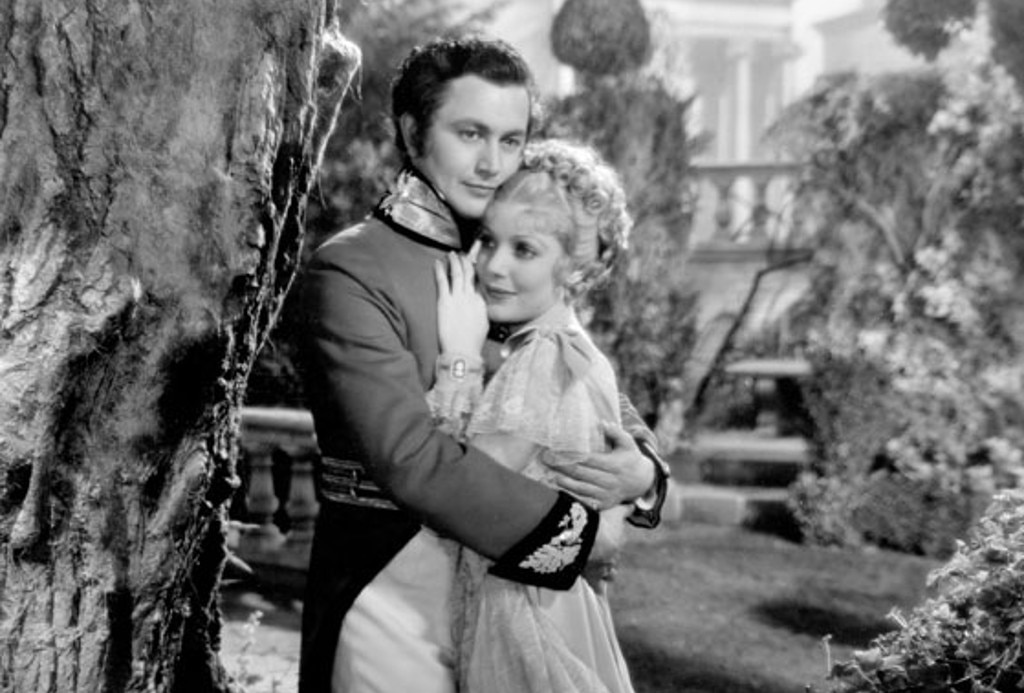
agenda and there is a romantic subplot involving the Rothschild's daughter Julie (Loretta Young) and a gentile
(Robert Young) that adds little to the story's momentum. Still, The House of Rothschild is a handsomely
mounted character study and a typical example of the sort of potentially controversial subject matter that
producer Darryl Zanuck liked to address in popular entertainments. Among his other triumphs in this area are I
Am a Fugitive on a Chain Gang (1932), made while he was still at Warner Bros., The Grapes of Wrath
(1940), The Ox-Bow Incident (1943), Gentleman's Agreement (1947), which was another film about
anti-Semitism, and Pinky (1949).
While The House of Rothschild was designed as a showcase for Arliss's talents, the film also offered
memorable supporting roles to some of Hollywood's finest supporting players such as C. Aubrey Smith as the Duke
of Wellington, Helen Westley as Gudula Rothschild, Reginald Owen as Herries, Alan Mowbray as Prince Metternich,
Florence Arliss (the wife of George Arliss) as Hannah Rothschild and Boris Karloff as Baron Ledrantz. Karloff had
already established himself as a major horror star with the boxoffice successes of I>Frankenstein (1931) and
The Mummy (1932) but he wanted to avoid typecasting and prove he was capable of other roles. The House
of Rothschild gave him the opportunity to play a villainous character without the aid of horror makeup and
suitably impressed the film's star. Arliss later stated in his autobiography, "Most of the actors I knew well; I
had either met them on the screen or played with them on the stage. The only one I had never met was the terrible
Boris Karloff - the professional bogeyman. I was therefore considerably surprised to find him one of the most
retiring and gentle gentlemen it has ever been my lot to meet."
The House of Rothschild is also notable for its final sequence, shot in three-strip Technicolor, in which
Nathan Rothschild is made a baron by the King of England after Napoleon's defeat at Waterloo. Most existing
prints of the film only present the sequence in black and white but the TCM version will feature the original
Technicolor version. According to some sources, The House of Rothschild was not banned in Germany as
expected. Instead Joseph Goebbels, the Nazi Propaganda Minister, had the film re-edited to depict the Rothschilds
in a negative light, reinforcing all of the racial stereotypes that would later make German director Veit
Harlan's Jud Suss (1940) the most notorious example of this in the cinema of propaganda.
When the film opened in theatres, most major film critics were glowing in their reviews. Mordant Hall of The
New York Times wrote, "Although the producers juggle with certain dates and here and there a name is changed,
the story runs along smoothly and swiftly, clinging substantially to facts in the major points. Where there are
embellished bits of history, it is all so well done that it makes a grand show. In fact the picture is engrossing
throughout. The dialogue is smart and often witty and the direction and staging are excellent...Not only does Mr.
Arliss's work here excel that which he has done in any other picture, but most of the other roles are acted
expertly. Boris Karloff, without any facial disguise, appears to advantage as the sinister Baron Ledrantz." And
Variety called it, "A fine picture on all counts in the acting, writing, and directing. It handles the
delicate subject of anti-semitism with tact and restraint." The film would go on to receive an Oscar nomination
for Best Picture but lost to It Happened One Night.
During the past two centuries, the Rothschild family has frequently been linked to conspiracy theories and claims
that the banking institution belongs to the Illuminati, a shadowy group that is believed to be the masterminds
behind events that will establish a New World Order. Whether there is any truth to this is debatable but
certainly a more objective and historically accurate film biography of the Rothschilds would be welcome. In the
meantime, The House of Rothschild is well worth seeing as an old-fashioned but compelling example of a big
budget studio biopic.
Producer: Darryl F. Zanuck
Director: Alfred Werker; Sidney Lanfield (uncredited)
Screenplay: Nunnally Johnson (screenplay); George Hembert Westley (play "Rothschild"); George Arliss, Maude T.
Howell, Sam Mintz (contributing writer (uncredited))
Cinematography: Peverell Marley
Art Direction: Richard Day
Music: Alfred Newman
Film Editing: Barbara McLean, Allen McNeil
Cast: George Arliss (Mayer Rothschild/Nathan Rothschild), Boris Karloff (Count Ledrantz), Loretta Young (Julie
Rothschild), Robert Young (Capt. Fitzroy), C. Aubrey Smith (Duke of Wellington), Arthur Byron (Baring), Helen
Westley (Gudula Rothschild), Reginald Owen (Herries), Florence Arliss (Hannah Rothschild), Alan Mowbray (Prince
Metternich).
BW&C-94m.
by Jeff Stafford
SOURCES:
Karloff: The Man, The Monster, The Movies by Denis Gifford (Curtis Books).
www.afi.com
IMDB
The House of Rothschild
by Jeff Stafford | December 01, 2010
SIGN UP FOR OUR NEWSLETTERS

CONNECT WITH TCM