The filming of All Quiet on the Western Front started at 11 a.m. on November 11, 1929, exactly 11 years after the end of World War I. The shoot took 17 weeks, partly because the film was shot in both sound and silent versions.
The battle scenes were shot on over 20 acres of Laguna Beach ranch land. To fill the trenches, Universal hired more than 2,000 extras, most of them World War I veterans. In a rare move for Hollywood, the battle scenes were shot in sequence.
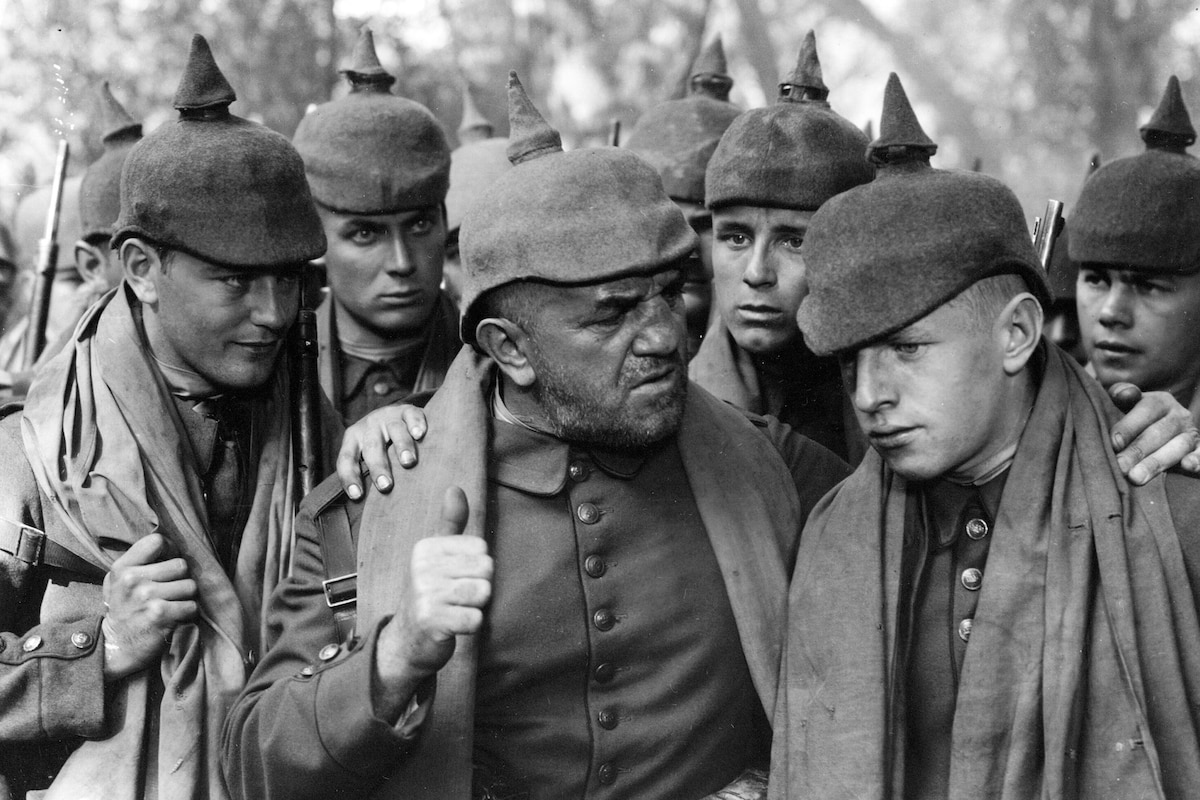
Director Lewis Milestone put out a call for German Army veterans from World War I to check the authenticity of costumes and props. So many responded he cast them as extras and hired some to play officers and drill the cast in military maneuvers. For the scene in which the Germans lay communications wire, he cast veterans who had done just that during the war.
Raymond Griffith, who plays the dying French soldier with whom Lew Ayres spends a tense night in a foxhole, had lost his voice permanently while working on stage. He eventually became a silent screen comic who some critics thought would eventually rival Charles Chaplin, but the coming of sound ended his acting career. He begged Milestone for the role, since the character's wounds made it impossible for him to speak above a whisper. It was Griffith's last role, though he continued working in the production end of the business until his death in 1957.
Ayres' death was the last scene shot. Neither Carl Laemmle, Jr. nor Lewis Milestone thought the novel's ending, in which Paul is left in despair as the war draws to a close, would work on screen. Originally, they had written an ending in which he died heroically in battle, but neither was happy with that. Production had gone so far over schedule that cinematographer Arthur Edeson had been forced to leave for another picture. His replacement, pioneering German cameraman Karl Freund, suggested the ending they filmed, in which Paul is shot by a sniper while reaching for a butterfly he sees just beyond his trench. During editing, Milestone decided he needed a close-up of Paul's hand. With the actors gone to other projects, he served as Ayres' hand double for the iconic shot.
When All Quiet on the Western Front previewed, audiences roared at ZaSu Pitts' scenes as Lew Ayres' mother. Despite her harrowing performance in Greed (1924), which had led to a brief reign as a dramatic lead, she had returned to comedy by the coming of sound and was so recognizable that the moment she turned up on screen audiences expected a funny scene. Universal withdrew all domestic prints and reshot her scenes with Beryl Mercer, though Pitts remains in European prints and the trailer for the film's silent version.
by Frank Miller
Behind the Camera - All Quiet On the Western Front
by Frank Miller | November 10, 2010
SIGN UP FOR OUR NEWSLETTERS

CONNECT WITH TCM