Yasujiro Ozu is most famous for the portraits in domestic life and social convention he directed with rigorous simplicity from the post-war years until his death in the early 1960's; his films have a unique, austere style and unassuming richness that earned him a reputation as the most "Japanese" of Japanese directors. The young Ozu, however, was a voracious film buff more interested in Hollywood movies than his own national cinema and his early films were greatly influenced by his love of American films (he was a big fan of Ernst Lubitsch and Harold Lloyd). In the burst of filmmaking after his 1927 directorial debut, he made films in almost every genre, from lighthearted college comedies and crime dramas to romantic melodramas and social dramas, averaging as many as six features a year. Directed in 1931, four years after his directorial debut, Tokyo Chorus was the prolific young director's 22nd film and he was in firm command of his art.
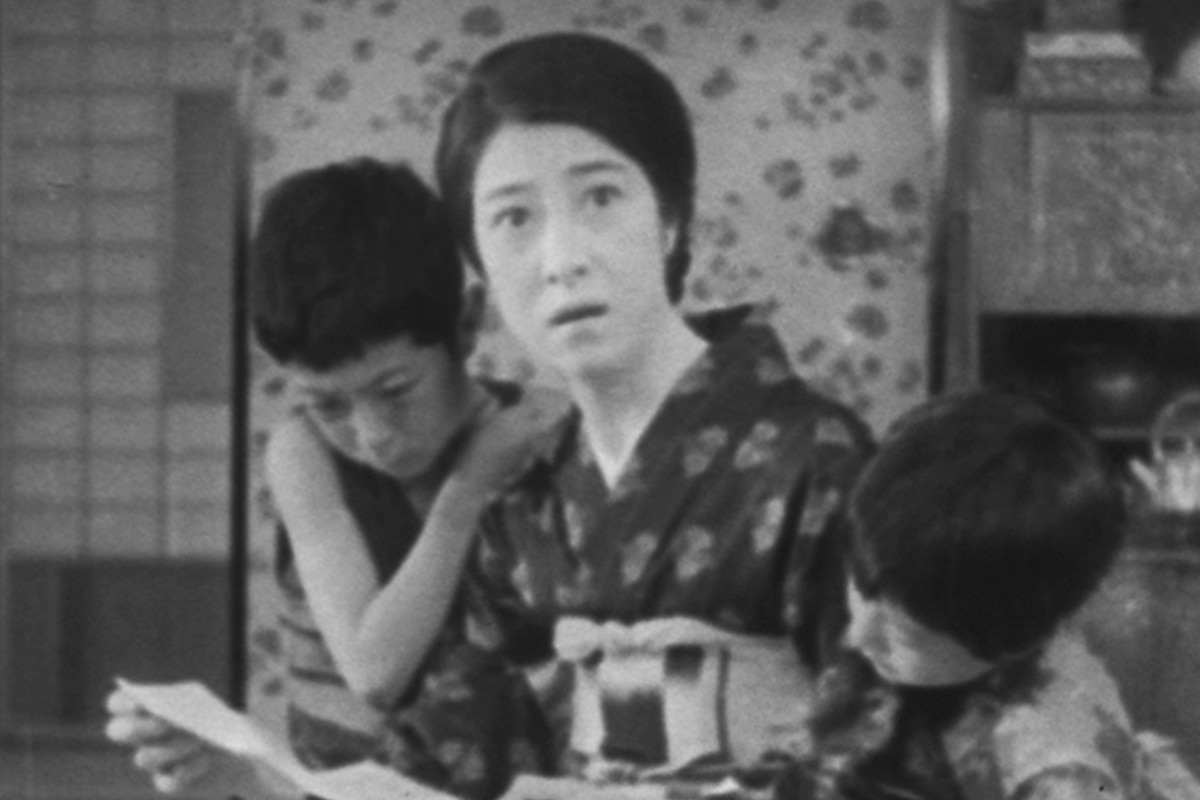
Screenwriter Kogo Noda, who went on to write many of Ozu's greatest films (including Tokyo Story, 1953, and Floating Weeds, 1959), drew many of the situations of bittersweet family comedy and drama from the stories of author Komatsu Kitamura (who received credit for "Original Idea"), but the film opens with a scene right out of Ozu's earlier college comedies. Rambunctious students goof around during an exercise period as a teacher (Tatsuo Saito, in a droopy mustache and a hangdog expression) eyes them and carefully marks out their demerits in his notepad. The good-natured horseplay segues into the future: a modern office building and a staff of white collar employees, where hapless college boy Shinji (Tokihiko Okada) is now a husband and father of three working for an insurance company; though still impulsive and young, a bad decision lands him in the ranks of the unemployed (hence the "Tokyo Chorus" of the title). As his situation becomes more desperate, he reconnects with his old teacher, Omura. Though now reduced to passing out flyers in the street like a busker, this supportive elder faces his situation with optimism and reaches out to Shinji and his family.
For all the deft sight gags and comic situations--and there are plenty (including a comic symphony around the shenanigans of salarymen trying to count their bonus money away from prying eyes)--there is also an undercurrent of anxiety running through the film as Shinji struggles to find work in Japan's depressed economy. The shadow of Japan's hard times falls over Tokyo Chorus and the characters and Ozu isn't shy about putting the depressed conditions on screen. Yet Ozu meets it with hope and humor and fills the film with tender and delicate moments in such seemingly simple scenes as a round-robin of patty-cake with the kids or group sing-song at the teacher's banquet. And in contrast to the adults, the children remain impulsive, obstinate and at times destructive when they don't get their way, especially Shinji's young son, who defiantly pokes holes through the paper walls and methodically eats the scraps in a show of indignation. The father is forced to grow up but his son remains blissfully free of such responsibilities and Ozu celebrates his stubborn willfulness and bad behavior as a last moment of innocence as well as opportunities for comedy (his hilariously ingenious ploy for stealing a pill from his younger sister is worthy of Chaplin).
Tokyo Chorus is more traditional filmmaking than his later style but it's also compassionate and affirming, funny and heartwarming without tipping into sentimental melodrama. It is also sharply observant of the everyday world that this family lives in. As film historian and Ozu scholar Donald Ritchie observed, "With this film, what Ozu called his "darker side" and what we would call his mature style began to emerge." Tokyo Chorus shows us Ozu in command of his tools, honing his style and finding his voice.
Director: Yasujirô Ozu
Screenplay: Kôgo Noda (screenplay, adaptation & story); Komatsu Kitamura (adaptation & story)
Cinematography: Hideo Shigehara
Film Editing: Hideo Shigehara
Cast: Tokihiko Okada (Shinji Okajima), Emiko Yagumo (Tsuma Sugako (His wife)), Hideo Sugawara (Sono Chounan (First Son)), Hideko Takamine (Sono Choujo (First Daughter)), Tatsuo Saito (Omura Sensei (Teacher)), Chôko Iida (Sensei no tusma (Mrs. Omura)), Takeshi Sakamoto (Rou-Shain Yamada (Old employee)), Reikô Tani (Shachou (Company President)), Kenichi Miyajima (Hisho (Secretary)), Isamu Yamaguchi (Kaisha no Douryou (An Employee).
BW-100m.
by Sean Axmaker
Tokyo Chorus
by Sean Axmaker | October 25, 2010
SIGN UP FOR OUR NEWSLETTERS

CONNECT WITH TCM