Jeanne Eagels (1957) is perhaps the least-remembered of the five movies in the Kim Novak
Collection, Sony's DVD tribute to the talented beauty. While it's an uneven film at best, it
still makes for a fascinating look at the short, tortured life of legendary stage and screen
star Jeanne Eagels, who shot to fame in the late 1910s and 1920s. Eagels acted in very few
plays and movies, but many of those who saw her claimed she was the greatest talent they had
ever witnessed.
Eagels most famously originated the role of Sadie Thompson in the 1922 production of
Rain, playing the role for four years both on Broadway and on the road. She'd had a few
film roles beforehand but made more of a real transition to the screen in 1927, opposite John
Gilbert in Man, Woman and Sin. She would appear in only two further films, however, until
her drug-related death in 1929. In 1930 she received a posthumous Academy Award nomination for
The Letter (1929).
The film Jeanne Eagels takes quite a few liberties with Eagels' life, but the general arc
of the story is true, with her strong ambition driving her to personal and professional
self-destruction. (Eagels' descendants were so angry at her depiction here that they sued the
studio over it.)
From the moment we meet Eagels in this film, at a Kansas City carnival beauty contest, she is
portrayed as driven to succeed, desperate to win. She doesn't, but she does land a job as a
"coochie" dancer and starts to develop a romance with carnival owner Sal Satori (Jeff Chandler).
Sal dreams of domestic bliss, but Jeanne is consumed with her own ambitions of getting to New
York and becoming an actress. Jeanne rockets to stardom so quickly that she is unable to handle
it psychologically, and she turns to the bottle. Meanwhile, her professional success inevitably
leads to intense conflict with Sal, and it is here where the heart of the story really
lies.
This was a favorite role of Novak's, and she certainly gives it her all. It was the first film
she was asked to truly carry alone; while co-stars Jeff Chandler and Agnes Moorehead were
certainly well-known names, it's Novak who appears in just about every single scene. By the end
of the picture she's even undergone 45 costume changes. It was a gamble for Columbia chief
Harry Cohn to give this part to Novak, but Cohn said it didn't matter -- Novak was hugely
popular, and audiences would show up regardless. They did show up, but looking at the film
today, it does seem that she may not have had quite enough experience at this point to deliver a
consistently convincing performance in such a complex and demanding role. Some scenes are
terrific, while others verge into histrionics. It's clear that she and director George Sidney
were consciously trying to embody the real-life exaggerated character that was Jeanne Eagels,
but exaggerated acting and line-readings in an otherwise straight drama are very risky because
they can come off as unintended -- as they sometimes do here. The script is also problematic;
while Eagels did indeed shoot to stardom, the film shows her appearing for her first meeting
with an uninterested drama coach (Agnes Moorehead), and then suddenly getting a Broadway role.
We don't even see her learning to act, and the transition comes off as abrupt and unrealistic.
Later, when alcoholism rears its head, it comes on too suddenly, consequently feeling almost
contrived.
The overall production, however, is superb and does much to hold one's attention. The gorgeous
black-and-white cinematography captures the highly detailed, imaginative art direction, and one
certainly believes one is in the time period shown on screen. Chandler and Moorehead give very
good performances, and there is an exceptional, brief turn from Virginia Grey as a washed-up,
aging actress desperate for a comeback. Movie buffs will also be fascinated to see real-life
director Frank Borzage playing himself, directing Jeanne Eagels in a Civil War film -- this
never actually happened but it's still fun to see.
Kim Novak was and still is a famously private, guarded star. It's easy to forget just how
popular she was in the late 1950s. She was a sex symbol but never embraced that label. Her film
performances are also richly varied, another reason her persona is as mysterious and indefinable
as her most famous character, Madeleine in Vertigo (1958).
She has emerged from her private life recently to promote this DVD collection, and she also is
present in the special supplements, taking part in some audio commentary as well as an excellent
17-minute featurette about her life and career -- though she refused to be photographed in
close-up for it. Jeanne Eagels features about 22 minutes' worth of audio commentary with
Novak and film historian Stephen Rebello, and it's a fascinating treat. She says that when she
researched the role, Eagels' films weren't available for her to see, but she was able to meet
with people who knew her, like her stand-in and secretary. She says that Chandler "was like a
brother to me," and reveals that George Sidney hired a musician who'd worked with Eagels to play
songs on set to create a proper mood. "She was an exaggerated person," Novak says of Eagels.
"She was bigger than life."
The rest of the Kim Novak Collection is reviewed here.
For more information about Jeanne Eagels, visit Sony Pictures. To order Jeanne Eagels (It is only
available as part of the Kim Novak Collection), go to
TCM Shopping.
by Jeremy Arnold
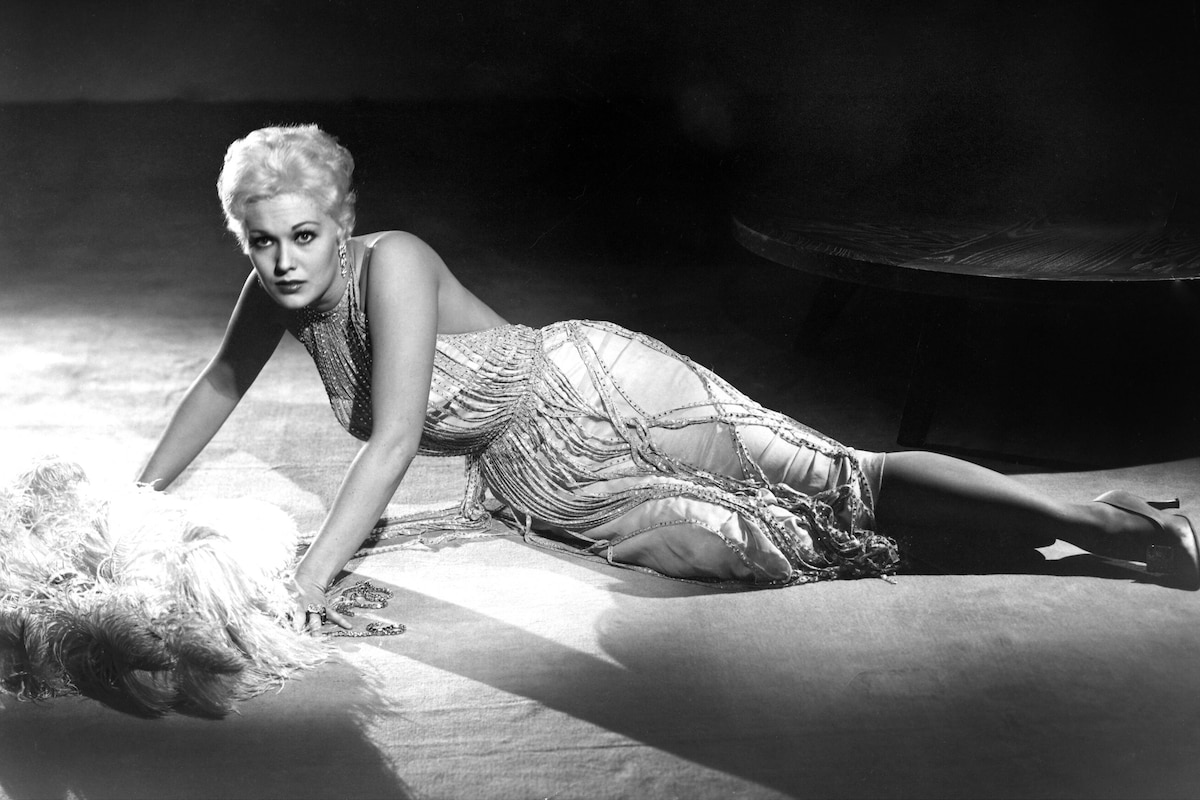
Jeanne Eagels - Kim Novak stars in the 1957 Biopic JEANNE EAGELS on DVD
by Jeremy Arnold | September 02, 2010
SIGN UP FOR OUR NEWSLETTERS

CONNECT WITH TCM