SEVEN DAYS IN MAY (1951) - September 27th
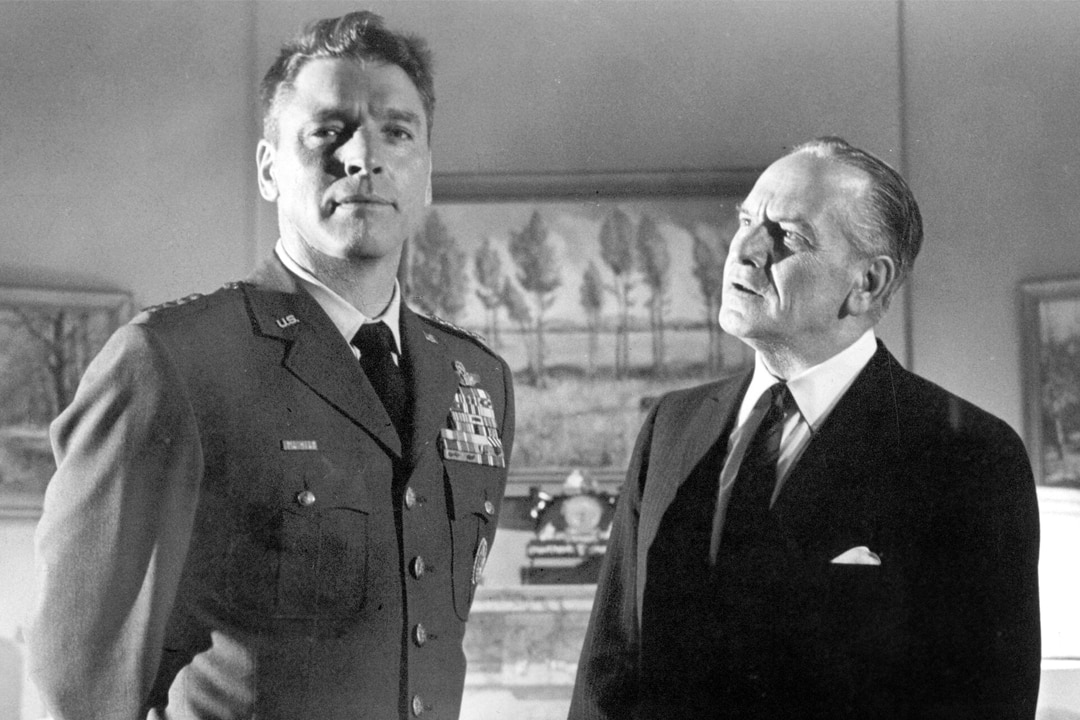
Seven Days in May seems so irrelevant today. Dishonest politicians, unscrupulous leaders and sharp divisions and distrust in Washington--how could we possibly...wait, never mind. Saboteurs aside, the inspiration of John Frankenheimer's honestly-shot black and white film rests in the fight good men wage against lawlessness and cynicism. It's the mid-1960s and the president has signed a nuclear disarmament treaty with the Soviets. But the Chairman of the Joint Chiefs of Staff--Gen. James Mattoon Scott, played by Burt Lancaster with a wisp of the evangelical superiority showed off in Elmer Gantry--thinks we're being played for suckers (to steal a line from Rod Serling's script). So Gen. Scott orchestrates a military coup to rid the country of an unpopular president--that's Fredric March.
A quick word about March. Can I vote for him? Like right now? March's President Lyman is a scene stealer--tough, smart and ethical. But not so pristine that he can't engage in some dirty pool with the fate of American Democracy at stake. Along with Henry Fonda's role as the president in Fail Safe--interestingly, also released in 1964--he may be one of the best two movie chief executives ever.
Frankenheimer's films are always thoughtful and complex, and if the coup's architect was a military man, so too would be the man who tries to stop it--Kirk Douglas, conflicted by his intense respect for Lancaster and his duty to the Constitution. And though Lancaster's Gen. Scott displays the revolting trait of loudly asserting that he loves his country more than his political enemies, his motives are honest. He does love his country, though his actions ultimately disrespect it.
Back to Serling's script--consistently clever, often funny, always foreboding. All three are on display in a scene with Douglas and Ava Gardner, so good as a needy yet self-aware Lancaster's. "I'll make you two promises," she says. "A very good steak, medium rare, and, and the truth, which is very rare."
47 years later, at least we get the truth a lot more often... never mind again.
by Ben Mankiewicz
Ben's Top Pick for September 2011 - Ben's Top Pick for September
by Ben Mankiewicz | August 26, 2010
SIGN UP FOR OUR NEWSLETTERS

CONNECT WITH TCM