In 1934, Marion Davies bid farewell to MGM after making her final picture there - Operator 13. Of course, it was really her mentor, millionaire publisher William Randolph Hearst, who chose to leave the Tiffany's of Hollywood studios, but as was always the case with her career, Davies had to go along for the ride.
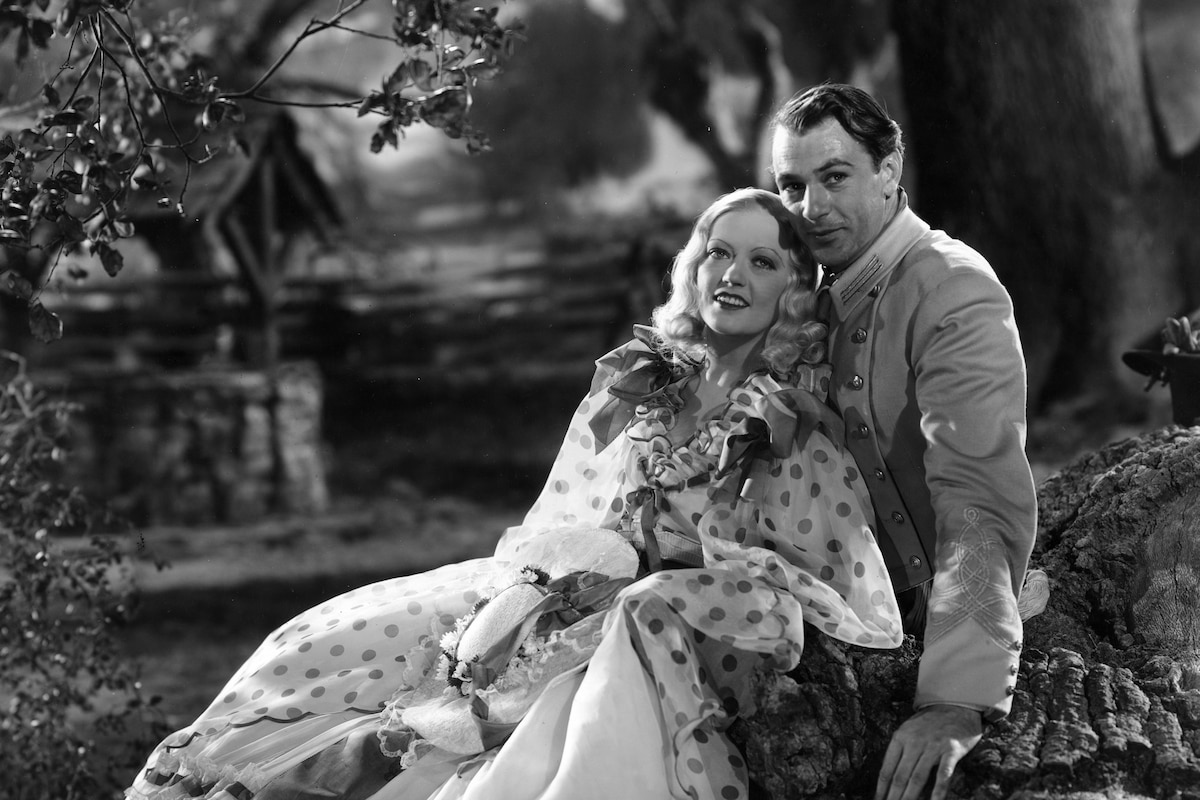
Like most of the vehicles Hearst crafted for Davies through his Cosmopolitan Pictures, an independent company housed on the MGM lot for ten years, Operator 13 was a lavish production. Although the story was relatively simple, about the romance between Union spy Davies and Confederate spy Gary Cooper during the Civil War, Hearst wanted to outdo The Birth of a Nation (1915) by creating a sweeping saga of the war between the states. His painstaking interference created turmoil on the production. Operator 13 had gone in front of the cameras with Raoul Walsh directing and Walter Wanger producing. But Hearst wasn't happy with their work and had Wanger taken off the film. He also demanded a revised screenplay, which sent Walsh packing. They were replaced by Lucien Hubbard as producer and Richard Boleslawsky, who had survived directing all three Barrymore siblings in Rasputin and the Empress two years earlier.
But even with the new production team, things moved slowly. Hearst was responsible for a large part of this, as he personally supervised every detail of the shoot. He even stepped in and directed some scenes himself when he didn't think Boleslawsky was getting them right. Yet, there was a positive side to this. An epic montage of Civil War battles that he had demanded was one of the sequences most often praised by the critics. And his attention to detail brought favorable comparisons to the work of D.W. Griffith.
Hearst wasn't the only person slowing things down. Although a gifted actress, particularly in comedy, Davies was never as interested in her film career as was her inamorata. As a result, she didn't exactly have the strongest work ethic in the world. Cooper would later describe a day on the set like this: "[Davies would] show up about ten, do two or three setups, and then retire to her dressing room for lunch, pretty wet and pretty long. After a nap, we'd do two or three more shots, then high tea, which was martinis, then Marion was off home. Helluva way to make a movie."
None of this got in the way of the growing friendship between Davies and Cooper - a relationship that would remain purely platonic. She admired his generosity on the set. He never quarreled when he knew that a scene needed to be thrown to her. But he also paid little attention to direction. She was amused to hear Cooper agree to suggestions from Boleslawsky (or "Boley" as she called him), then play the scene exactly as he had before. For his part, Cooper was amused by Davies' carefree character and appreciated the fact that she put him on the guest list for Hearst's West Coast retreat, San Simeon.
The real problems were taking place in the corporate offices. For years Hearst had been complaining that MGM management didn't take Davies seriously as an actress. They had never given her a push for the Academy Award and routinely gave the best parts to other actresses - usually production chief Irving G. Thalberg's wife, Norma Shearer. While Operator 13 was in production, Hearst was battling to win Davies the leading role of Elizabeth Barrett Browning in The Barretts of Wimpole Street, a prestige production adapted from the stage hit starring Katherine Cornell. When MGM announced that the role would go to Shearer, Hearst decided to move his production unit to Warner Bros.
Losing Hearst had its positive and negative aspects for MGM. On the downside, it meant losing preferential treatment in the papers he ran and the columns and radio broadcasts of his Hollywood gossip columnist, Louella Parsons. But his over-produced pictures had cost the studio dearly. The 20 films he made with Davies between 1925 and 1934 cost over $14 million altogether and had a combined loss of almost $1 million. Even with strong reviews, Operator 13 was simply too expensive to make a profit.
Moving to Warner Bros. did little to boost Davies' box-office performance. She made only four more films there and was clearly tired of film stardom. In fact, she had urged Hearst to let her retire when they left MGM. For his part, Hearst was suffering from declining health and needed to turn his attentions to his publishing empire, which had begun to feel the pinch of the Great Depression. Operator 13 was the last of Davies' films that he personally supervised.
Producer: Lucien Hubbard
Director: Richard Boleslawsky
Screenplay: Harvey Thew, Zelda Sears, Eve Greene
Based on the novel by Robert W. Chambers
Cinematography: George Folsey
Art Direction: Cedric Gibbons, Arnold Gillespie
Music: William Axt
Principal Cast: Marion Davies (Gail Loveless/Ann Claibourne), Gary Cooper
(Capt. Jack Gailliard), Jean Parker (Eleanor), Katherine Alexander (Pauline
Cushman), Ted Healy (Dr. Hitchcock), Douglas Dumbrille (Gen. "Jeb" Stuart),
Fuzzy Knight (Sweeney), Sidney Toler (Maj. Allen), Russell Hardie (Lt. Gus Littledale), Henry Wadsworth (Capt. John Pelham).
BW-85m.
by Frank Miller
Operator 13
by Frank Miller | July 28, 2003
SIGN UP FOR OUR NEWSLETTERS

CONNECT WITH TCM