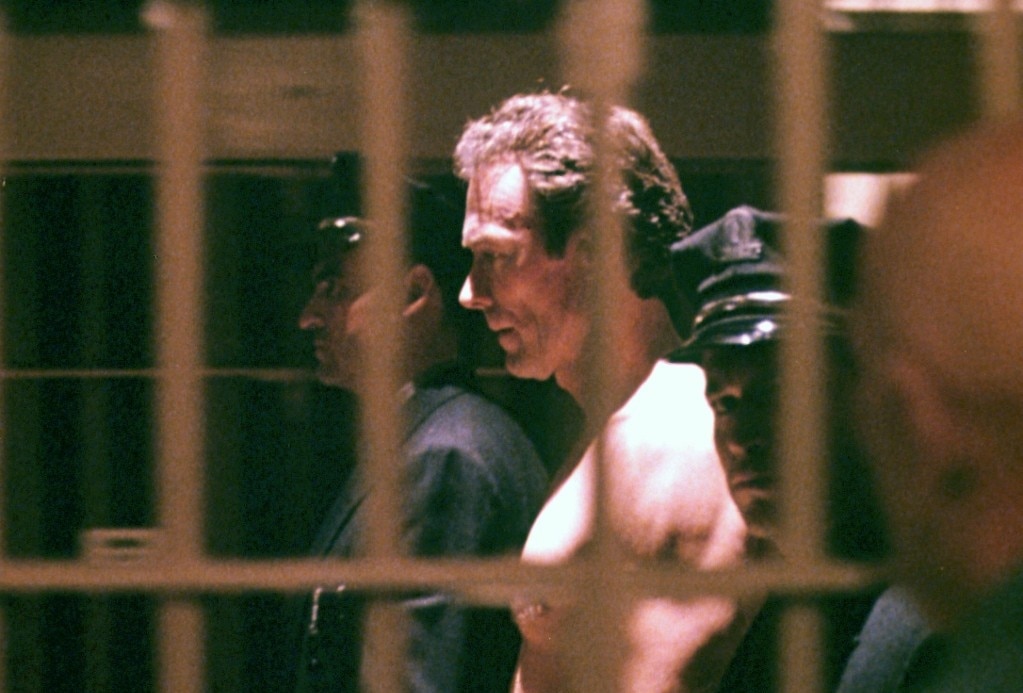
Based on the true story of an escape from the island prison fortress in San Francisco Bay, Escape from Alcatraz (1979) was the fifth and final film for the successful team of director Don Siegel and actor Clint Eastwood and a major hit. Touted as escape-proof, "The Rock" had once contained the likes of Al Capone. But the breakout by Frank Morris and the Anglin brothers in 1962 shattered that notion, and the prison was closed less than a year later. Eastwood plays Morris, who arrives in Alcatraz after breakouts from other prisons, determined that he will be the one to escape the fortress. A calculating and nervy mastermind, Morris befriends several other prisoners before enlisting the Anglin brothers in his escape plan. Using handmade tools, they chip away the walls from around the ventilation grills in their cells and finally manage to wiggle through the tiny openings to an airshaft opening on the roof of their cellblock. The three lower themselves down the outside wall and into the icy, treacherous waters of the bay, using makeshift water wings for flotation. Some of their discarded personal items are eventually found on distant Angel Island, and the smug warden (played by Patrick McGoohan, best known for being incarcerated himself in the British TV series, The Prisoner) predicts their bodies will soon be discovered. But Morris and the Anglins were never found. To this day, no one knows if they died in the water or made new lives for themselves under different identities.
Escape from Alcatraz doesn't proceed at the break-neck pace of a typical action film. Siegel had a talent for placing his characters in hostile environments they had to escape or survive. He follows the breakout plan with meticulous detail. Even when the three manage to get out of their cells, the story doesn't focus on the suspense of the chase between escapees and pursuers. In fact, the prison officials are not seen until the discovery on Angel Island, and at that point, the prisoners are never seen again in the picture. Instead, the battle is between individuals and the physical space they have to conquer. It's less about avoiding guards and more to do with heights and depths and barriers to cross. The prison itself, rather than those who oversee it, becomes the antagonist.
Although it was bested by Morris and the Anglins, Alcatraz almost proved to be the undoing of the film crew. Siegel had visited there years before, when it was still an operational prison, while he was preparing one of his most highly regarded B-pictures, Riot in Cell Block 11 (1954). By the time he returned to make this movie, "The Rock" was a tourist attraction, which meant the crew would have to film around the sightseeing boats that arrived every half hour. The hordes of tourists, free to roam the area, gathered to watch the filming, talking during the actual shooting. Siegel said Eastwood used his movie star charm to ease the situation considerably by requesting quiet on the set but eventually many of the sequences had to be shot at night. Stuck in the middle of the bay with no heat, cast and crew soon learned the meaning of Mark Twain's statement: "The coldest winter I ever spent was a summer in San Francisco." Paramount also had to lay out a considerable sum of money for refurbishment, replacing the corroded wiring and using water-soluble paint to cover the graffiti and paintings left on the walls by the Native Americans who once seized and occupied the island as a political protest. The markings were seen as part of the island's rich history, and the paint had to be carefully washed off them when production was completed.
Siegel and Eastwood already had thriving careers before they first worked together on Coogan's Bluff (1968). Siegel started out as a montage director at Warner Brothers, contributing to such classics as Casablanca (1942) and Yankee Doodle Dandy (1942) before moving on to directing features. From the mid-1940s on he worked steadily, creating mostly action flicks that stood out for their attention to character. Although not a big-budget "A" director, he was recognized by the critics and filmmakers of the French New Wave as a true American auteur, and his most famous film of the time, the original Invasion of the Body Snatchers (1956), has become a sci-fi classic of Cold War paranoia. Eastwood first rose to prominence as a star of the TV Western series Rawhide and then to international status as the laconic lead of Sergio Leone's "spaghetti westerns" of the 1960s. But their association through five films, particularly the brutal cop drama Dirty Harry (1971), consolidated their reputations, bringing to Siegel a new success and clout and catapulting Eastwood to the superstar status he holds to this day. Eastwood went on to become a notable director himself and credited Siegel with having taught him "to know what you want to shoot and to know what you're seeing when you see it." Siegel, who made a cameo appearance as a bartender in Eastwood's first directorial effort, Play Misty for Me (1971), felt that an earlier picture the two made together, The Beguiled (1971), was the best film collaboration between the two of them.
Producer/Director: Don Siegel
Screenplay: Richard Tuggle, based on the book by Campbell Bruce
Cinematography: Bruce Surtees
Editing: Ferris Webster
Art Direction: Allen E. Smith
Original Music: Jerry Fielding, Gilbert Thomas, Jr.
Cast: Clint Eastwood (Frank Morris), Patrick McGoohan (Warden), Roberts Blossom (Doc), Fred Ward (John Anglin), Jack Thibeau (Clarence Anglin), Paul Benjamin (English).
C-112m. Letterboxed.
by Rob Nixon
