Even with all of its international acclaim, Black Orpheus still generated some criticism. There were those who felt that the film was more a tourist's perspective on Brazil and its people and lacked authenticity. Some felt that Camus romanticized the poverty-ridden lives of the characters and dressed the dismal conditions of the favelas (slums) in lush cinematography. Contemporary Brazilian filmmaker Carlos Diegues, who made an updated version of Black Orpheus called Orfeu in 1999, said, "Black Orpheus is not an exploitative film. You can see that it was made with real affection and enthusiasm. Camus fell in love with Rio and its culture, but he made a superficial film about something he didn't really understand. It's as if I were to go to France to make a movie about Joan of Arc. That's not to say I don't know anything about her. But there are others in France who know much more than I could ever hope to learn."
Director Marcel Camus made several more films throughout the course of his career, but none ever matched the success of Black Orpheus. The film has endured as Camus' one great opus that remains in the public consciousness as new generations continue to discover it long after his death in 1982.
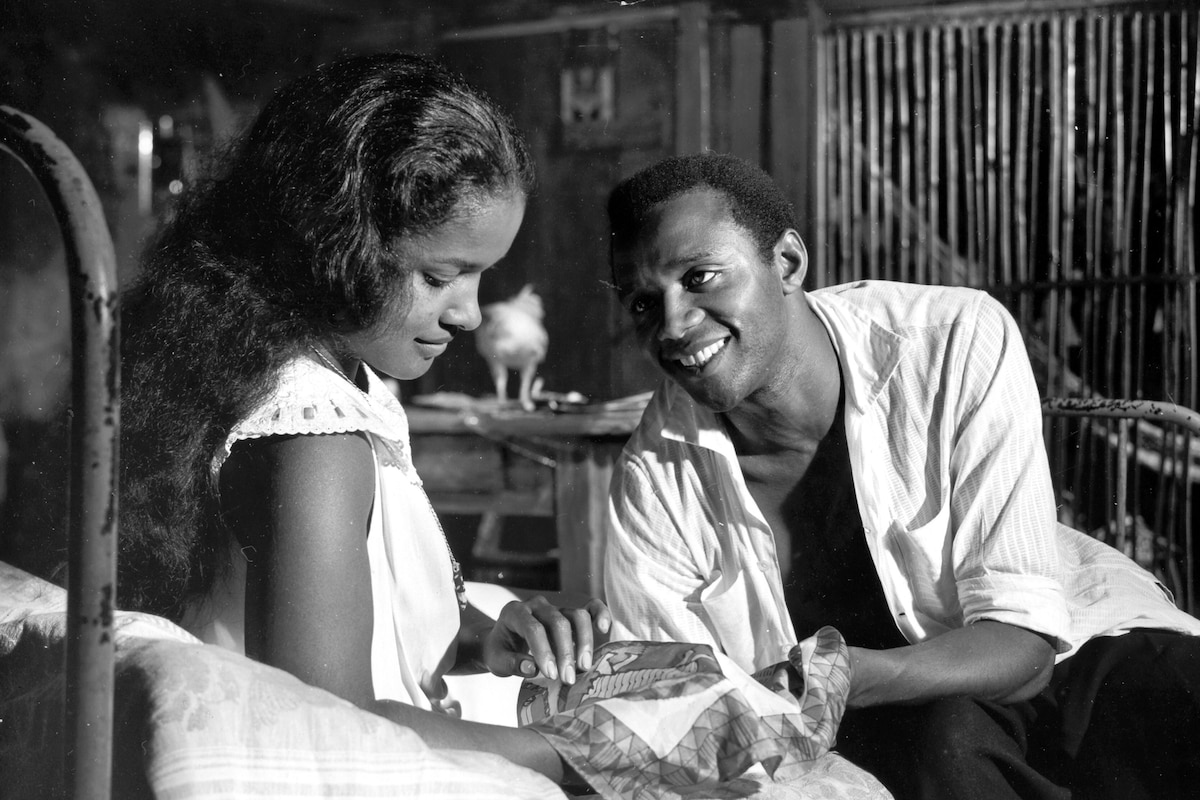
All of the actors in Black Orpheus were non-professional Brazilians. The one exception was Marpessa Dawn, who played Eurydice. She was an American dancer from Pittsburgh.
Black Orpheus was based on the play Orfeu da Conceição by Vinicius des Moraes, itself an adaptation of the Greek legend of Orpheus and Eurydice.
Actor Breno Mello, who played Orpheus in the film, made his living as a soccer player before director Marcel Camus tapped him to star in Black Orpheus.
Mello and Marpessa Dawn, who played Eurydice, died a mere 41 days apart in 2008.
Dawn was briefly married to Black Orpheus director Marcel Camus.
Filmmaker and actor Mario Van Peebles cites Black Orpheus as a major influence on his career. "My father made the first Black Power film in 1971," he said. "But more than a decade earlier, you have Orfeu Negro, which showed people of color with three-dimensional humanity. It didn't take on race issues, and this was revolutionary. In America, we were making films that were very conscious of class and race and struggle. The film ignores the whole race question. It shows people having a self-sufficient life that doesn't depend on a white person giving them their rights. My goodness, what a wonderful piece of cinema. I first saw it as a kid and it made quite an impression-so lush and colorful and rich. It shaped my vision and still holds up."
In President Barack Obama's memoir Dreams from My Father he mentions that Black Orpheus was a particular favorite film of his mother, which he learned one summer when she visited him in New York. "One evening, while thumbing through The Village Voice," wrote Obama, "my mother's eyes lit on an advertisement for a movie, Black Orpheus, that was showing downtown. My mother insisted that we go see it that night; she said that it was the first foreign film she had ever seen." She later told him that she had been 16-years-old at the time and had felt like a real adult when she had first seen it. "I thought it was the most beautiful thing I had ever seen," she told her son, the future president. Obama wasn't as impressed as his mother and wanted to leave halfway through the film. When he turned to his mother in the theater, he could see that she wanted to stay and finish watching. "...her face, lit by the blue glow of the screen, was set in a wistful gaze," said Obama. "At that moment, I felt as if I were being given a window into her heart, the unreflective heart of her youth. I suddenly realized that the depiction of childlike blacks I was now seeing on the screen, the reverse image of Conrad's dark savages, was what my mother had carried with her to Hawaii all those years before, a reflection of the simple fantasies that had been forbidden to a white middle-class girl from Kansas, the promise of another life: warm, sensual, exotic, different."
When Black Orpheus opened in 1959, Marcel Camus was hailed for his poetic and powerfully original interpretation of the ancient story of Orpheus and Eurydice. The film generated international acclaim, and audiences all over the world responded to the fresh, riveting and visually stunning new film. It was awarded the top prize-the Golden Palm-at the Cannes Film Festival and won the Academy Award as Best Foreign Language Film.
Compiled by Andrea Passafiume
Trivia - Black Orpheus - Trivia & Fun Facts About BLACK ORPHEUS
by Andrea Passafiume | February 19, 2010
SIGN UP FOR OUR NEWSLETTERS

CONNECT WITH TCM