AWARDS AND HONORS
Black Orpheus won the Academy Award for Best Foreign Language film.
Black Orpheus won the Golden Palm at the Cannes Film Festival in 1959.
Black Orpheus won the Golden Globe for Best Foreign Film.
Black Orpheus was nominated for a BAFTA Award as the "Best Film From Any Source."
THE CRITIC'S CORNER BLACK ORPHEUS
"...the most sensuous use of color I have ever seen on film...it is not so much dressed in color as created out of color."
Paul Beckley, New York Herald Tribune
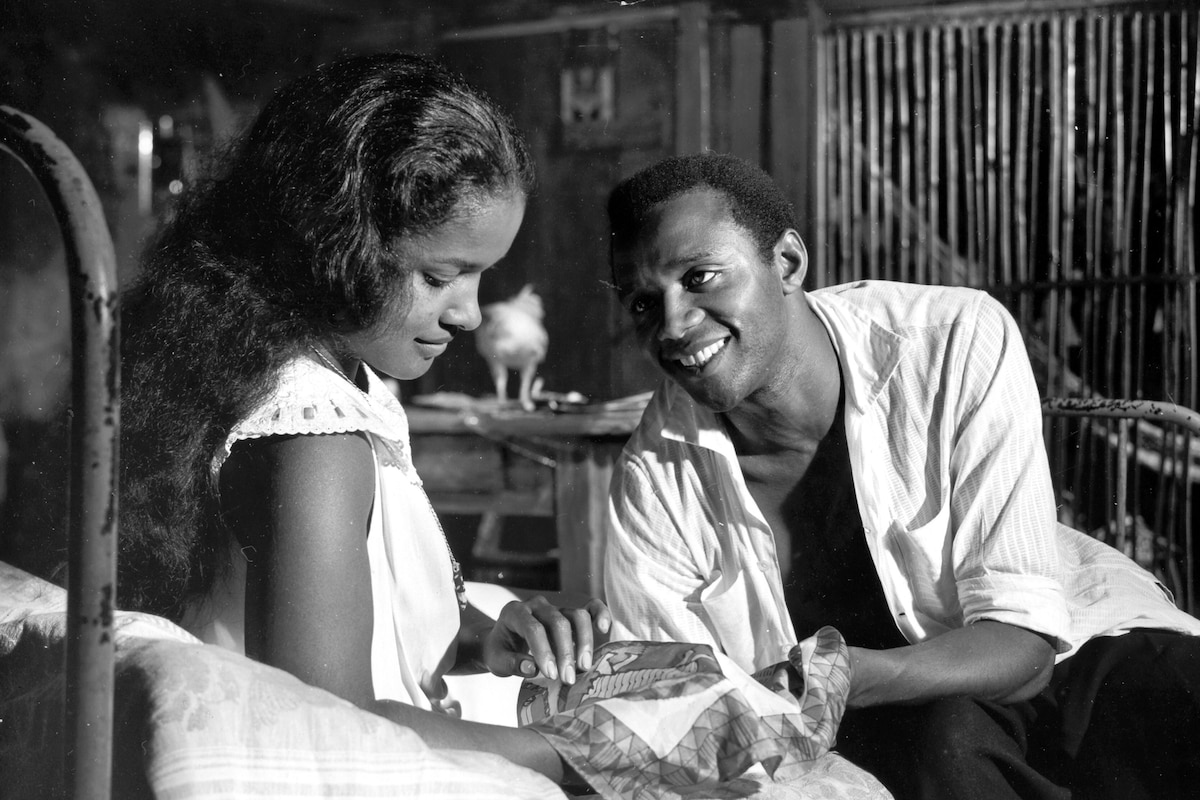
"If it gets too demanding in following the legend, this still gives warmth and depth to the characters. It is beautifully dressed up in color...pic is somewhat cerebral being mainly helped by the fresh playing of the cast especially the Yank actress, Miss Dawn. She makes a sensitive, beauteous Eurydice whose doom is foreshadowed. Color is excellent and director Marcel Camus gives this movement."
Variety
"...it really is not the two lovers that are the focus of interest in this film; it is the music, the movement, the storm of color that go into the two-day [Carnival] festival. M. Camus has done a superb job of getting the documented look not only of the over-all fandango but also of the build-up of momentum the day before."
New York Times Magazine
"Lyrical updating of the Orpheus and Eurydice legend is beautifully acted and directed."
Leonard Maltin, Movie and Video Guide
"Director Marcel Camus...has fashioned an impressive, wildly poetic film from a Brazilian poet's adaptation of the Orpheus legend."
- Time Magazine
"Rather irritating and noisy attempt to update a legend, without showing very much reason for doing so."
Halliwell's Film Guide
"This is one of the first films with black characters that was popular with American white audiences. Females tend to like it better than males, perhaps because of extensive dancing and music (indeed, the film is like an epic dance). It's an extremely colorful film, with emphasis on local customs and costumes. Splendid photography by Jean Bourgoin captures glorious setting (mountains, sky, sunrises, cityscapes).
- Danny Peary, Guide for the Film Fanatic
"Camus jumps right into the thick of Carnival with all of its colorful sights, vibrant sounds and rich sensations. Camus's cacophony of the senses is effectively an upscale travel ad for Brazil. The strength of Black Orpheus lies mainly in how it captures the energy of Carnival. In the pre-satellite age, the bossa nova soundtrack of Brazil's samba beat was far more exotic."
- The Washington Diplomat
"The movie's lack of subtlety is exemplified by its soundtrack...it's striking how little bossa nova, that infinitely gentle music, the film actually contains. Instead, Black Orpheus is dominated by percussive scenes of slum-dwellers dancing frantically, as if possessed, to the rhythms of samba. These scenes are exciting, but go on endlessly, and with little creativity in the manner in which they were shot and edited. The brief moments of samba's more harmonically sophisticated and jazz-influenced offshoot function, by contrast, like a cool breeze: The bits of "Manha de Carnaval" we hear at the beginning of the movie are a reminder that this is one of the loveliest and saddest of all bossa nova melodies. This is mostly a matter of taste: Plenty of people prefer samba, which in any event is more appropriate to the movie's Carnival setting, to the bossa nova. But the lack of contemplative moments in this film, and its wild plunge from unalloyed happiness to tragedy, is simply a mistake."
- Michael Antman, PopMatters
Compiled by Andrea Passafiume
Critics' Corner - Black Orpheus
by Andrea Passafiume | February 19, 2010
SIGN UP FOR OUR NEWSLETTERS

CONNECT WITH TCM