The roots of Black Orpheus go all the way back to Greek mythology. In the original story, Orpheus and Eurydice are deeply in love. On the day of their wedding, however, Eurydice steps on a poisonous snake and dies. Devastated, Orpheus follows her into the underworld where he attempts to persuade the King of Hades to allow Eurydice to return to the land of the living with him. The King is moved by Orpheus' exquisite music of longing and love and allows Orpheus to lead Eurydice out of the underworld and back to the land of the living - on one condition: he must not look back at Eurydice during the journey. Orpheus makes the mistake of breaking this condition, and Eurydice vanishes back into the underworld for eternity, leaving Orpheus alone and heartbroken.
The classical Greek myth had been adapted countless times, but it was a Brazilian version that captured the interest of French filmmaker Marcel Camus. Brazilian poet, lyricist, and playwright Vinicius de Moraes wrote a play based on the story called Orfeu da Conceição. The play transported the Greek legend to modern day Rio de Janeiro during Carnival and updated the plot to be more contemporary.
Marcel Camus was intrigued by this bold adaptation and decided to make a film version of Vinicius de Moraes' play to be filmed entirely on location in Brazil. It would be an international co-production between Brazil, France and Italy. Camus had started out as a professor of painting and sculpture before he developed an interest in film. He soon found work in cinema assisting French directors such as Alexandre Astruc, Georges Rouquier and Jacques Becker under whose guidance he learned the craft of filmmaking. Camus made his first solo effort as a director with the 1957 film Fugitive in Saigon set during the war in Indochina. Black Orpheus would be his second feature film effort.
For the screenplay, Marcel Camus collaborated with writer Jacques Viot, with whom he would go on to work together on two more films, Os Bandeirantes (1960) and L'oiseau de Paradis (1962).
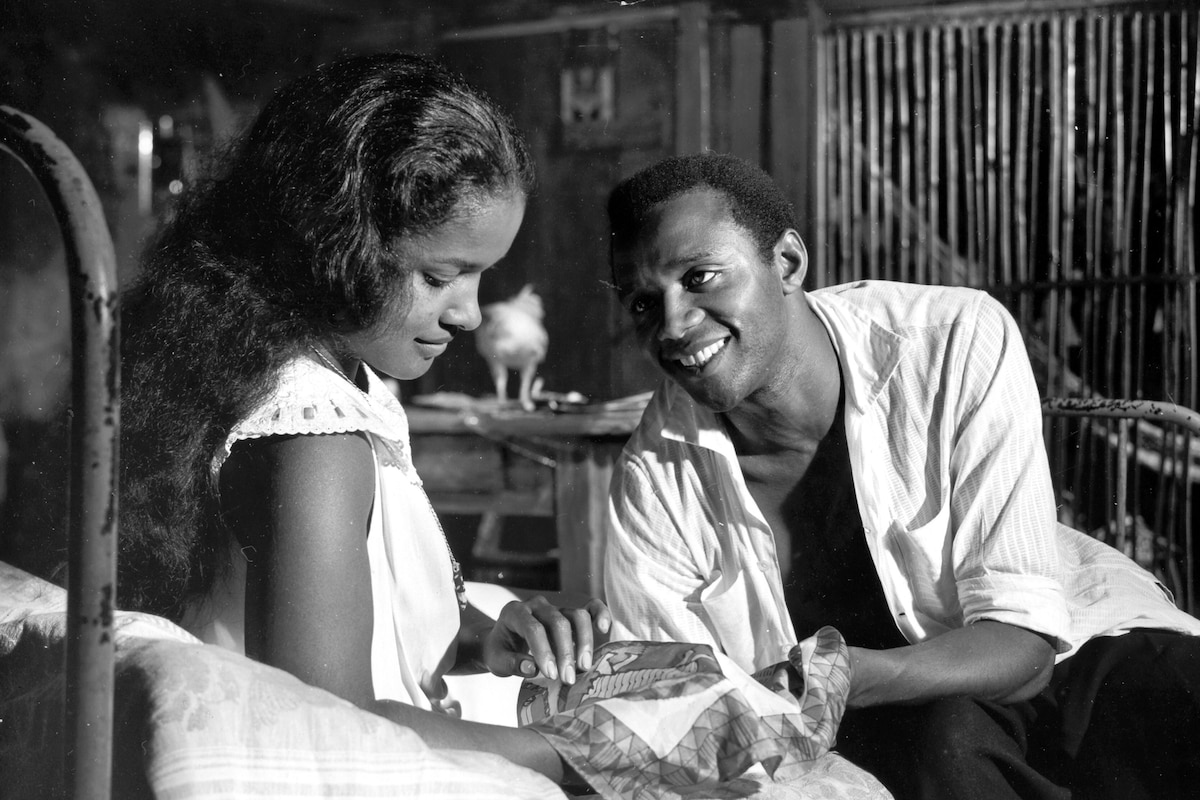
Wanting to shoot Black Orpheus in Brazil, director Camus made the decision to use mostly Brazilian actors. Most of them, including Breno Mello who played Orpheus, were not professional actors. Mello was a Brazilian soccer player when Camus invited him to star in the film. The only somewhat professional artist Camus used was Marpessa Dawn, an American dancer, who played Eurydice. Dawn also eventually became Mrs. Camus, though her marriage to the director ultimately ended in divorce.
Camus hired noted cinematographer Jean Bourgoin to capture the rich, colorful images of Rio de Janeiro's Carnival on film. For the music, Camus brought in Antonio Carlos Jobim and Luiz Bonfa to bring the vibrant rhythms of Brazil to life on the soundtrack.
by Andrea Passafiume
The Big Idea - Black Orpheus
by Andrea Passafiume | February 19, 2010
SIGN UP FOR OUR NEWSLETTERS

CONNECT WITH TCM