Director Frank Capra had completed his contract with Columbia Pictures with Mr. Smith Goes to Washington (1939); he had worked for 12 years there, during which time he had helped elevate the studio from poverty row status to become one of the Hollywood majors. With frequent screenwriter Robert Riskin, he formed Frank Capra Productions, an independent film company originally based at David O. Selznick studios and they planned to release their pictures through United Artists.
Originally, Riskin wanted to film the life of Shakespeare, while Capra was more interested in doing either Cyrano de Bergerac with Ronald Colman or Don Quixote with John Barrymore and Wallace Beery. Then Riskin remembered reading a story called "A Reputation" by Richard Connell in a 1922 issue of Century Magazine. In the story, a clerk invades a Park Avenue party and threatens to commit suicide in protest against the mistreatment of the little man. Jo Swerling had attempted a stage adaptation in 1937 but had never finished it. Connell and Robert Presnell had written a screen treatment called "The Life and Death of John Doe" in 1939. Riskin got hold of it and sent it to Capra in New York, where he was attending the premiere of Mr. Smith Goes to Washington. Capra read it on the train back to Hollywood and at the next stop wired Riskin to start working on the screenplay.
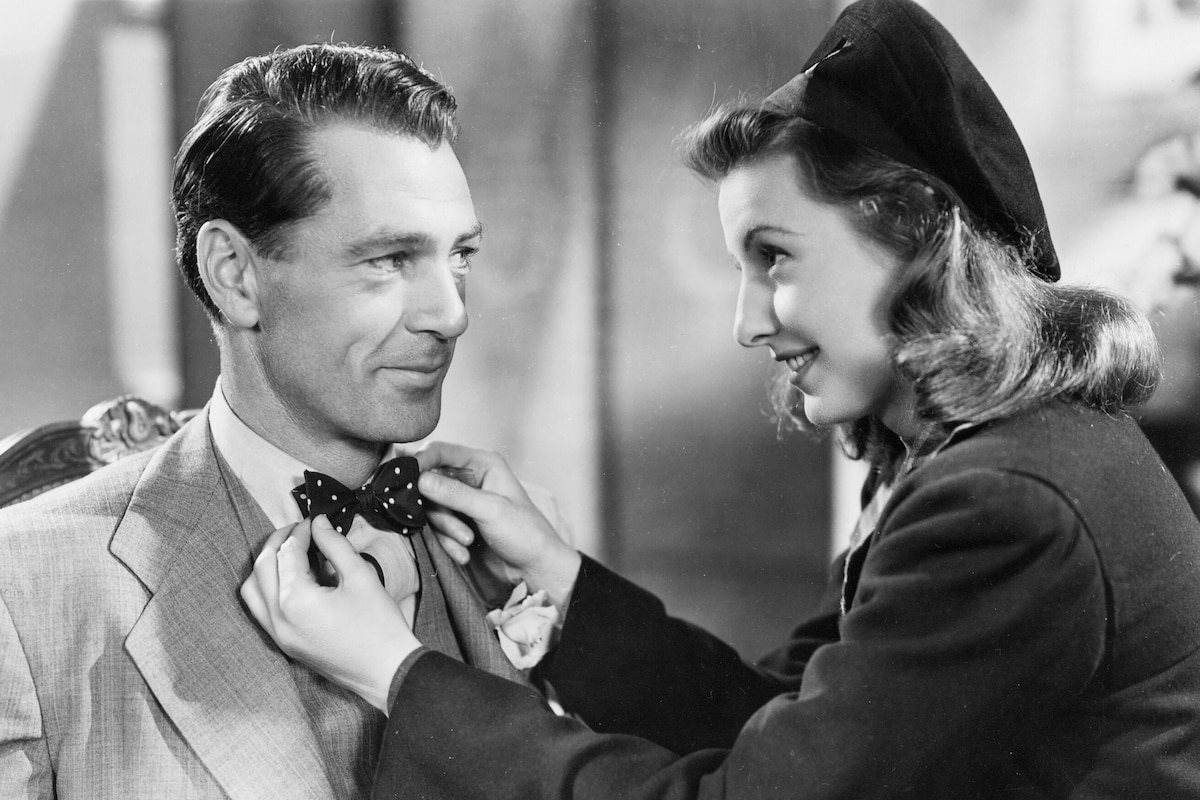
While writing the screenplay with Riskin, Capra thought of re-teaming James Stewart and Jean Arthur of You Can't Take It with You (1938) and Mr. Smith Goes to Washington. Then he envisioned Ronald Colman, the star of his Lost Horizon (1937), in the leading role of Long John Willoughby. As the script developed, however, he realized the part needed to go to Gary Cooper, who had become the epitome of all-American values in the director's Mr. Deeds Goes to Town (1936).
Eventually, Capra made a distribution deal with Warner Bros. In return for $500,000 and use of the their production facilities, the studio would distribute Meet John Doe under their production banner and take 25 percent of the gross after the first $2 million. Frank Capra Productions borrowed an additional $750,000 (putting up the director's home as collateral) from which it would pay Capra $250,000, the leading man $150,000 and the writers a total of $100,000. After five years, the film's ownership would revert to Frank Capra Productions.
Warner Bros. leading ladies Ann Sheridan and Olivia de Havilland tested for the female lead. Originally, Capra was prepared to cast Sheridan, but she was in a contract dispute with the studio and, to punish her, Warner's wouldn't let her do the film. Finally, Capra turned to Barbara Stanwyck, whom he had directed several times in the '30s.
The film's leading players -- Cooper, Stanwyck, Edward Arnold, Walter Brennan, James Gleason and Spring Byington -- agreed to do the film without seeing a completed script simply on the strength of Capra's name. Stanwyck asked if her role were honest. When Capra gave her his word that it was, she signed on.
To get Cooper, who was under contract to independent producer Samuel Goldwyn at the time, Capra had to pay $200,000, more than his budgeted salary for leading man. In addition, Warner Bros. had to loan Goldwyn Bette Davis for The Little Foxes (1941).
In particular, Capra didn't have an ending for his story. Determined to prove critics wrong who had criticized his sunny optimism and upbeat populist visions, he and Riskin deliberately put the leading character, Long John Willoughby (Cooper), into the direst straights they could envision at the end. But they couldn't figure out how to solve his problems. They called in writers Myles Connolly and Jules Furthman for advice, but nothing seemed to work. Eventually they had to go into production without a final scene.
Shortly after making his film debut (in 1929's Alibi), Regis Toomey had met Frank Capra in a Hollywood store. They talked for several minutes before Toomey even knew who Capra was. Then Capra said, "Regis, someday I will have a part that I particularly want you to play. I hope you will be available." Ten years later, Capra called him for a meeting and asked him to look over a 14-page scene from a film he was working on. When Toomey got home, he realized it was a 14-page monologue. He came back the next morning, and Capra asked him to read the scene for screenwriter Robert Riskin. Toomey already had it memorized and landed the part of Bert Hansen.
by Frank Miller
SOURCES:
The Films of Frank Capra by Victor Scherle, William Turner Levy and William O. Douglas
The Big Idea - Meet John Doe
by Frank Miller | January 25, 2010
SIGN UP FOR OUR NEWSLETTERS

CONNECT WITH TCM