Synopsis:
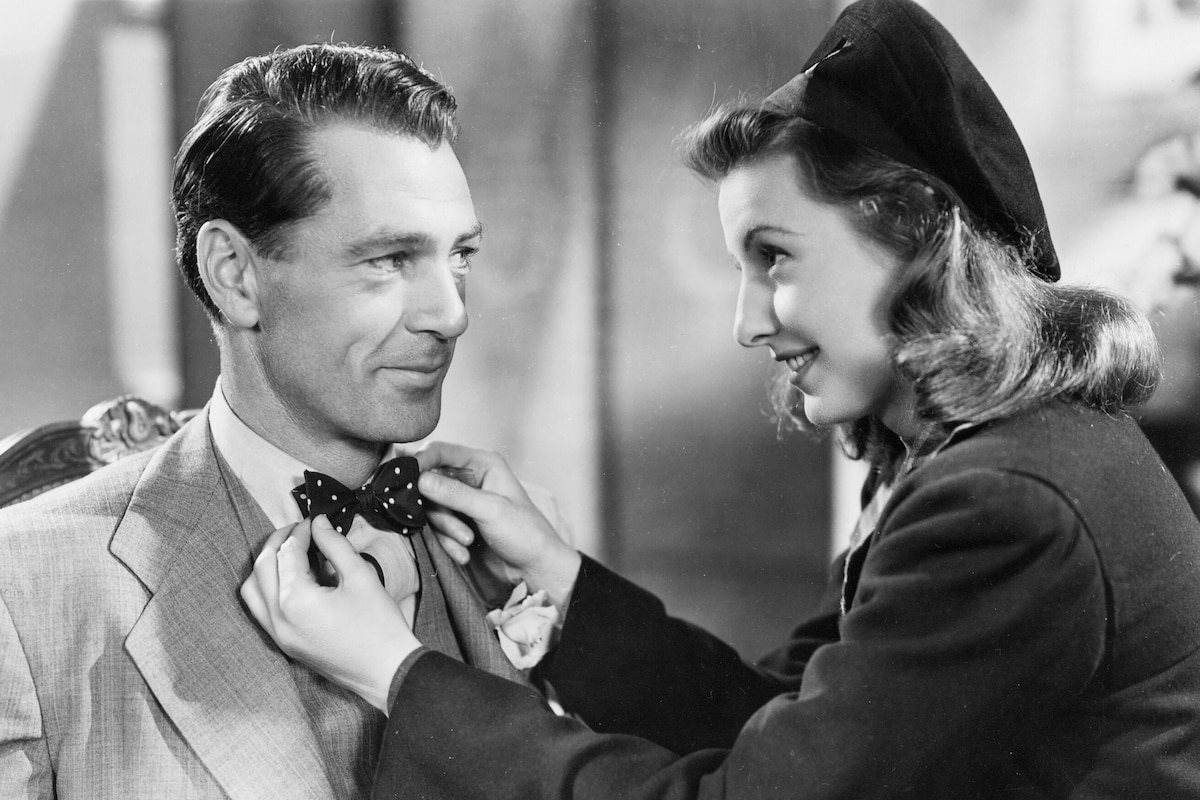
After she's fired, newspaper reporter Ann Mitchell decides to bow out with a bogus story about an unnamed idealist, John Doe, threatening to throw himself off the roof of City Hall on Christmas Eve as a protest against the continued mistreatment of the little man. When the story sells papers, she has to find an unemployed man to become her John Doe. But she gets more than she bargains for when she gives the job to Long John Willoughby, a baseball pitcher put out of work by a bum arm. As the furor mounts, her publisher, Norton, steps in to use Willoughby as his ticket to political power. By the time Willoughby catches on to his game, John Doe Clubs have spread across the nation, triggering the birth of a new political party. When Willoughby tries to denounce Norton, the publisher accuses him of being a fraud and stealing the Clubs' money. Publicly disgraced, Willoughby sees no way of bringing back the spirit of John Doe except to follow through on a suicide threat he never made.
Producer-Director: Frank Capra
Screenplay: Robert Riskin
Based on the short story "A Reputation" by Richard Connell and the motion picture story "The Life and Death of John Doe" by Connell and Robert Presnell
Cinematography: George Barnes
Editing: Daniel Mandell
Art Direction: Stephen Goosson
Music: Dimitri Tiomkin
Cast: Gary Cooper (Long John Willoughby), Barbara Stanwyck (Ann Mitchell), Edward Arnold (D.B. Norton), Walter Brennan (The Colonel), Spring Byington (Mrs. Mitchell), James Gleason (Henry Connell), Gene Lockhart (Mayor Lovett), Rod La Rocque (Ted Shelton), Irving Bacon (Beany), Regis Toomey (Bert Hansen), J. Farrell MacDonald (Sourpuss Smithers), Sterling Holloway (Dan), M. J. Frankovich (Radio Announcer), Ann Doran (Mrs. Hansen), Bess Flowers (Mattie), Susan Peters (Autograph Hound), Jim Thorpe (John Doe Applicant)
BW-123m.
Why MEET JOHN DOE is Essential
Meet John Doe is now considered the climax of a trilogy in which Frank Capra dealt with American individualism. The other two films are Mr. Deeds Goes to Town (1936) an Mr. Smith Goes to Washington (1939).
Contemporary critics have hailed the film as one of Capra's most personal. Like the characters played by Barbara Stanwyck, Gary Cooper and Edward Arnold, he had become a shaper of public opinion through his highly successful films. The picture explores the nature of such power, with Stanwyck and Cooper's characters, like Capra himself, questioning the validity of their influence. With Cooper's betrayal in the film, critics also see Capra questioning the nature of public opinion and the ease with which the pubic can turn against its heroes.
After establishing Gary Cooper's all-American image in Mr. Deeds Goes to Town, director Capra propelled him into the ranks of top Hollywood stars with Meet John Doe. Ironically, the former presented him as a man who keeps his small-town ideals despite a bruising encounter with big-city corruption, while the latter presents him as a man with no true ideology who develops his ideals after almost being destroyed by political manipulators. With the release of Sergeant York later the same year, Cooper made his first appearance on the year-end list of top box office stars.
Capra had directed Stanwyck in five films, starting with Ladies of Leisure (1930), the film that made her a star. They had not worked together since 1933's The Bitter Tea of General Yen. Historians have credited him with helping her refine her acting for the screen. By the time they reunited for Meet John Doe, she was one of Hollywood's top stars.
Meet John Doe is one of the few films of its era to deal with the dangers of Fascist movements on American soil in the years preceding the U.S.' entry into World War II. Publisher William Randolph Hearst and aviator Charles Lindbergh had publicly expressed support of Adolph Hitler's Third Reich. Organizations like the German-American Bund actively supported Hitler's programs in the U.S., while Lindbergh's America First Committee fought to keep the U.S. out of World War II.
Meet John Doe marked Frank Capra's last collaboration with his most sympathetic screenwriter, Robert Riskin. The two had first worked together on The Miracle Woman (1931), adapted from Riskin's play Bless You Sister. Their ten films together included It Happened One Night (1934), for which Riskin won an Oscar®, Mr. Deeds Goes to Town, Lost Horizon (1937) and You Can't Take It with You (1938). Capra chose to make Here Comes the Groom (1951) because it was adapted from a story Riskin had written in 1947.
by Frank Miller
The Essentials - Meet John Doe
by Frank Miller | January 25, 2010
SIGN UP FOR OUR NEWSLETTERS

CONNECT WITH TCM