England's Ealing Studios had been around since the beginning of sound under various names and ownership before being taken over by new head of production Michael Balcon in 1938. Surrounded by a pool of some of Britain's top creative talent, Balcon strove to make quality original films. During World War II Ealing churned out some excellent war films and costume dramas. However, it was the comedy genre that ultimately came to define Ealing Studios under Balcon's leadership.
The Ealing comedies of this period generally focused on somewhat eccentric British characters who had been thrust into unconventional circumstances. "The comedies reflected the country's moods, social conditions and aspirations," said Michael Balcon in his 1969 autobiography A Lifetime of Films. "Our theory of comedy - if we had one - was ludicrously simple. We took a character - or group of characters - and let him or them run up against an apparently insoluble problem, with the audience hoping that a way out would be found, which it usually was. The comedy lay in how the characters did get around their problem..." The protagonists, no matter how despicable, were usually characters the average person could relate to in some way. Balcon went on to add that Ealing comedies were "about ordinary people with the stray eccentric among them - films about daydreamers, mild anarchists, little men who long to kick the boss."
In the years following World War II there was a collective need to lighten up, which contributed to Ealing's decision to start making their own brand of eccentric comedies. "...I think our first desire was to get rid of as many wartime restrictions as possible and get going," said Balcon. "The country was tired of regulations and regimentation, and there was a mild anarchy in the air. In a sense our comedies were a reflection of this mood...a safety valve for our more anti-social impulses."
According to Balcon, the idea for Kind Hearts and Coronets came when a writer named Michael Pertwee discovered a "tattered Victorian novel" called Israel Rank: The Autobiography of a Criminal by Roy Horniman while browsing in an old bookstore. The book about how one man systematically murdered all those who stood between him and a substantial inheritance was not a comedy. Balcon speculated that "it must have been Michael and Robert [Hamer] who had the idea to use the theme for a comedy - surely the first 'black comedy' made in [England]."
Writer/director Robert Hamer was one of the many talented people at Ealing Studios. He had previously directed the memorable mirror sequence in the 1945 horror classic Dead of Night as well as the feature film It Always Rains on Sunday (1947). Hamer was looking to make a film that was "not noticeably similar to any previously made in the English language," he told Sight and Sound in a 1951 interview. He wanted a film that would not shock, per se, but ignore moral conventions "from an impulse to escape the somewhat inflexible and unshaded characterization which convention tends to enforce in scripts." The novel Israel Rank, he knew, would be the perfect source material for such a film.
Hamer teamed up with John Dighton to adapt Israel Rank into the screenplay that became Kind Hearts and Coronets. Only the basic plot structure from the novel remained by the time Hamer and Dighton were done, and the tone had been changed from serious to droll, tongue-in-cheek satire. Hamer, it was decided, would direct the film.
British actor Dennis Price was cast in the leading role of Louis Mazzini. It was a plum role but required a subtle touch that was crucial to the success of the film.
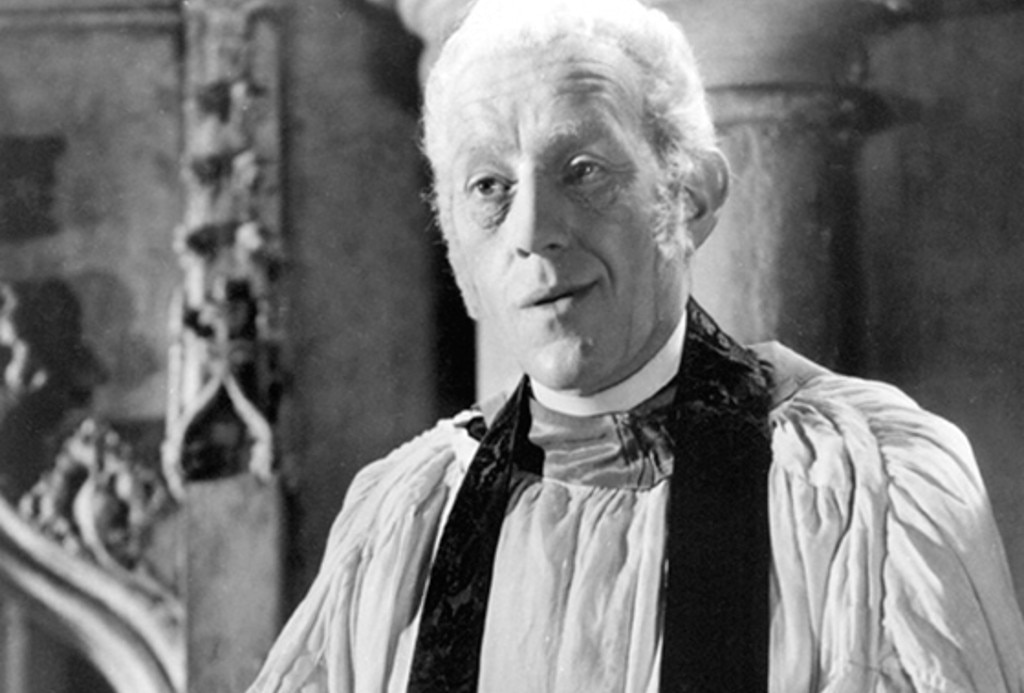
In an inspired idea, Hamer wanted the same actor to play all of the doomed members of the D'Ascoyne family, which numbered only three in the initial stages of the screenplay. Michael Balcon immediately thought of Alec Guinness. Guinness had just come off of two films in which he had done solid work: Great Expectations (1946) and Oliver Twist (1948). He was not yet a major star, but Balcon had always wanted to work with him. "As a theatergoer I had watched Alec's performances with great admiration," said Balcon in his autobiography, "and I was determined to use him in films at the earliest opportunity." Guinness had recently been placed under contract with the Rank Organisation, a British entertainment company that enjoyed a professional alliance with Ealing. "There was nothing much planned for Guinness's future in the Rank programme," said Balcon, "so I had no difficulty in obtaining his services for Kind Hearts and Coronets, as Ealing was able to draw on the Rank group of contract artists."
Guinness read the script and thought it was "brilliant". It was he who persuaded Hamer to increase the number of D'Ascoyne family members he played from three to eight. "If you want seven or eight people to look like me," he told Hamer at the time, "why don't I play them all myself?"
Not everyone was as supportive of Alec Guinness taking on such a massive role in the film. "There were those who, to put it mildly, had doubts about my wisdom in casting Guinness not just for one comedy part but for eight in one film," said Michael Balcon in his autobiography. "I remember standing on the steps of the Dorchester Hotel one night after a dinner party of film men when I had mentioned my plans for Kind Hearts. One of my fellow guests, who was leaving with me - an important man in the film business-suddenly stood quite still and stared at me. He had apparently been thinking about what I had said earlier and now with this strange expression fixed on me he said slowly, 'Mick, do you really believe you can make a film star out of Alec Guinness?' 'Yes,' I said confidently. 'I believe that in the right parts he has a quality comparable with Chaplin.' 'Then,' said the other man conclusively, 'you must be out of your bloody mind.'"
Rounding out the stellar cast of the dark comedy were Joan Greenwood as Sibella, Louis' unscrupulous childhood sweetheart, Valerie Hobson as Edith, the aristocratic widow of one of Louis' victims, and John Penrose as Lionel, Sibella's weak-willed husband.
by Andrea Passafiume
The Big Idea - Kind Hearts and Coronets
by Andrea Passafiume | January 25, 2010
SIGN UP FOR OUR NEWSLETTERS

CONNECT WITH TCM