In Nightmare Movies, his essential 1988 horror film overview, writer Kim Newman classified Dan Curtis' Burnt Offerings (1976) as "the dregs of a genre more or less created by Roman Polanski in Repulsion (1965) and Rosemary's Baby" (1968). However harsh that assessment, the film's minor standing in the estimation of both critics (Roger Ebert called it "slop") and the horror hoi polloi ("Dan Curtis is better off making TV films" carped The Psychotronic Encyclopedia of Film) is a matter of public record. A haunted house spooker in the Shirley Jackson mold, playwright Robert Marasco's 1973 source novel added an intriguing level of determinism to the standard "bad house" blueprint, suggesting that the American nuclear family introduced in Chapter One is not so much sucked in by malevolent design but that its members are rather answering the siren call of their respective fates. In adapting the bestseller for the big screen, Curtis and screenwriter William F. Nolan scuttled Marasco's deterministic foreshadowing, preserving the logline of "a house that eats people" and tacking on a less ambiguous, more commercial ending. Budgeted at $2 million (cheap for United Artists, home of the James Bond and Pink Panther franchises, Charles Bronson, Carrie [1976] and Rocky [1976]), Burnt Offerings was guaranteed a profit and yet its reception was decidedly chilly.
Part of the problem was bad timing. By 1976, houses haunted by nothing more than ancient, undying evil were passé. John Hough's The Legend of Hell House (1973) had pulled out all the stops within the subgenre, requiring future attempts to go big or go home. In Stuart Rosenberg's The Amityville Horror (1979), the plague
upon that house was nothing short of Satanic, while Tobe Hooper's Poltergeist (1982) reset the gold standard for paranormal activity, making the low tech Burnt Offerings seem as quaint and curious as The Cat and the Canary (1927). Dan Curtis was looking to break free of the doldrums of his Gothic soap opera Dark Shadows and such terror telefilms as The Night Stalker (1972) and Trilogy of Terror (1975); Burnt Offerings was his presumed passport to the majors. The chance to actualize the Marasco novel came via the intervention of (of all people) Sergio Leone. The Italian filmmaker was desperate for Curtis to release the rights to Harry Gray's Depression era crime novel The Hoods; as a convincer, Leone agreed to underwrite any other project of Curtis' choice. A deal was struck, Curtis moved on to Burnt Offerings and Leone turned The Hoods into Once Upon a Time in America (1982). Though the movie was a profitable release, Curtis returned to television and did not direct another feature until 1993.
Bette Davis reportedly accepted a part in Burnt Offerings because she had bills to pay and wanted to work. Once on location, however, she quickly developed a distaste for her co-stars. She complained to one journalist that her co-star Oliver Reed had gotten drunk one night and tumbled down a hillside while playing the bagpipes. She didn't like Karen Black any better, telling the press she "changes her makeup in the middle of a scene, so nothing matches on the screen. She sleeps all day, never goes to rushes and you can't hear a bloody thing she says on the set. When I made movies you could hear me in a tunnel."
Davis's co-stars weren't the only ones to experience her wrath. According to Lawrence J. Quirk in Fasten Your Seat Belts: The Passionate Life of Bette Davis, the actress "yelled so often at producer-director Dan Curtis that he walked off the set and disappeared for days. She was nervous about how the DeLuxe Color would make her look and argued endlessly with cinematographers Stevan Larner and Jacques Marquette, frightening them into dropping and smashing valuable camera lens. She walked in and out of other people's dressing rooms hollering that the original novel by Robert Marasco "stank," that the screenplay was lousy, and that she might have to rewrite the whole thing herself...When Producer Curtis sent a mild-mannered man to point out to her the disadvantages inherent in the unfortunate publicity such negative interviews would attract, which might affect bookings and future reviews, she yelled at him so furiously that the poor man retreated in tears and later vomited in the men's room. When told of this later, she said, "Good - it got all the damned puke out of him. Let's hope he took a good crap, too - he was full of it when I talked to him!"
While Davis may have terrorized the entire cast and crew of Burnt Offerings, most critics were decidedly unfrightened by the movie. Variety noted that the film "might have been interesting if director Dan Curtis hadn't relied strictly on formula treatment," and Roger Ebert of The Chicago Sun-Times said, "it's a tricky business, making a supernatural thriller with artistic ambitions. Roman Polanski and William Friedkin have pulled it off in recent years, with subtle blends of the mundane and the preternatural. And, come to think of it, The Legend of Hell House brought out the fun in this sort of material very well. But Burnt Offerings just persists, until it occurs to us that the characters are the only ones in the theatre who don't know what's going to happen next."
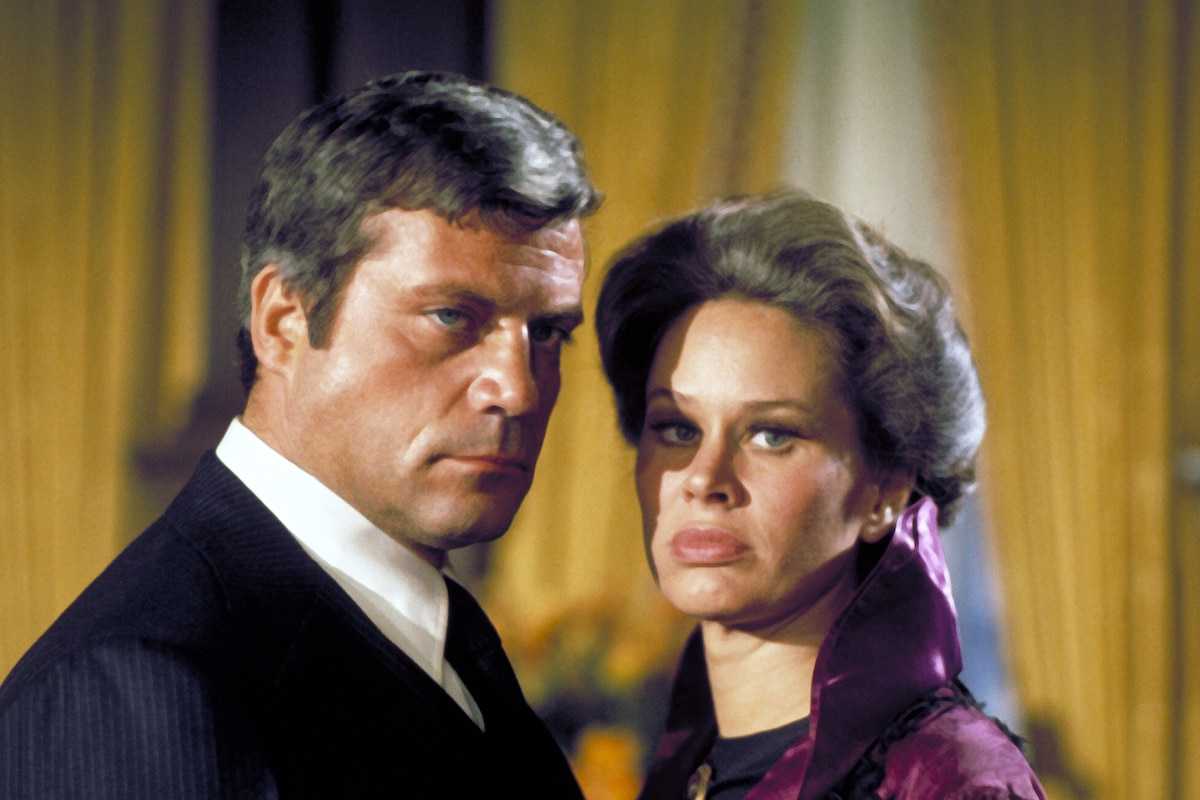
Yet, to call Burnt Offerings "the dregs" is to pay it a backhanded compliment via the metaphor of winemaking. Designed by the legendary Eugène Lourié and enacted by a better than average cast (Oliver Reed, Karen Black, Burgess Meredith, Eileen Heckart and Bette Davis), the film offers a syllabus of shocks whose cumulative effect is, like rustic Italian grappa, surprisingly potent. A highlight is the recurring specter of a grinning hearse driver (Anthony James), whose joie de mort is Curtis' best, cheapest special effect. Reining in their egos, Bette Davis and Oliver Reed show disarming vulnerability as a traumatized child grown to uncertain middle age and his elderly aunt; the scene in which they cower pitiably as the hearse driver pushes an empty casket toward them is both chilling and deeply sad.
Stephen King acknowledged a debt to Marasco's novel in writing The Shining and Burnt Offerings anticipates key bits of business in Stanley Kubrick's The Shining (1980). Curtis hated Marasco's original ending and claimed he came up with his own in fifteen minutes. This is entirely likely, as the payoff of that quarter hour is a reworking of the fruit cellar scene in Alfred Hitchcock's Psycho (1960); Curtis varies the recipe slightly, sending his protagonist up to the attic but also in search of a woman named Marian. A downbeat ending always seems to elevate the stock of any horror film and the denouement of Burnt Offerings is especially grim. In the parlance of joke tellers, it's a "way-homer" that only really clicks upon reflection. Curtis' tack ensured sufficient word of mouth in 1976 and thirty five years later still has people talking.
Producers: Dan Curtis, Robert Singer
Director: Dan Curtis
Writer: Dan Curtis, William F. Nolan, Robert Marasco (novel)
Music: Bob Cobert
Cinematography: Jacques R. Marquette
Editor: Dennis Virkler
Production Designer: Eugène Lourié
Make Up Artist: Al Fleming
Costumer: Ann Roth
Cast: Oliver Reed (Ben Rolf), Karen Black (Marian Rolf), Bette Davis (Aunt Elizabeth), Lee H. Montgomery (David Rolf), Burgess Meredith (Arnold Allardyce), Eileen Heckart (Roz Allardyce), Dub Taylor (Walker), Anthony James (The Chauffeur), Jim Myers (Dr. Ross), Todd Turquand (Young Ben), Joseph Riley (Ben's father).
C-115m. Letterboxed.
by Richard Harland Smith
SOURCES:
Bette & Joan: The Divine Feud by Shaun Considine (E.P. Dutton)
Fasten Your Seat Belts: The Passionate Life of Bette Davis by Lawrence J. Quirk (Signet)
Hellraisers: The Life and Inebriated Times of Richard Burton, Richard Harris, Peter O'Toole and Oliver Reed by Robert Sellers (Thomas Dunne Books)
The Girl Who Walked Home Alone by Charlotte Chandler (Simon & Schuster)
Evil Spirits: The Life of Oliver Reed by Cliff Goodwin (Virgin)
The Gist (Burnt Offerings) - THE GIST
by Richard Harland Smith | January 22, 2010
SIGN UP FOR OUR NEWSLETTERS

CONNECT WITH TCM