After a nervous breakdown that led to an eight month stay in New York's Rockland State mental hospital, Mary Jane Ward wrote The Snake Pit, a novel inspired by her experiences. She sold it to Random House in 1945. The title came from the ancient practice of throwing the insane into a pit of snakes in hopes that it would shock them back to sanity.
At the urging of Random House head Bennett Cerf, producer-director Anatole Litvak read the book in galleys. He immediately sent a copy to Ingrid Bergman, who turned down the project. He then went to Olivia de Havilland, who was Ward's first choice for the leading role. When she agreed to star in a film version, he bought the rights for $75,000 with plans to film it independently. After being turned down by every other studio, he took the project to his friend Darryl F. Zanuck, whose studio, 20th Century-Fox, rarely picked up independent films. Although not sure of the film's bankability, Zanuck's interest in socially relevant subjects (which dated back to his days as production head for Warner Bros. in the early '30s) inspired him to take a chance on the project. He bought the rights from Litvak for $175,000 and hired him to direct and produce, the latter in partnership with the studio's Robert Bassler. When the book came out, it was a huge best seller, eventually selling more than one million copies.
Although Litvak already had a commitment from de Havilland, Zanuck also considered her sister, Joan Fontaine, and Fox contract star Gene Tierney for the role. Ironically, Tierney would later suffer her own breakdown.
Zanuck considered Joseph Cotten and Richard Conte for the psychiatrist's role. He eventually cast Leo Genn, a British actor who had played Katina Paxinou's lover in Mourning Becomes Electra (1947).
De Havilland personally requested Fox contract player Mark Stevens to play her husband. Stevens had co-starred with Fontaine in From This Day Forward (1946).
To write the screenplay for The Snake Pit, Zanuck paired experienced Hollywood writer Frank Partos with Millen Brand, a novelist and poet whose 1937 novel The Outward Room had focused on an escaped mental patient.
As research, Litvak, Bassler and the screenwriters visited several East Coast mental institutions and consulted with three prominent New York psychiatrists, who helped them construct Virginia's case history. The names of the hospitals and doctors were kept confidential at the time. They approached Dr. Gerard Chrzanowski, the psychiatrist who had cared for Ward and served as a model for Dr. Kik in the novel, about consulting on the film, but he declined.
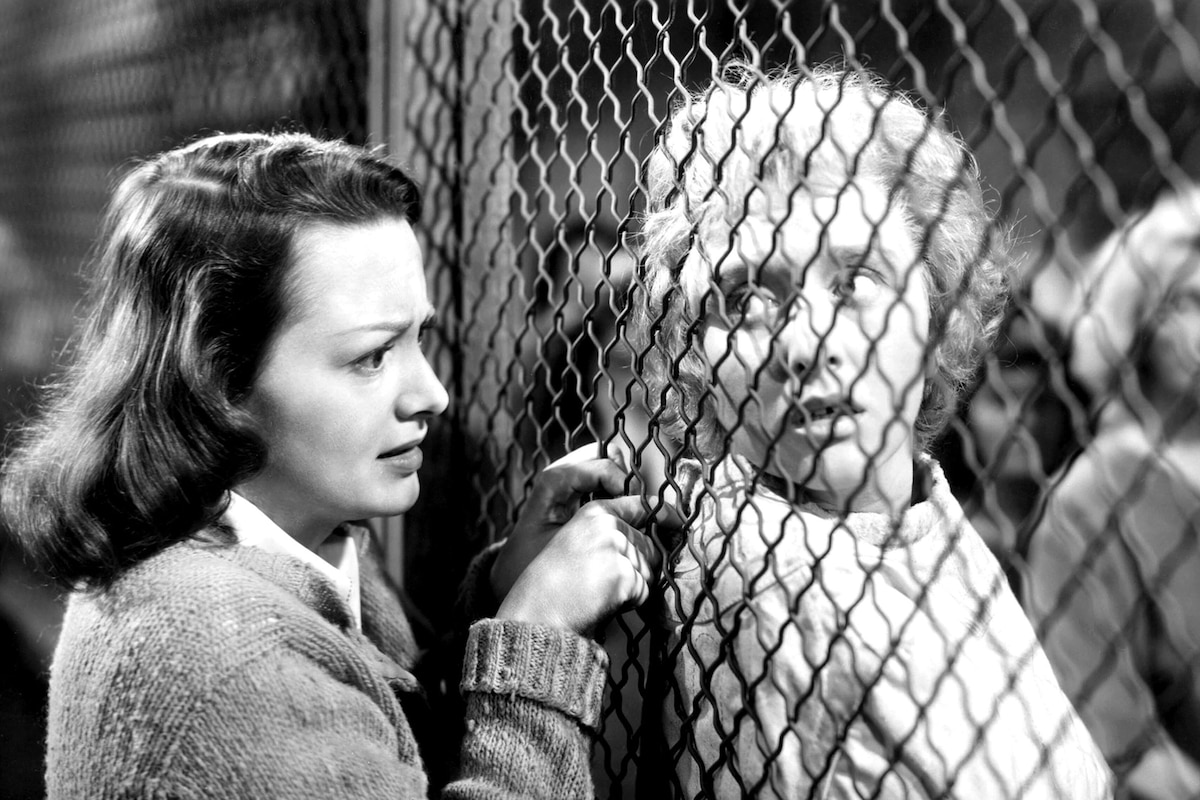
Litvak also ordered the actors, key crew members and even some of the extras to visit local mental institutions. De Havilland visited several hospitals and consulted with several psychiatrists to gain a deeper understanding of her character's condition. At Camarillo State Hospital in California she met a young woman with a condition similar to her character's. She would later say, "I met a young woman who was very much like Virginia, about the same age and physical description, as well as being a schizophrenic with guilt problems. She had developed, like Virginia, a warm rapport with her doctor, but what struck me most of all was the fact that she was rather likable and appealing. It hadn't occurred to me before that a mental patient could be appealing, and it was that that gave me the key to the performance."
In adapting Ward's novel, the screenwriters changed the nature of both Virginia's condition and her cure. In the book, Virginia's mental illness is brought on after years of marriage by the economic failure of her husband, a leftist writer, and by the strain of trying to maintain her own writing career while also serving as wife and mother. For the film, they turned her problems into a father fixation intensified when her first fiancé, a controlling male, dies in a car crash. They also cut out any scenes with Virginia's child and placed her breakdown much earlier in the marriage. In addition, where the book had been told entirely from the heroine's point of view, Litvak shot the film more objectively, avoiding cinematic techniques that would have presented the story through her eyes. Virginia's point of view was represented primarily on the soundtrack, which featured her interior monologue and the voices in her head, and a few shots capturing her fantasies. Finally, where Ward had depicted Virginia's recovery largely through her own struggles, the screenplay attributed her recovery almost entirely to her doctor's use of Freudian psychoanalysis to get to the roots of her mental illness.
Before filming started on The Snake Pit, playwright Arthur Laurents (Home of the Brave) did a final polish on the screenplay. When his request for credit for "additional dialogue" was turned down, he appealed to the Writer's Guild, but they decided his contribution had not been large enough. Nonetheless, Litvak credited his work in an interview with the New York Times.
by Frank Miller
SOURCES:
The Films of Olivia de Havilland by Tony Thomas
The Big Idea - The Snake Pit
by Frank Miller | January 21, 2010
SIGN UP FOR OUR NEWSLETTERS

CONNECT WITH TCM