For Spencer Tracy, San Francisco followed right on the heels of his starring role in Fritz Lang's powerful Fury (1936). The roles he played in each film showcased his versatility, and audiences and critics stood up and took notice of his astonishing talent. After years of knocking around Hollywood without much success, Tracy had finally made a breakthrough with San Francisco and the film made him a bona fide star. According to Larry Swindell's 1969 book Spencer Tracy, after the release of the film, the number of Tracy's fan letters skyrocketed from 300 to 3,000 a week.
The rousing title song introduced in the film by Jeanette MacDonald became an instant classic recorded by numerous artists all over the world. The city of San Francisco adopted it as one of its official city songs in 1984, and it still instigates waves of affection from its native citizens to this day.
It was rumored that legendary epic director D.W. Griffith, W.S. "Woody" Van Dyke's mentor, directed one scene in San Francisco, though which one is still in debate. Some claim that Griffith directed the big earthquake sequence, while others claim that he supervised one of Jeanette MacDonald's operettas.
Director Woody Van Dyke reportedly used another of his friends from the old silent film days, Erich von Stroheim, to write additional dialogue for the San Francisco screenplay.
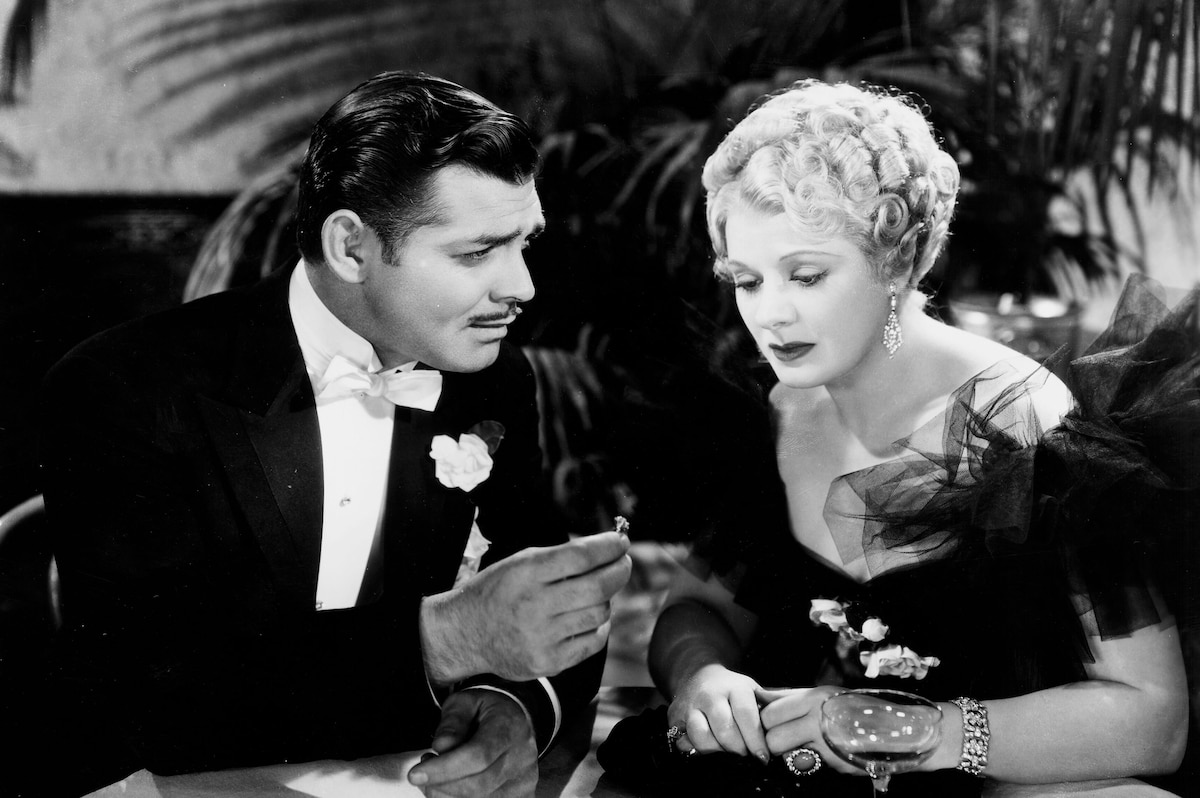
San Francisco marked the first time that actors Clark Gable and Spencer Tracy ever worked together. Audiences liked the way they played off each other so well that MGM paired them in two more blockbusters, Test Pilot (1938) and Boom Town (1940).
The shot during the earthquake sequence in which the street splits open was an astonishing visual effect in its day. It was achieved by people using cables to pull apart two hydraulic platforms with hoses underneath gushing water to simulate broken water mains.
San Francisco writers Anita Loos and Robert "Hoppy" Hopkins were both natives of San Francisco and wanted the film to pay tribute to the city that they loved.
One scene towards the end of San Francisco gave Clark Gable some trouble. It was the scene in which Blackie is so humbled after the earthquake that he falls to his knees and prays for Mary's safe return. Such a scene went against Gable's traditionally macho image, and he resisted doing it at first. Director Van Dyke finally came up with a solution: Gable would be shown from the back dropping to his knees-it was the only way Gable felt it would work for a tough character like Blackie.
There are two endings in existence for San Francisco. In the film's original theatrical release, the film ends with a montage of modern day (1936) San Francisco having been rebuilt that included a shot of the Golden Gate Bridge under construction. For a 1948 re-release, however, the footage with the incomplete Bridge was removed.
One of the ballads that Jeanette MacDonald sings in San Francisco, "Would You?", was featured prominently in the 1952 musical Singin' in the Rain. In Singin' in the Rain it is the song that Debbie Reynolds' character has to dub for Lina Lamont when it turns out that Lina can't sing.
According to The Virtual Museum of the City of San Francisco some of the actual survivors of the real 1906 San Francisco earthquake became ill during the earthquake sequence when the film originally premiered and had to leave the theater.
by Andrea Passafiume
Famous Quotes from SAN FRANCISCO
"Well, sister, what's your racket?"
"I'm a singer."
"Let's see your legs."
"I said, I'm a singer."
"Alright, let's see your legs."
--Blackie Norton (Clark Gable) / Mary Blake (Jeanette MacDonald)
"Hey, I thought I told you not to wear that thing."
"Aw, gee, Honey, I think it's nice."
"Yeah? Well I think it makes you look cheap. Now don't wear it anymore. Blackie doesn't like it."
Blackie / Trixie (Shirley Ross)
"There's no law against an opera singer being slender, young and beautiful." Jack Burley (Jack Holt), referring to Mary.
"Well, we certainly don't do things halfway in San Francisco." Waiter at Chicken's Ball (William H. O'Brien)
"You're in probably the wickedest, most corrupt city, most Godless city in America. Sometimes it frightens me. I wonder what the end's going to be. But nothing can harm you if you don't allow it to because nothing in the world, no one in the world, is all bad." Father Mullin (Spencer Tracy) to Mary
"One never knows where one's going to find talent."
"No, no, one never does, does one?"
-Jack / Blackie
Trivia - San Francisco - Trivia & Fun Facts About SAN FRANCISCO
January 21, 2010
SIGN UP FOR OUR NEWSLETTERS

CONNECT WITH TCM