SYNOPSIS
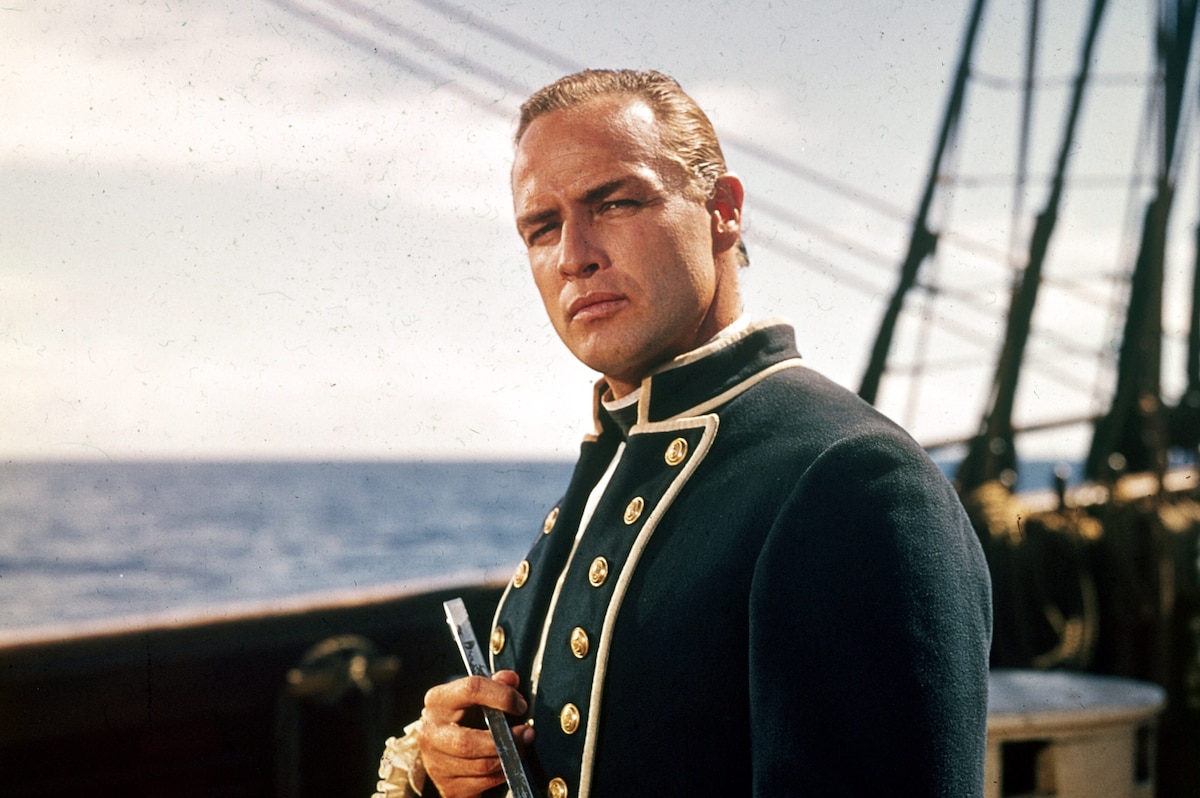
In December of 1787, H. M. S. Bounty sets sail from Portsmouth, England. The destination is Tahiti, and the crew's mission is to transplant thousands of breadfruit plants from that island to Jamaica in the hope that the plants will become a food staple for plantation slaves. The vessel is commanded by William Bligh, an experienced but tyrannical captain who quickly arouses the ire of the crew. His first officer is Fletcher Christian who tries to intercede on his behalf but soon turns against him over his cruel treatment of the men and eventually leads a mutiny against him. After setting Bligh and his supporters adrift in the sea, Christian and his crew seek refuge on an uncharted Pacific island, knowing that the British navy will try to hunt them down and prosecute them.
Director: Lewis Milestone
Producer: Aaron Rosenberg
Screenplay: Charles Lederer
Based on the novel by Charles Nordhoff and James Norman Hall
Cinematography: Robert L. Surtees
Editing: John McSweeney, Jr.
Art Direction: George W. Davis, J. McMillan Johnson
Music: Bronislau Kaper
Cast: Marlon Brando (Fletcher Christian), Trevor Howard (Capt. William Bligh), Richard Harris (John Mills), Hugh Griffith (Alexander Smith), Richard Haydn (William Brown), Tarita (Maimiti), Gordon Jackson (Edward Birkett), Chips Rafferty (Michael Byrne), Eddie Byrne (John Fryer), Frank Silvera (Minarii), Henry Daniell (Court Martial Judge), Torin Thatcher (Staines).
C-179 m.
Why MUTINY ON THE BOUNTY Is Essential
Followed by 20th Century-Fox's Cleopatra (1963), another epic production that lost money on its initial release, Mutiny on the Bounty marked the end of Hollywood's golden age. Its box office failure signaled that the days in which individual studio productions would rule at the box office were long past.
For all of its flaws and the bad press it received, the film's epic scale and drama is truly powerful, representing the height of studio filmmaking in terms of design and technical effects.
Mutiny on the Bounty was one of the films -- some would say the key film -- that destroyed Marlon Brando's position as one of the world's greatest actors in the '60s. His reviews were devastating, and accounts of his behavior on set did a great deal to damage his popularity and bankability.
For Brando's supporters, his attempts to create a character from a consistent viewpoint about class and environment, despite the fact that he was never given a complete script, is a testament to his inventiveness as an actor that more than balances stories of his on-set behavior. Overriding two experienced directors while making the film, he became the film's true auteur with a performance that dominates the picture and shapes its meaning on the most basic levels. His character's transition from bored dilettante to man of honor gives the film a humanistic message that was very important to an actor who would eventually devote much of his life to the fight for civil and human rights for minorities.
Mutiny on the Bounty was the last Ultra Panavision film shown in the 2.76:1 aspect ratio. Later movies using the process were shown in narrower formats.
by Frank Miller
The Essentials - Mutiny on the Bounty ('62)
by Frank Miller | January 21, 2010
SIGN UP FOR OUR NEWSLETTERS

CONNECT WITH TCM