The film premiered at New York's Paramount Theatre on either June 30 or July 1, 1948 (sources differ) and went into brief general release in August. It was only a moderate success, thanks in part to its early withdrawal from most screens.
Academy Award nominations for Best Cinematography, Black-and-White (Charles Lang), Best Writing, Screenplay (Charles Brackett, Billy Wilder, Richard L. Breen)
Writers Guild of America nomination for Best Written American Comedy
The picture was denounced as "rotten" on the floor of the U.S. House of Representatives and the Department of Defense issued a statement saying the movie gave a false picture of the occupation army. It then banned it from being shown in Germany. Under fire from so many sides, Paramount quietly withdrew the film from general release.
"Crude, superficial, and insensible to certain responsibilities.... Berlin's trials and tribulations are not the stuff of cheap comedy, and rubble makes lousy custard pies." Stuart Schulberg, U.S. Army official who evaluated films for release to the troops, 1948
"I was in the army and I was in Berlin. ... All right, this is fiction, but let me tell you things I observed that are absent. It is not just the American or the Russian occupiers that behave like this. Every occupying, victorious army rapes, plunders, stealsthat is a rule that goes way back to the Persians." Billy Wilder, responding to the film's being banned in occupied Germany
The film was finally shown in Germany in 1977 to critical and popular acclaim.
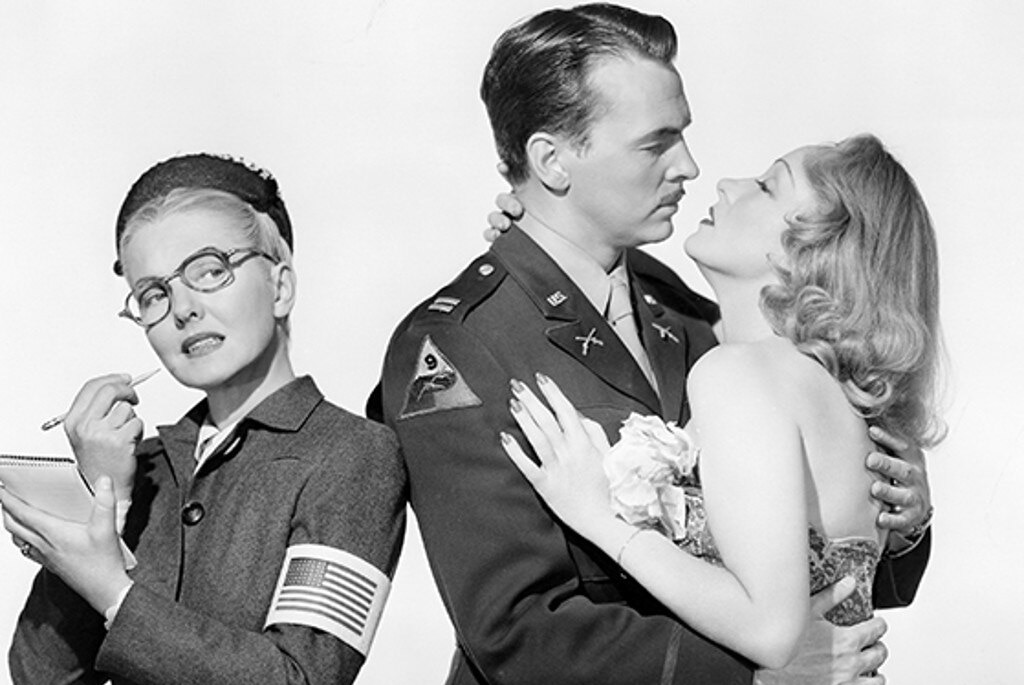
"A dandy entertainment which has some shrewd and realistic things to say. Congress may not like this picture...and even the Department of the Army may find it a shade embarrassing. ... It has wit, worldliness and charm. It also has serious implications, via some actuality scenes in bombed Berlin, of the wretched and terrifying problem of repairing the ravages of war. Indeed, there are moments when the picture becomes down-right cynical in tone, but it is always artfully salvaged by a hasty nip-up of the yarn. Much credit is due the performers. Jean Arthur is beautifully droll as the prim and punctilious Congresswoman.... And John Lund is disarmingly shameless as the brash American captain. ... But it is really Marlene Dietrich who does the most fascinating job.... For in Miss Dietrich's restless femininity, in her subtle suggestions of mocking scorn and in her daringly forward singing of 'Illusions' and 'Black Market,' two stinging songs, are centered not only the essence of the picture's romantic allure, but also its vagrant cynicism and its unmistakable point." Bosley Crowther, New York Times, July 1, 1948
"Some sharp, nasty, funny stuff at the expense of investigatory Americans; thenas in The Emperor Waltzthe picture endorses everything it has been kidding and worse. A good bit of it is in rotten taste, and the perfection of that is in Dietrich's song 'Black Market.'" James Agee, Nation, July 24, 1948
"Dietrich steals the show in an uproarious Hollywood view of low life in Berlin." Life, July 1948
"Except for an occasional nagging thought that maybe Berlin isn't precisely the proper locale for a farce these days, I had a pretty good time." The New Yorker, 1948
"A messy conglomeration of bumbling humor, pointless vulgarity, and occasionally comic caricature. The picture's three central characters are thoroughly repulsive...thrown together in a gutter romance." Cue, July 1948
"Looking back from the perspective of almost thirty years, it is evident that Foreign Affair was one of the first realistic and honest post-war films and, in my opinion, was on an artistic level with the works of De Sica and Rossellini. It cut deeply and meanly and it told the truth, which was that under pressure men and women do not follow the Ten Commandments." Maurice Zolotow, Billy Wilder in Hollywood (Proscenium, 1977)
"As relevant to the current American involvement in Iraq as if it had been made yesterday. ... This talky, intelligent, cynical film is startling even now, with dry jokes about gas chambers and brainwashed youngsters still carving swastikas everywhere. Lines like this, from a former Nazi to her American protector, make you wince: 'I have a new Fuhrer now: you. Heil, Johnny.' Imagine how this must have struck audiences at the time, just a few years after the war! I'd love to see a modern director with Wilder's bravery take on the challenge of portraying how a contemporary occupying army deal with a country full of 'open graves and closed hearts.'" Andrea Mullaney, Eye for Film
Critics Richard Corliss and Andrew Sarris have claimed Wilder's presentation of Jean Arthur on screen was brutal and abusive, with Corliss saying she was "photographed with all the gentleness of a mug shot." But Wilder claimed in later years that Arthur called him after seeing the film on television and gushed about how great it was and how wonderful her close-ups were.
by Rob Nixon
Critics' Corner - A Foreign Affair
by Rob Nixon | January 21, 2010
SIGN UP FOR OUR NEWSLETTERS

CONNECT WITH TCM