The story of the lightweight romantic comedy Spring Madness (1938) would have been unthinkable just a few short years after its release. In 1938, however, the flirtation between the American Left and the Soviet Union was still in bloom, and the desire of college students to travel to Russia was not yet the taboo it would become amid the Cold War politics and Red Scare fervor of the post-war period. Not that this movie gives us any deep insight into the relationship between Soviet communism and the American collegiate set; this is a harmless entertainment which was described by critic Otis Ferguson as "a silly but gay little piece, much helped by its unpretentiousness and sensible comedy writing." So it's fascinating to speculate on the furor it might have caused a decade later, simply by suggesting that a tour of Russia after graduation would be a fun idea.
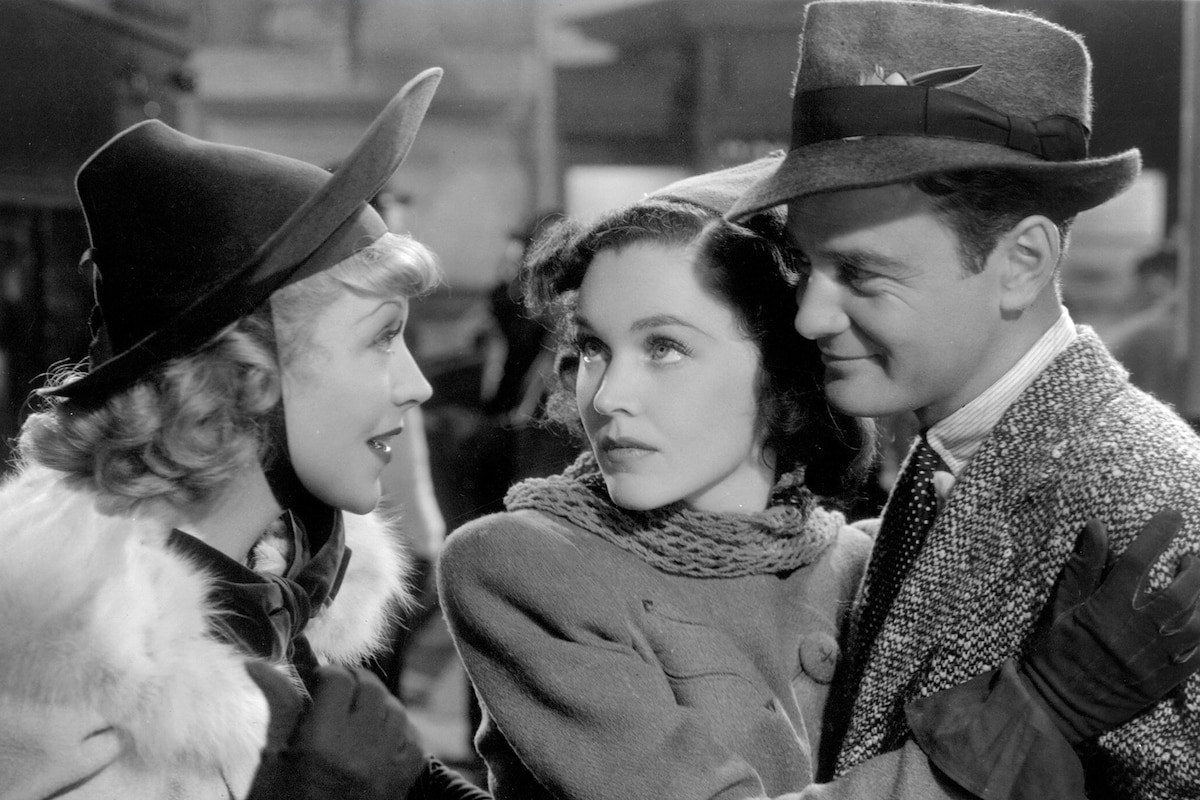
The trip to Russia in Spring Madness is planned by Sammy and "The Lippencott," aka Lipp, college seniors concerned about the dire economic situation in the U.S. It is the only real touch of politics in the story and, in fact, the trip never takes place. Despite Lipp's best efforts to keep his friend on track with their plans and out of the clutches of women, Sam ends up falling for pretty Alex. After much confusion surrounding a spring dance at the school and the clever tricks employed by several of Alex's friends, he decides he doesn't want to risk losing her by going off on an extended trip abroad.
The plot premise is not the only aspect of Spring Madness that wouldn't fly in the years following World War II. The casting of Lew Ayres in the lead might also have been a dicey proposition, at least initially. Ayres rose quickly from his first bit part in The Sophomore (1929) to a significant role with Greta Garbo in only his third film, The Kiss (1929). The following year he received much attention from critics and audiences for his work in All Quiet on the Western Front (1930), a World War I drama that instilled in him a strong sense of pacifism. He worked steadily through the 1930s, notably landing the plum title role in the hit MGM "Dr. Kildare" hospital drama series, and by the time of Spring Madness, the New York Times was calling him the cinema's best underappreciated actor. Then came World War II and Ayres' refusal, as a conscientious objector, to enter direct combat. Although most stars who enlisted with much publicity and fanfare never came anywhere near the front lines, Ayres, a former medical student who ended up serving as an orderly at the South Pacific front, was vilified by Hollywood and the public. After the war, he slowly began working again. No longer a young leading man, he began taking on meatier supporting roles. Despite an Academy Award nomination as Best Actor for Johnny Belinda (1948), his career declined in the 1950s, and he worked mostly on television for the next 40+ years until his death in 1996 at the age of 88.
As Ayres' love interest in Spring Madness, Maureen O'Sullivan was also nearing the end of her most in-demand period at this time. Best known for her work as Jane in the Tarzan series, O'Sullivan was kept very busy by MGM throughout the 1930s, either in B leads or supporting roles in top productions. In 1942, however, she decided to take time off to be with her husband director John Farrow and their children, including Maria, who would later be famous as Mia Farrow. O'Sullivan, too, returned after the war in sporadic supporting film roles and numerous television appearances. After Farrow's death, she extended her career to stage success.
Although no one ever made claims for Spring Madness as great film art, reviewers found it intelligent enough and engaging, particularly singling out the work of Burgess Meredith as The Lippincott and praising a fine supporting cast that included Ruth Hussey, Joyce Compton, and character actor Sterling Holloway.
Spring Madness was filmed by Russian-born cinematographer Joseph Ruttenberg, who worked with such great directors as Griffith, Lubitsch, Lang, Cukor, and Wyler. He was Oscar®-nominated ten times, winning for The Great Waltz (1938), Mrs. Miniver (1942), Somebody Up There Likes Me (1956), and Gigi (1958).
The screenplay by producer Edward Chodorov, whose career was cut short in the 1950s by the anti-communist Hollywood Blacklist, was based on the short-lived 1936 play Spring Dance by Philip Barry, author of the far more successful Holiday, The Philadelphia Story, and The Animal Kingdom, all of which were turned into hit movies. The source material for Barry's stage original is credited to an earlier play by Eleanor Golden and Eloise Barrangon. Working pre-release titles for this film included Barry's original play title and Sorority House.
Audiences may spot Clayton Moore, later famous as The Lone Ranger on TV, and Phillip Terry, future husband of Joan Crawford, in uncredited roles as Dartmouth college students.
Director: S. Sylvan Simon
Producer: Edward Chodorov
Screenplay: Edward Chodorov, based on the play Spring Dance by Philip Barry and an earlier play by Eleanor Golden and Eloise Barrangon
Cinematography: Joseph Ruttenberg
Editing: Conrad A. Nervig
Art Direction: Cedric Gibbons
Original Music: William Axt
Cast: Lew Ayres (Sam Thatcher), Maureen O'Sullivan (Alex Benson), Ruth Hussey (Katie McKim), Burgess Meredith (The Lippencott), Joyce Compton (Sally Prescott), Sterling Holloway (Buck).
BW-67m.
by Rob Nixon
Spring Madness
by Rob Nixon | November 02, 2009
SIGN UP FOR OUR NEWSLETTERS

CONNECT WITH TCM