A co-production between Britain and Zimbabwe and filmed entirely on location in the Republic of Zimbabwe, A World Apart (1988) is the story of real life anti-Apartheid protester Ruth First (renamed Diana Roth for the film) as told by her daughter, screenwriter Shawn Slovo. While the events focus on her mother's political activities and her time in prison, the film is just as much about her own growing awareness of the world around her. It's both political and personal, the story of an ideal and the personal responsibility to fight for that ideal.
Awareness of South African apartheid was growing in the West in the late 1980s. In 1986, Steve Van Zandt organized "Artists United Against Apartheid," a group of musicians from across the musical spectrum that refused to perform in the racially segregated country and brought the issue public through a politically charged protest song (which was banned in South Africa) and accompanying music video and album. Paul Simon's album Graceland brought the voices and musical styles of black South African musicians to America. Richard Attenborough brought the murder of civil rights leader Steven Biko to the screen (albeit through the story of a white journalist) in 1987 with Cry Freedom and in 1988, the Broadway musical "Sarafina" brought to life the story of the 1976 Soweto student uprisings.
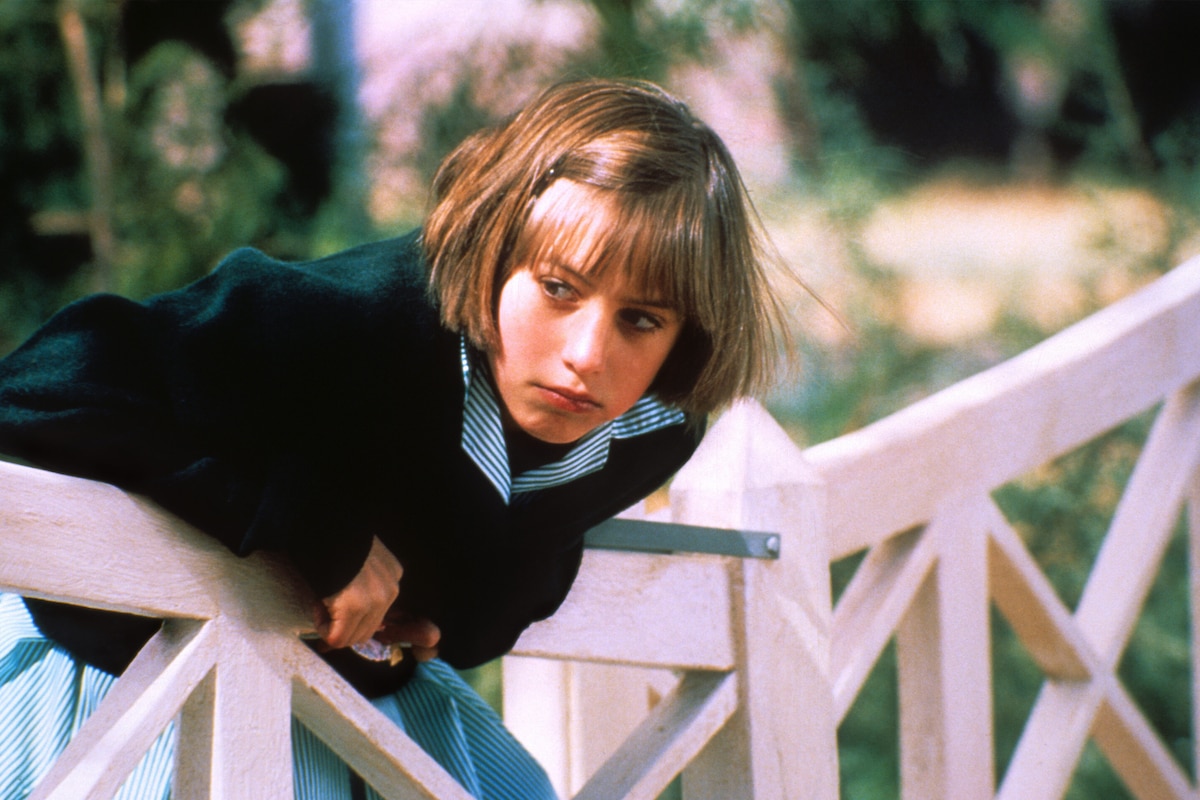
Like Cry Freedom, A World Apart dramatizes the evils of Apartheid and the racist policies of the ruling government through the story of white South Africans, in this case journalist and activist Diana Roth (Barbara Hershey) and her husband Gus (Jeroen Krabbé), who is seen fleeing the country for his safety in the opening scenes. It's the last that his thirteen-year-old daughter (named Molly in the film and played by Jodhi May) sees of him in the film. The time is 1963 and Molly is just old enough to question the appalling treatment of the country's black citizens by the whites. The setting also resonates with American history: the civil rights struggle in the American south was intensifying in the early sixties.
A World Apart is the feature directorial debut of Chris Menges, the Oscar®-winning cinematographer of The Killing Fields (1984) and The Mission (1986). Like those earlier films (both directed by Roland Joffe), there is a strong social consciousness and political content, but Menges also brings a subdued dramatic atmosphere and rich visual sensibility to the film, layering scenes with telling details that illustrate the conditions of life in this place and time. He takes care to view the story from the perspective of Molly and draws a poignant and powerful performance from the young May. She is excellent as the spirited, affectionate, curious girl who communicates her growing awareness with wide eyes and pained expressions that wash across her face. Watching an elderly man knocked violently off his bicycle in a hit-and-run by a white driver is startling, but it's the callous apathy of the white bystanders that haunts her.
Hershey is cold and distant as the mother Diana, as if hardened by the struggle and the constant harassment by the police. She loosens up in a lively mixed-race party that is, predictably, raided by the police (with a platoon big enough to take on a small army), but otherwise she is so dedicated to the cause that she withdraws emotionally from her daughter. When Molly is shunned by schoolmates and even adults after her mother's very public arrest, she finds more acceptance in the black community than she does in her own. But she still has a hard time reconciling her understanding of the terrible inequities in her country with the anger at her mother for sacrificing family stability for the political struggle. The world apart is not just the segregated white society, but the distance between her and her mother, who is unable to talk frankly to Molly about her work.
The end of Apartheid was years away when the film was released in 1988, but it was decades away in 1963 and the film ends with a sobering reminder of the years of struggle to come: "Ruth First (Diana Roth) was assassinated on the 17th of August 1983. This film is for her and for the thousands who have died in the struggle for a free South Africa." Yet there is still a triumph in the conclusion, of personal commitment to justice if not the triumph of the struggle itself. The film's commitment to both the politics and the understanding of the adolescent Molly helped it win the Special Jury Prize and the Prize of the Ecumenical Jury at Cannes 1988 and the Best Actress award, given jointly to Jodhi May, Barbara Hershey, and co-star Linda Mvusi.
Producer: Sarah Radclyffe
Director: Chris Menges
Screenplay: Shawn Slovo
Cinematography: Peter Biziou
Art Direction: Mike Philips
Music: Hans Zimmer
Film Editing: Nicolas Gaster
Cast: Jodhi May (Molly Roth), Jeroen Krabbe (Gus Roth), Barbara Hershey (Diana Roth), Nadine Chalmers (Yvonne Abelson), Maria Pilar (Spanish Dance Teacher), Kate Fitzpatrick (June Abelson), Tim Roth (Harold), Phyllis Naidoo (Sareda), Linda Mvusi (Elsie), Carolyn Clayton-Cragg (Miriam Roth), Yvonne Bryceland (Bertha).
C-113m. Letterboxed.
by Sean Axmaker
A World Apart
by Sean Axmaker | October 21, 2009
SIGN UP FOR OUR NEWSLETTERS

CONNECT WITH TCM