AN IRISH COP VS. A GUN-MAD KILLER!
Tagline for The Great O'Malley
From the ads, the 1937 police drama The Great O'Malley seems like a perfect pairing of Pat O'Brien, Warner Bros.' quintessential Hibernian hero, and Humphrey Bogart, one of the screen's greatest gangsters. Yet Bogart's role was far from the crazed gunman promised. He wasn't even a gangster (though the character had been in the story's 1925 silent version, The Making of O'Malley). He was just a desperate unemployed man driven to crime when a minor traffic violation costs him his first job in years.
The film brought Bogart his first star billing, in only his second year at Warner Bros., but when he made it in July 1936, his career seemed to be going nowhere. Part of his problem was the fact that studio head Jack L. Warner didn't like him. Not only did he consider the actor disrespectful and ungrateful, but he also resented having to hire him in the first place. Leslie Howard had refused to sign for the film version of his Broadway hit The Petrified Forest (1936) unless his friend Bogart got to repeat his stage role as a psychotic gangster. If others at Warner's hadn't seen the actor's potential, Warner would have continued offering him thankless roles like John Phillips in The Great O'Malley in hopes of goading the actor into walking out on his contract.
In this case, Bogart was forced to play second fiddle to child star Sybil Jason, Warner's attempt to cash in on the success of Shirley Temple at 20th Century-Fox. His casting as Jason's father seemed particularly improbable as the South African-born moppet had a pronounced British accent, as did Frieda Inescort, cast as her mother. The writers finally added a line to indicate the family had emigrated from Canada in search of work, which supposedly explained their dueling dialects.
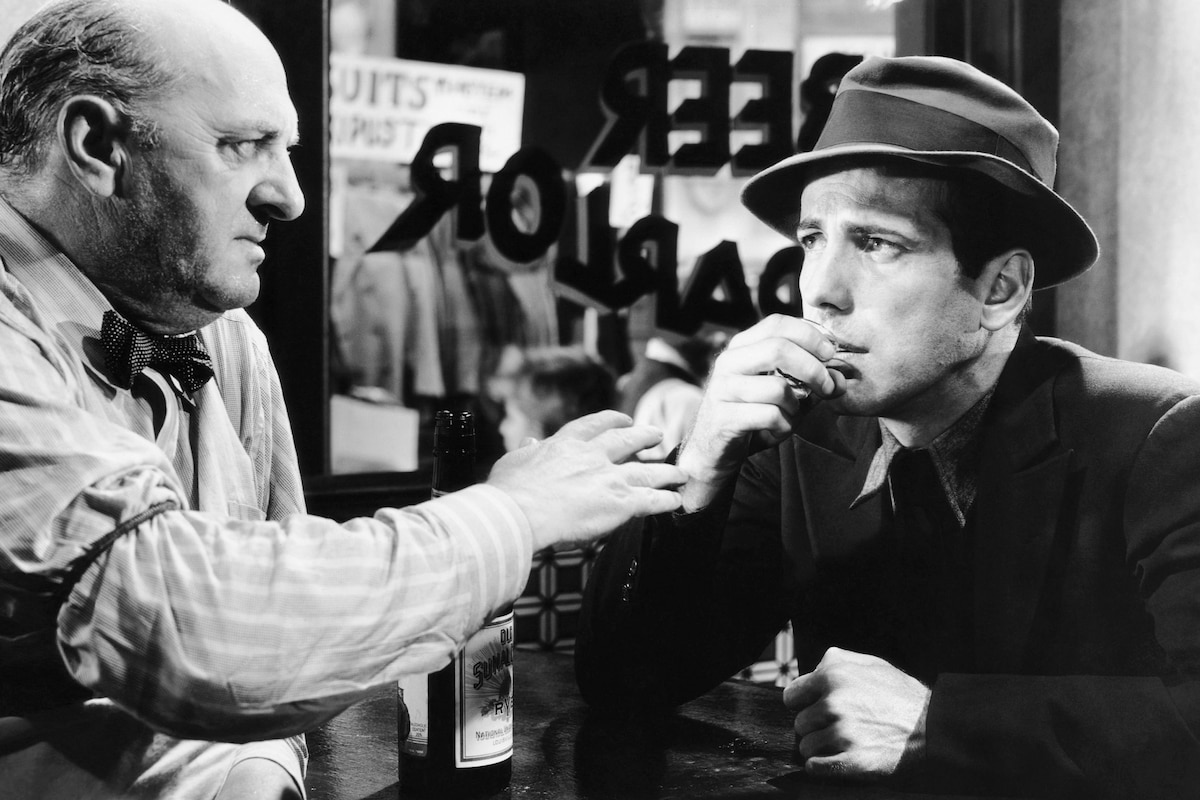
Much as the actor may have hated his role in The Great O'Malley, he still made the most of it. The scene in which he turns to crime after unsuccessfully trying to pawn his World War I medals, a possible lift from the studio's I Am a Fugitive from a Chain Gang (1932), gave him his best material in the film, and Bogart seized the opportunity. Bogart's clash with the pawnbroker gives an inkling of the acting power he would display in later films like High Sierra (1941) and Casablanca (1942).
Even if Bogart was on the outs at the studio, that didn't stop him from standing up for himself and his fellow actors in the face of bullying from director William Dieterle who had been assigned to the film at the last minute (originally Michael Curtiz was to have directed). He sent an impassioned memo to production chief Hal Wallis demanding he be removed from the production on the grounds that he had been promised he would not have to direct any gangster films, his only producer would be Henry Blanke and all of his films would be billed as "William Dieterle Productions." The memo arrived while Wallis was out of town, however, and by the time he got it, production had started.
Early on, Dieterle demanded Jason remove a gold bracelet that all of the girls in her family wore during childhood. The child was upset because the bracelet would have to be cut off, and her sister and guardian tried to protest. When Dieterle insisted, Bogart growled, "For Christ's sake, Bill, the kid coulda gotten the damn bracelet from a dime store. Let her wear it!" Rather than give in, the director called Warner to argue his case to him, to no avail. The bracelet can be spotted throughout the film.
At another point, Bogart and Dieterle disagreed about how to play a minor scene in the film. As the argument escalated, and it became clear that the director was not going to back down, Bogart finally told him to just shoot the scene. Then when Dieterle cried "Action", the actor unzipped his pants and proceeded to urinate on camera. He then informed the director that he would continue to disrupt filming until he got to play the scene his way. Not surprisingly, the two would never work together again.
At least Bogart could console himself with his camaraderie with the rest of the cast, particularly Ann Sheridan, who didn't seem to have an enemy on the lot. Also, his career started looking up when Wallis and producer Robert Lord assigned him a leading role as a working man unwittingly drawn into the machinations of a Klan-like organization in Black Legion (1937). Although shot later, the film would be released before The Great O'Malley, which may account for Bogie's move to star billing.
Jason was less fortunate. Within a year Warner had decided that she was never going to be a serious threat to Temple (whose films he had forbidden her to watch), and he let her go. After two films opposite her former rival, she left the screen.
Producer: Harry Joe Brown
Director: William Dieterle
Screenplay: Milton Krims, Tom Reed
Based on the story "The Making of O'Malley" by Gerald Beaumont
Cinematography: Ernest Haller
Art Direction: Hugh Reticker
Music: Heinz Roemheld
Cast: Pat O'Brien (James Aloysius O'Malley), Sybil Jason (Barbara 'Babs' Phillips), Humphrey Bogart (John Phillips), Ann Sheridan (Judy Nolan), Frieda Inescort (Mrs. Phillips), Donald Crisp (Police Captain Cromwell), Henry O'Neill (Defense Attorney), Hobart Cavanaugh (Reporter Pinky), Mary Gordon (Mrs. O'Malley), Sonny Bupp (Boy With Lollipop).
BW-71m.
by Frank Miller
SOURCES:
Sybil Jason, My Fifteen Minutes
The Great O'Malley
by Frank Miller | October 20, 2009
SIGN UP FOR OUR NEWSLETTERS

CONNECT WITH TCM