The story was performed over the airwaves on the Lux Radio Theater in 1948. Ingrid Bergman reprised her role and Joseph Cotten, with whom she was filming Hitchcock's Under Capricorn (1949), played Cary Grant's role.
The first German version of the movie, called White Poison and released in 1951, was dubbed to eliminate any reference to World War II and the Third Reich. Instead of Nazis, the plot dealt with international drug smugglers.
Notorious begins with the title: "Miami, Florida, 3:20 p.m., April 20, 1946," a very specific bit of information that adds little to our understanding or appreciation of the story. Hitchcock used the same time and date specificity at the beginning of Psycho (1960).
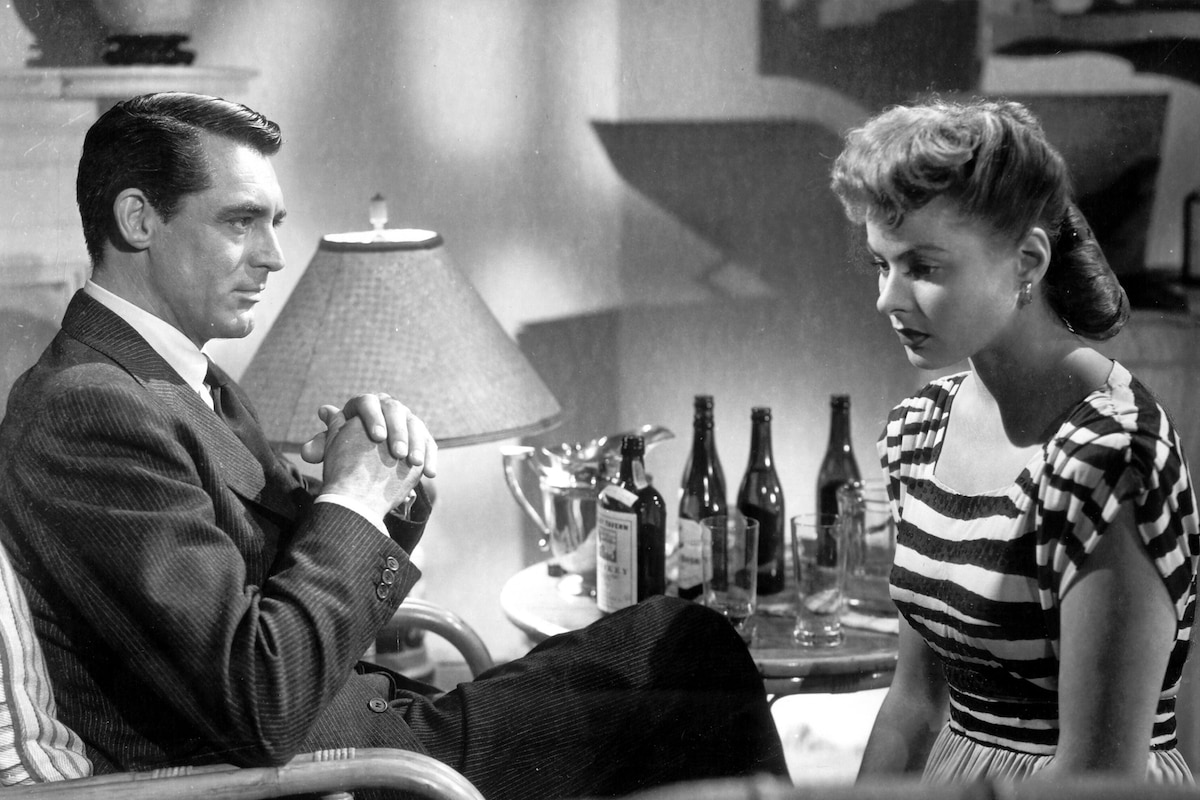
The poisoned drink, only suspected in Suspicion (1941) and Spellbound (1945), becomes a real threat to Bergman's life in Notorious.
The scene where Grant and Bergman kiss while discussing the chicken she will make for dinner is echoed later in To Catch a Thief (1955). Grace Kelly seduces Grant while discussing poultry, asking if he prefers legs to breasts.
The scene where Alex Sebastian and his mother argue about the house keys behind closed doors is reminiscent of the scenes of Norman Bates arguing with his mother (in fact, himself), also shot outside her bedroom door. In fact, the domineering mother in Notorious prefigures many such characters in Hitchcock's films, including The Birds (1963) and Marnie (1964).
The Saturday Evening Post story that inspired Notorious, "Song of the Dragon" (or "Song of the Flame," according to Hitchcock), was also used as the basis for the silent film Convoy (1927), starring Dorothy Mackaill and Lowell Sherman.
The scene where a drunken Ingrid Bergman sends everyone home from her party was later used to amusing effect in the Steve Martin private eye parody, Dead Men Don't Wear Plaid (1982).
by Rob Nixon
Pop Culture 101 - Notorious
by Rob Nixon | April 30, 2009
SIGN UP FOR OUR NEWSLETTERS

CONNECT WITH TCM