SYNOPSIS
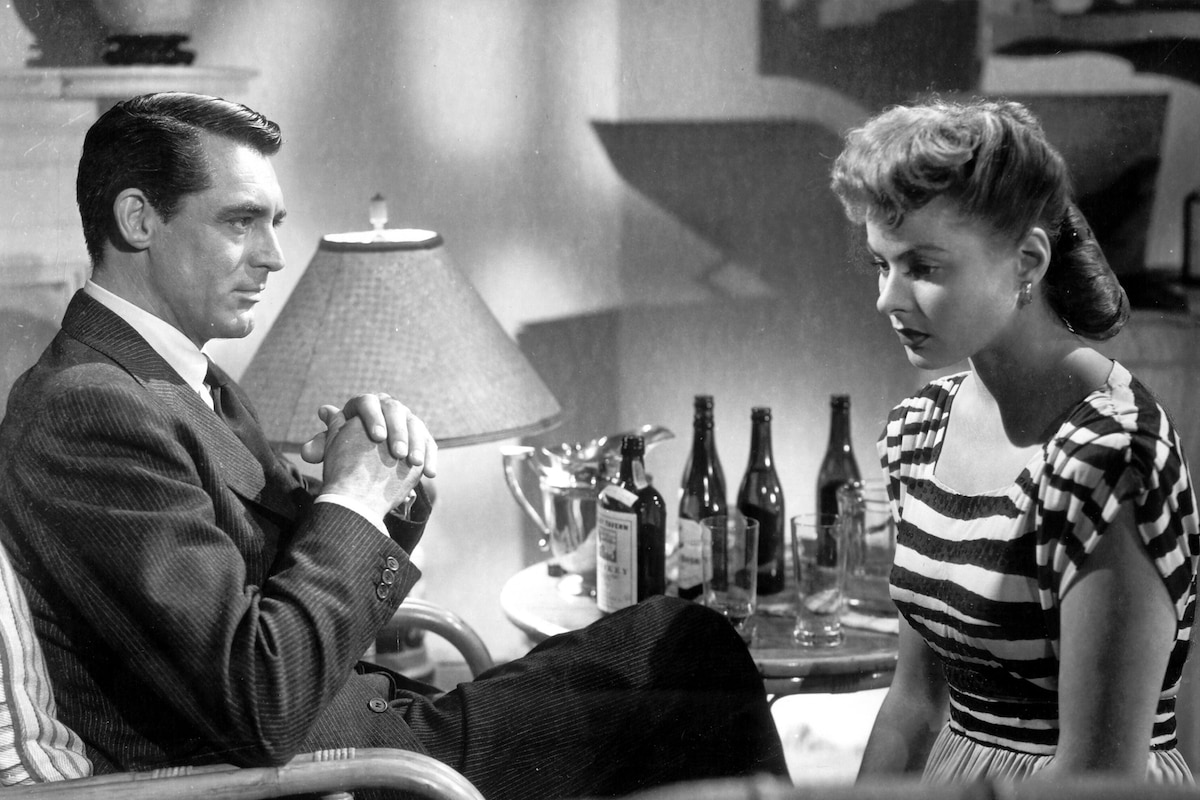
A federal agent enlists the daughter of a convicted traitor in a plan to infiltrate a group of escaped Nazis in South America. The mission proves to be successful, but her forced marriage to one of the Nazis threatens both her love affair with the U.S. agent and her life.
Director: Alfred Hitchcock
Producer: Alfred Hitchcock
Screenplay: Ben Hecht
Cinematography: Ted Tetzlaff
Editing: Theron Warth
Art Direction: Carroll Clark, Albert D'Agostino
Original Music: Roy Webb
Cast: Cary Grant (T.R. Devlin), Ingrid Bergman (Alicia Huberman), Claude Rains (Alexander Sebastian), Leopoldine Konstantin (Madame Sebastian), Louis Calhern (Prescott).
BW-101m.
Why NOTORIOUS is Essential
Always a manipulator of audience perceptions and expectations, director Alfred Hitchcock did a pretty audacious thing for 1945 (the year production on this film began) - right at the end of World War II, he created a sympathetic Nazi character in a romantic thriller involving German fascists living secretly in South America. Not that Hitchcock portrays the activities and philosophies of the Nazis in a positive light or makes Sebastian (played by Claude Rains) the "hero" of the story. That distinction goes to Cary Grant as FBI agent T.R. Devlin, and there again, our sympathies are toyed with. Assigned to enlist the American-born daughter (Ingrid Bergman) of a Nazi war criminal in a plot to trap the Germans, Devlin often appears cagey, tight, bitter, and apparently insensitive to the young woman's feelings and the danger she's in. On the other hand, Sebastian is shown to be a cultured man who truly loves her, a put-upon, almost tender man with a domineering mother, fatally betrayed by the one person he cares most about. At the end of the movie, you almost feel sorry for the Nazi.
Manipulating audience expectation is not the only thing that makes Notorious quintessential Hitchcock. There are the technical hallmarks - an incredible zoom-in from a high crane shot to an extreme close-up of a key in Bergman's hand, a famous kissing scene (designed to get around censor objections) with Grant and Bergman nibbling away at each other while talking about food, the suspenseful tracking and intercutting of the final scene.
Here also are prime early examples of some trademark Hitchcock themes and motifs - a woman complicitous in her forced transformation to a different person, later brought to its most obsessive heights in Vertigo (1958); the figure of the mother both adoring and deadly, who appears in various forms in Strangers on a Train (1951), Psycho (1960), The Birds (1963), and Marnie (1964). And, of course, the "MacGuffin," Hitchcock's narrative gimmick that motivates the characters' behavior (a search for a secret formula, an impending assassination) but is of secondary interest to the audience.
Notorious was the first true love story Hitchcock made, rich in passion, deception, reversals, and obsession. It was the significant start of his exploration of the themes, relationships, and techniques that would mark his mature work for the remainder of his career.
by Rob Nixon
The Essentials - Notorious
by Rob Nixon | April 30, 2009
SIGN UP FOR OUR NEWSLETTERS

CONNECT WITH TCM