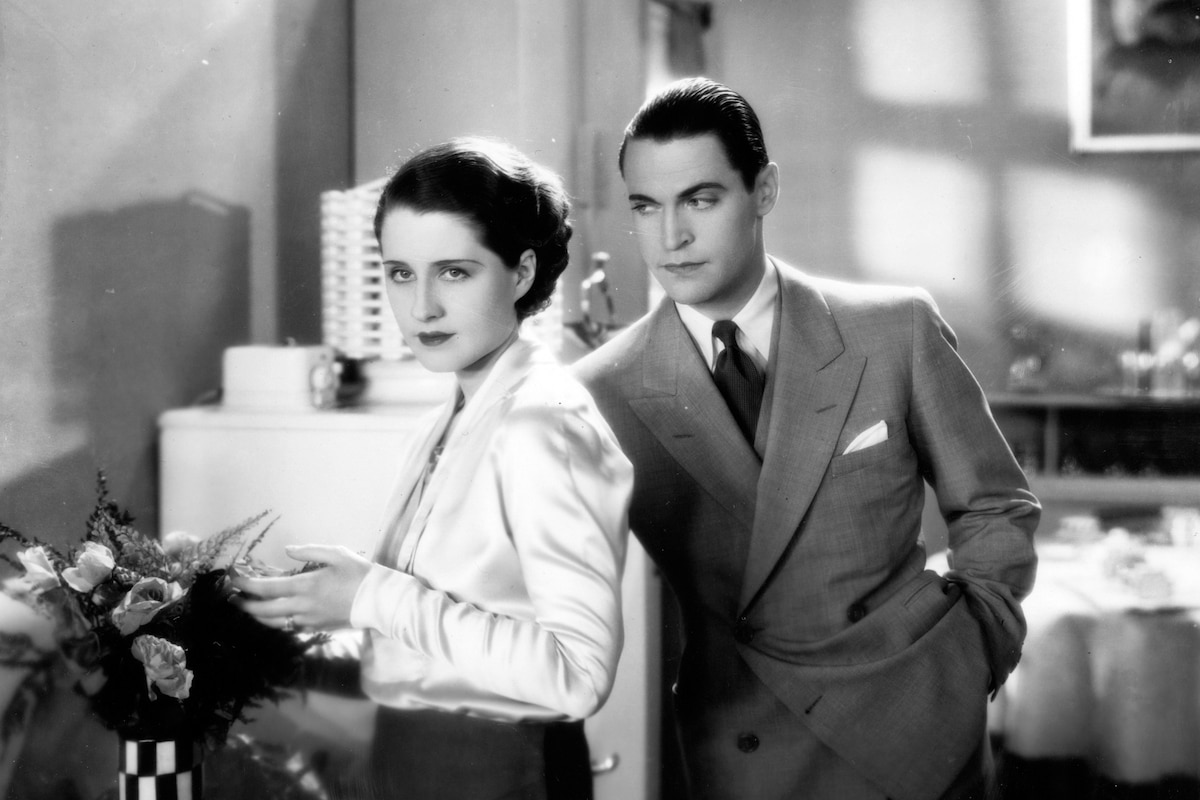
The Divorcee (1930) was the one that almost got away for Norma Shearer. As the wife of MGM's director of production, Irving G. Thalberg, she pretty much had a lock on any strong female role that ended up on the production roster. But her marital situation almost proved her undoing on this one. Thalberg had such an exalted opinion of his wife, that he initially refused to consider her for the lead in this steamy tale of divorce and infidelity.
The original novel was so hot, author Ursula Parrott had it published anonymously. When MGM acquired rights to the best seller, the Production Code Administration, which ran the industry's self-censorship program, informed them that they couldn't even use the original title Ex-Wife. So the story of a woman who takes revenge for her husband's infidelity by divorcing him and going through a string of lovers went on the schedule as The Divorcee. Just to keep things clean for the kiddies, the writers transformed the husband's affair into a romance before the marriage, while the wife's infidelities became just so much dating. But it was still a hot role- only it had been assigned to another up-and-coming studio star, Joan Crawford.
To convince her husband that she wasn't too ladylike for the picture, Shearer enlisted the help of a photographer who was just getting started in the business. George Hurrell had set up shop on the West Coast, where his first celebrity client was Latin lover Ramon Novarro. He had shot Novarro costumed for a variety of operatic roles as part of the star's campaign to become a classical singer. Shearer was so impressed that she hired Hurrell herself. She mussed up her hair, wrapped herself in silver lam - and lounged suggestively as he shot away. The photos convinced Thalberg that she could handle the role and, according to Hollywood legend, significantly improved their romantic life as well.
With Shearer in the lead, Thalberg gave The Divorcee all the attention a top production at MGM could get. Adrian designed the perfect wardrobe for her, while writer Francis Marion made some uncredited script changes, creating the kinds of lines and scenes that would show Shearer off to full advantage. For her part, the star insisted on endless rehearsals and retakes until her performance was just right. The film previewed so well, that it was one of the few MGM productions released without further tinkering from Thalberg, whose efforts in that direction had brought the studio the nickname of "Retake Valley."
The Divorcee's success led to further sophisticated and sexual roles for Shearer, including the screen version of Private Lives (1931) and A Free Soul (1931). But it brought her more than that. Shearer won her first Oscar® nomination for the role, though most people expected the award to go to Greta Garbo for her talking film debut in Anna Christie. A few days before the ceremonies (and long before the competition became world famous), the Academy announced that Shearer had won. To this day, rumors persist that Thalberg had ordered all of MGM's employees to vote for her. "What do you expect?" studio rival Joan Crawford used to say. "She sleeps with the boss."
Director/Producer: Robert Z. Leonard
Screenwriter: Nick Grinde, John Meehan, Zelda Sears
Cinematographer: Norbert F. Brodin
Editor: Truman K. Wood, Hugh Wynn
Art Director: Cedric Gibbons
Costume Designer: Adrian
Cast: Norma Shearer (Jerry), Chester Morris (Ted), Conrad Nagel (Paul), Robert Montgomery (Don), Florence Eldridge (Helen)
BW-82m. Closed captioning.
by Frank Miller
The Divorcee
by Frank Miller | February 12, 2008
SIGN UP FOR OUR NEWSLETTERS

CONNECT WITH TCM