Brother John (1971) is one of the least known of all Sidney Poitier's roughly 50 films and one that was not received favorably by critics at the time of its release. Many viewers, however, remember it as an unusual and effecting mix of social-issue cinema and something approaching a fantasy story with a spiritual basis. On the other hand, critical wags at the time commented that, given the heroic and almost saintly nature of the roles Poitier had played up to that point, it was "only a matter of time before [he] played Christ."
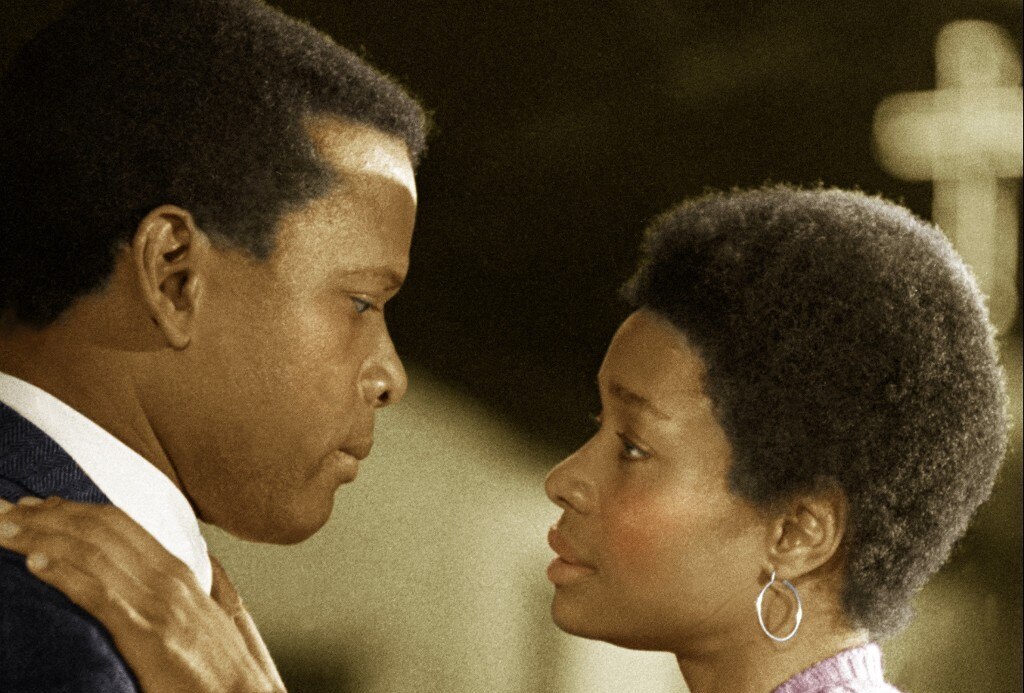
Poitier plays John Kane, a mysterious figure long absent from his small Alabama town who somehow knows when anyone in his family is about to die and shows up out of nowhere. Returning home upon the death of his sister, he is mistaken for an outside labor agitator and soon becomes involved in the town's social and racial upheaval. The story maintains a deliberate ambiguity about who and what Kane is: a guardian angel, a savior, a quiet peacemaker who nevertheless can bring great force and fury when necessary to right injustice. Only the town's elderly doctor, the man who delivered him many years before, may have some insight into Kane's true nature.
Poitier makes no mention of the film in either of his two autobiographies, although in the second volume, Life Beyond Measure (Harper Collins, 2008), written as a series of letters to his great-granddaughter, he talks about the rational basis of his world view but notes that thanks to the spiritual teachings his mother taught him, he still doesn't "completely discount the existence of guardian angels." It may be that Poitier drew on some of his mother's strong faith to play a character who seems to come from another dimension, whether or not he and the filmmakers meant to imply that dimension was heaven.
Poitier's production company, E&R, made Brother John as the first of a three-picture deal with Columbia. A December 1969 Variety news item credited the actor with the original story, although the film bears a screenplay credit only for Ernest Kinoy, the Emmy-winning co-writer of the landmark miniseries Roots (1977). Variety also noted that the original title of the film was "Kane" until RKO won a suit against E&R based on the former's copyright of Citizen Kane (1941).
Producer Joel Glickman, quoted in the Hollywood Reporter in April 1970, claimed Brother John had the most multi-racial crew of any major Hollywood production up to that time. Glickman told the publication that pressure from the Justice Department to speed equal opportunities for minorities in the film industry spurred the unions to find ways around seniority policies that put up roadblocks to minorities seeking movie jobs. The article also noted that the American Film Institute used a Ford Foundation Grant to put up $100 of the $250 weekly cost for paying and housing the film's five minority interns. The same issue of the Reporter also noted that production times and costs were streamlined thanks to the introduction of Synctrol, a new wireless camera control and sound system invented by Hal Landaker of the Columbia sound department, which required only a two-man crew.
The town of Marysville in Northern California stood in for Kane's Alabama hometown in location shooting. In addition, Poitier's romantic interest in the film was played by Beverly Todd, who had appeared with him previously in The Lost Man (1969) and They Call Me MISTER Tibbs! (1970). According to a press release issued just prior to the film's release, Poitier had also directed her in the short-lived 1968 Broadway production of the comedy Carry Me Back to Morningside Heights, although Todd's name is not listed in any credits for that play. The same press release touted a tie-in event to promote Brother John, in which Todd selected the winning numbers in the New York state lottery for March 18, 1971. Most recently, Ms. Todd appeared as Morgan Freeman's wife in The Bucket List (2007).
Earlier in their careers, both director James Goldstone and cinematographer Gerald Perry Finnerman worked frequently on the Star Trek television series.
Director: James Goldstone
Producer: Joel Glickman
Screenplay: Ernest Kinoy
Cinematography: Gerald Perry Finnerman
Editing: Edward A. Biery
Art Direction: Albert Brenner
Original Music: Quincy Jones
Cast: Sidney Poitier (John Kane), Will Geer (Doc Thomas), Bradford Dillman (Lloyd Thomas), Beverly Todd (Louisa McGill), Paul Winfield (Henry Birkart).
C-95m.
by Rob Nixon
Brother John
by Rob Nixon | June 19, 2009
SIGN UP FOR OUR NEWSLETTERS

CONNECT WITH TCM