In these days of relatively common cross-over success between TV and motion
pictures, it's strange to consider that television directors were once
viewed as second-tier talents by the film industry. Movie producers
regarded the new medium as an electronic poacher, a wooden box that enabled
viewers to get - for free - the very product that they had been shelling out
good money to see in theaters for over 30 years. Many TV directors who
later enjoyed significant movie careers were given the cold shoulder when
they first attempted to carry their skills to "the big leagues."
That was certainly the case with John Frankenheimer, whose first feature,
The Young Stranger (1957), was a critical success despite the largely
uncooperative producers and technicians who worked on it. Frankenheimer
(who was only 26 years old at the time) was adapting a story he first shot
for television, so he was at an even greater disadvantage in the eyes of his
co-workers. He was so stung by the experience of filming The Young
Stranger, he avoided movie work altogether for the next few years,
preferring instead to stick to TV. However, even with the extra agitation,
Frankenheimer constructed a straightforward juvenile delinquency drama that was
heartfelt and effective. Its understated tone is a nice contrast to the
fiery, sometimes overtly melodramatic path blazed by Rebel Without a Cause
(1955).
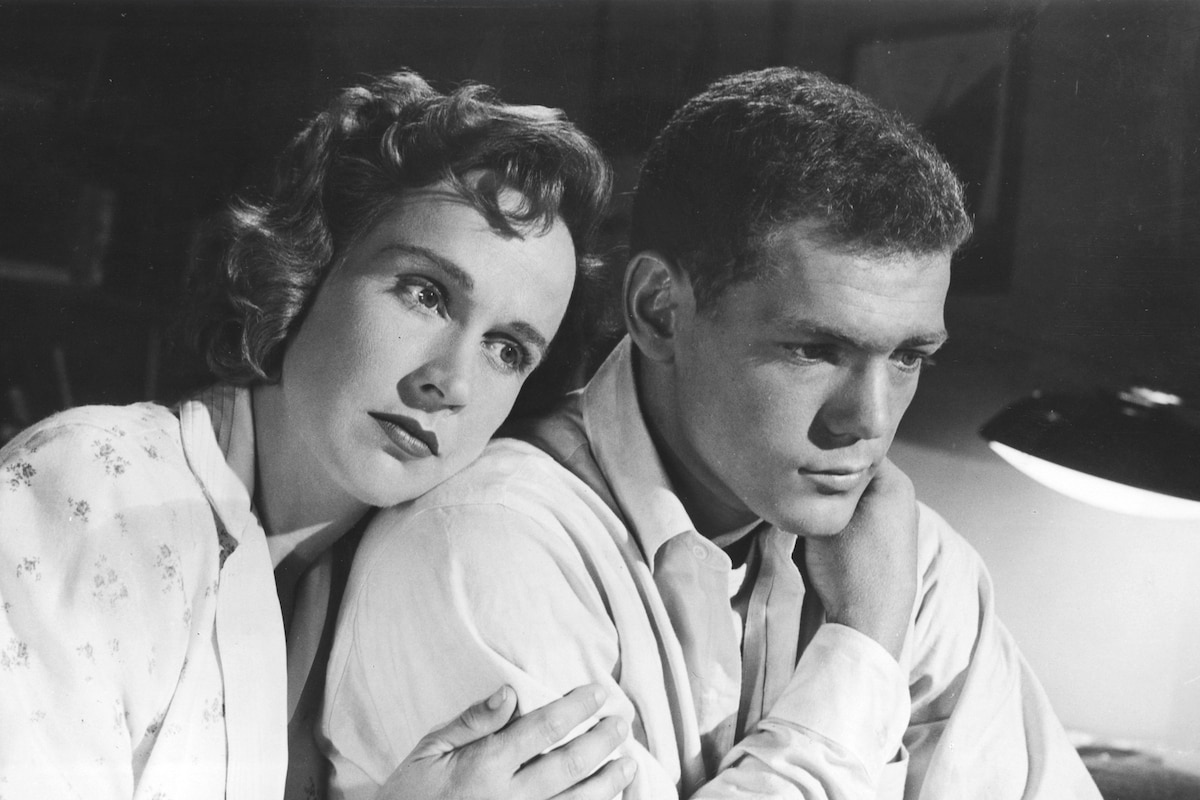
In The Young Stranger, written by Robert Dozier, James MacArthur plays Hal, the sixteen year-old son of Tom Ditmar (James Daly), a famous movie producer. Tom continually
chastises Hal for his semi-surly attitude and youthful rebellion. One night at a movie
theater, Hal puts his feet on the seat in front of him. He winds up in an
argument with another patron and is asked to leave. On the way out, he's
provoked by Mr. Grubbs, the theater manager (Whit Bissell). Hal belts
Grubbs in the mouth and gets hauled to the police station, where his unruly behavior is noted by Shipley (James Gregory), a kindly police officer.
Hal's dad, of course, is appalled by all of this, but he and his son will
eventually reconnect...after another fight and the help of concerned Officer
Shipley.
Years later, Frankenheimer was completely open about the ordeal of shooting
this picture. "I was panic stricken on my first day at the studio," he
said. "We rehearsed in continuity, and the actors began to use one scene to
get into the other. When we shot the film out of continuity they were lost
and had to start all over again."
But that was a common beginner's error. The more formidable challenge was
commanding the respect of the crew and a tight shooting schedule: "The cameraman had been under contract at Metro for years, and didn't want to do the stuff I wanted him to do. He
influenced the way the rest of the crew reacted to me. We had two weeks'
rehearsal and a twenty-five day shooting schedule, and I was told that if I
didn't finish the film in twenty-five days, the lights get turned out. So
we finished in twenty-five days."
It must have helped that Frankenheimer had a talented cast. MacArthur (the
son of legendary stage and screen actress, Helen Hayes) received strong
reviews for his performance as Tom, but would have to wait until the late
1960s, when he co-starred on TV's Hawaii Five-O, before he would
achieve real stardom. And Gregory, who would later appear as a bumbling
Senator in Frankenheimer's political thriller The Manchurian
Candidate (1962), played one of the great recurring characters in TV
history - Inspector Luger, the morbidly lonely, loud-mouthed detective on
ABC's Barney Miller.
Directed by: John Frankenheimer
Screenplay: Robert Dozier
Producer: Stuart Millar
Photography: Robert Planck
Editing: Robert Swink and Edward Biery, Jr.
Music: Leonard Rosenman
Art Direction: Albert D'Agostino and John B. Mansbridge
Principal Cast: James MacArthur (Hal), Kim Hunter (Helen), James Daly (Tom
Ditmar), James Gregory (Shipley), Whit Bissell (Grubbs), Jeffrey Silver
(Jerry).
BW-85m. Closed captioning.
by Paul Tatara
The Young Stranger
by Paul Tatara | May 25, 2004
SIGN UP FOR OUR NEWSLETTERS

CONNECT WITH TCM