Scottish naval veteran Alistair MacLean drew on his knowledge of maritime warfare to write a series of short stories and novels that launched his career. For his second novel, The Guns of Navarone (1957), he drew on memories of the Aegean campaign in World War II to create a fact-based story of an attempt to blow-up a German fortress on the fictional island of Navarone.
After producing films with Stanley Kramer and writing the classic Western High Noon (1952), Carl Foreman fell victim to the blacklist for refusing to name names before the House Un-American Activities Committee (HUAC). Unable to work in the U.S., he relocated to England, where he worked using pseudonyms and covers (his Oscar®-winning script for 1957's The Bridge on the River Kwai, co-written by fellow blacklistee Michael Wilson, was credited to the novel's author, Pierre Boulle).
In 1958, Foreman set up his own production company, Open Road Films, and started making films under his own name. In search of a vehicle that would reestablish his career, he bought the rights to Alistair MacLean's novel in 1958. From the start he planned to use international stars as the novel's six main characters.
Among the actors Foreman considered for the film were Cary Grant, Marlon Brando, William Holden, Gary Cooper, Rock Hudson, Alec Guinness, James Mason, Dean Martin, Trevor Howard, Jack Hawkins and Hugh O'Brian.
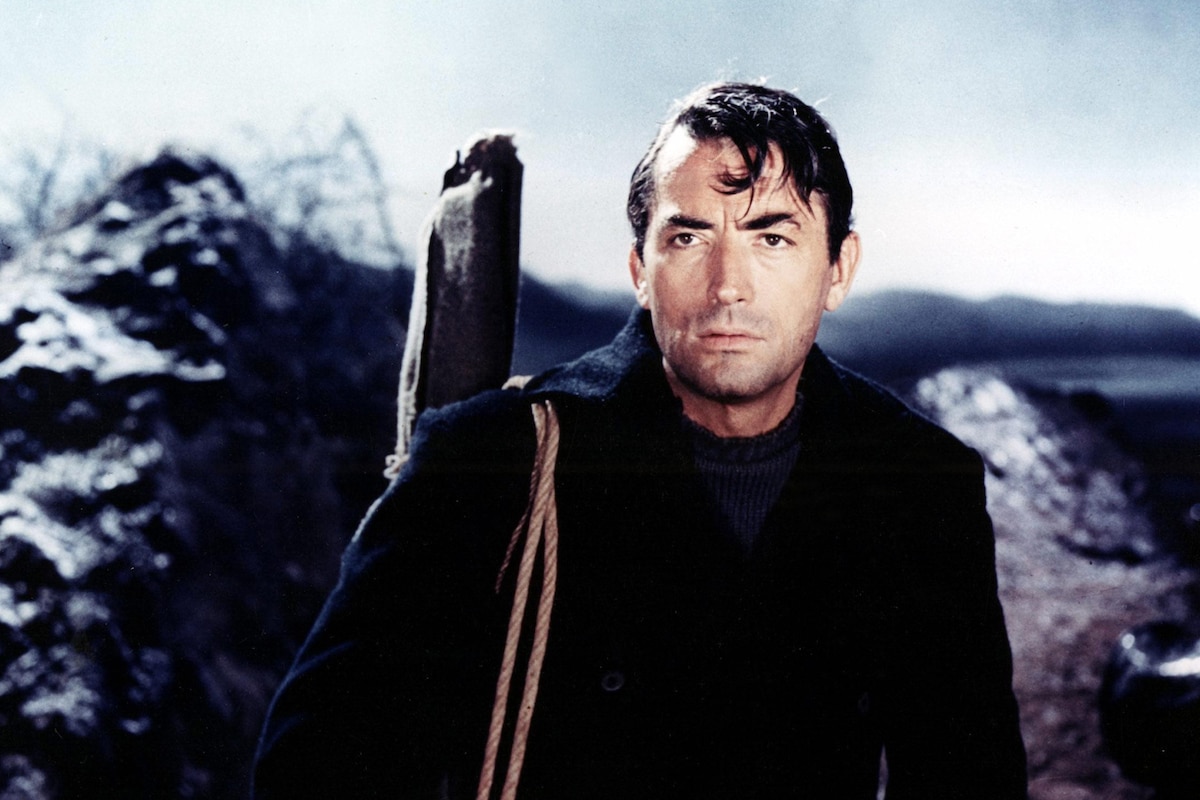
Foreman decided that Cary Grant, who was 50 at the time, was too old to play Capt. Mallory. Gregory Peck was only 44.
William Holden, who had worked with Foreman on The Key (1958), demanded $750,000 and ten percent of the gross to play Mallory. The producer turned him down, then wound up paying Peck the same amount.
After settling on David Niven for the role of the munitions expert, Foreman had to replace him with Kenneth More because of delays on Please Don't Eat the Daisies (1959). When More was held up on another film, Niven won his role back.
Although at the time Stanley Baker was one of England's top film actors, he accepted the relatively small role of Private "Butcher" Brown because he was impressed with the anti-war message Foreman had worked into the script.
James Darren's manager campaigned for a role for him in The Guns of Navarone hoping it would help him graduate from teen idol roles like the one he played in Gidget (1959).
To increase the film's box office appeal, Foreman wrote two female resistance fighters into the script.
To score the film, Foreman picked Dimitri Tiomkin, the Russian-born composer who had won an Oscar® for the producer-writer's earlier High Noon. The producer paid him $50,000, the highest amount ever paid for a film composer to that time.
Foreman hired Alexander Mackendrick to direct. The American-born director had made his mark directing such classic British comedies as The Man in the White Suit (1951) and The Ladykillers (1955), both starring Alec Guinness. He and Foreman had an argument a week before filming started, leading to his firing before any film had been exposed.
With Peck's approval, Foreman finally hired up-and-coming British director J. Lee Thompson. Among his qualifications was the fact that Thompson had served in World War II with the RAF. He arrived on location three days before shooting was to begin.
by Frank Miller
The Big Idea - The Guns of Navarone
by Frank Miller | May 12, 2009
SIGN UP FOR OUR NEWSLETTERS

CONNECT WITH TCM