SYNOPSIS
It's love at first sight for international scholar Humbert Humbert when he meets
all-American girl Lolita Haze. But it's not their different nationalities or
cultural backgrounds that stand between him and romance. It's the socially
unacceptable age difference between them - the middle-aged academic has fallen for a
nymphet. As he tries to build a life with his beloved Lolita despite opposition from
her culture-vulture mother and a conniving rival for her body, Humbert becomes more
and more intent on realizing his fantasy.
CAST AND CREW
Director: Stanley Kubrick
Producer: James B. Harris
Screenplay: Valdimir Nabokov
Based on his novel
Cinematography: Oswald Morris
Editing: Anthony Harvey
Art Direction: Bill Andrews
Music: Nelson Riddle
Cast: James Mason (Humbert Humbert), Sue Lyon (Lolita Haze), Shelley Winters
(Charlotte Haze), Peter Sellers (Clare Quilty), Marianne Stone (Vivian Darkbloom),
Roberta Shore (Lorna), Lois Maxwell (Nurse Mary Lore)
BW-152m.
Why LOLITA is Essential
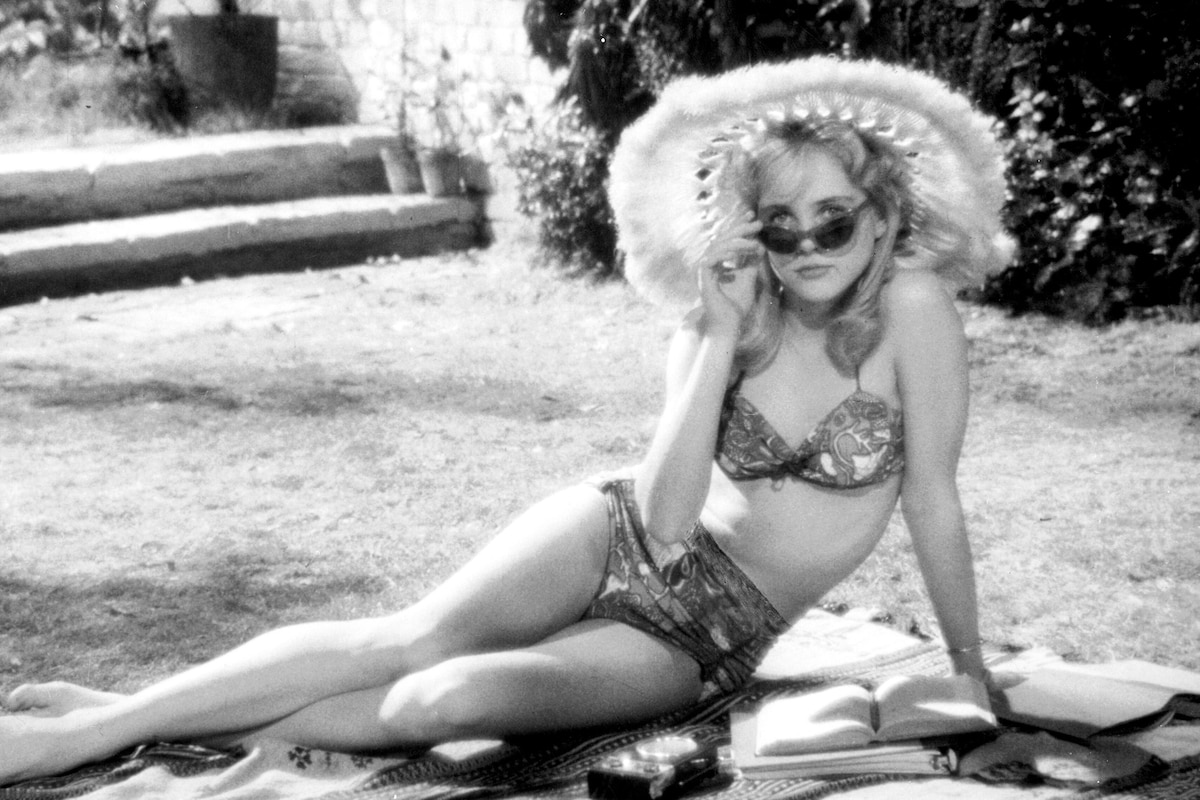
Because of the novel's ironic depiction of pedophilia, Lolita was considered
unfilmable. When Stanley Kubrick and Vladimir Nabokov came up with a screenplay
that could pass the Production Code Administration and the Legion of Decency, it
struck a new blow for on-screen permissiveness and opened the door to other
cinematic treatments of sexual perversion.
Lolita was the first of Stanley Kubrick's films on which he exercised total
artistic control, a demand he routinely made after his experience working on
Spartacus (1960).
As in most of Kubrick's films, Lolita demonstrates the tendency of human
error to destroy even the best-laid plans. Humbert fails to keep Lolita, just as
the thieves in The Killing (1956) fail to make themselves rich, the title
character in Spartacus fails to free the Roman Empire's slaves and the title
character in Barry Lyndon (1975) fails to become a wealthy and influential
aristocrat.
Kubrick first revealed his talent for brittle, edgy comedy of manners with
Lolita, thereby paving the way for the political satire of his next film
Dr. Strangelove (1964), and offering a fascinating insight into such later
films as 2001: A Space Odyssey (1968), A Clockwork Orange (1971) and
Barry Lyndon.
For the first time, Kubrick employed first-person narration (delivered by James
Mason as Humbert Humbert), a device he would use to great effect again in A
Clockwork Orange and Barry Lyndon.
Lolita was the first Stanley Kubrick film shot in England, which would become
the travel-phobic director's home base for the rest of his life. Being based far
from Hollywood helped the director retain his independence as a filmmaker.
Both James Mason and Peter Sellers benefited from the positive critical response to
their work in Lolita. Sellers would continue to capitalize on his success,
which added to his reputation as a comic genius through the '70s. For Mason, the
boost would last until his disastrous 1964 divorce, which left him desperate to
accept any well-paying role to keep up alimony and child-support payments.
Kubrick and Sellers developed a rapport on Lolita that would lead to their
teaming on the director's next picture, Dr. Strangelove.
by Frank Miller
The Essentials - Lolita
by Frank Miller | January 06, 2009
SIGN UP FOR OUR NEWSLETTERS

CONNECT WITH TCM