Henry Fielding's A History of Tom Jones, a Foundling, first published on February 28, 1749, was one of the first British novels.
Tom Jones was twice adapted to the musical stage. French composer Francois-Andre Danican Philidor brought it to the stage of Paris' Comedie-Italienne in 1765, where it flopped. He remounted it with a new libretto, and it became one of the biggest hits of the late 18th century. In 1907, Edward German brought the novel, heavily bowdlerized, to the stage in England as a comic opera. It ran 110 performances in London, then moved to the U.S. More recently, the Shaw Festival at Niagara-on-the-Lake revived the opera with a new script that restored material from Fielding's story that German's version had censored.
Fielding's novel had only been filmed once previously, as a silent film in 1917. The British film starred Langhorn Burton in the title role, Will Corrie as Squire Western and Dora De Winton as Sophie.
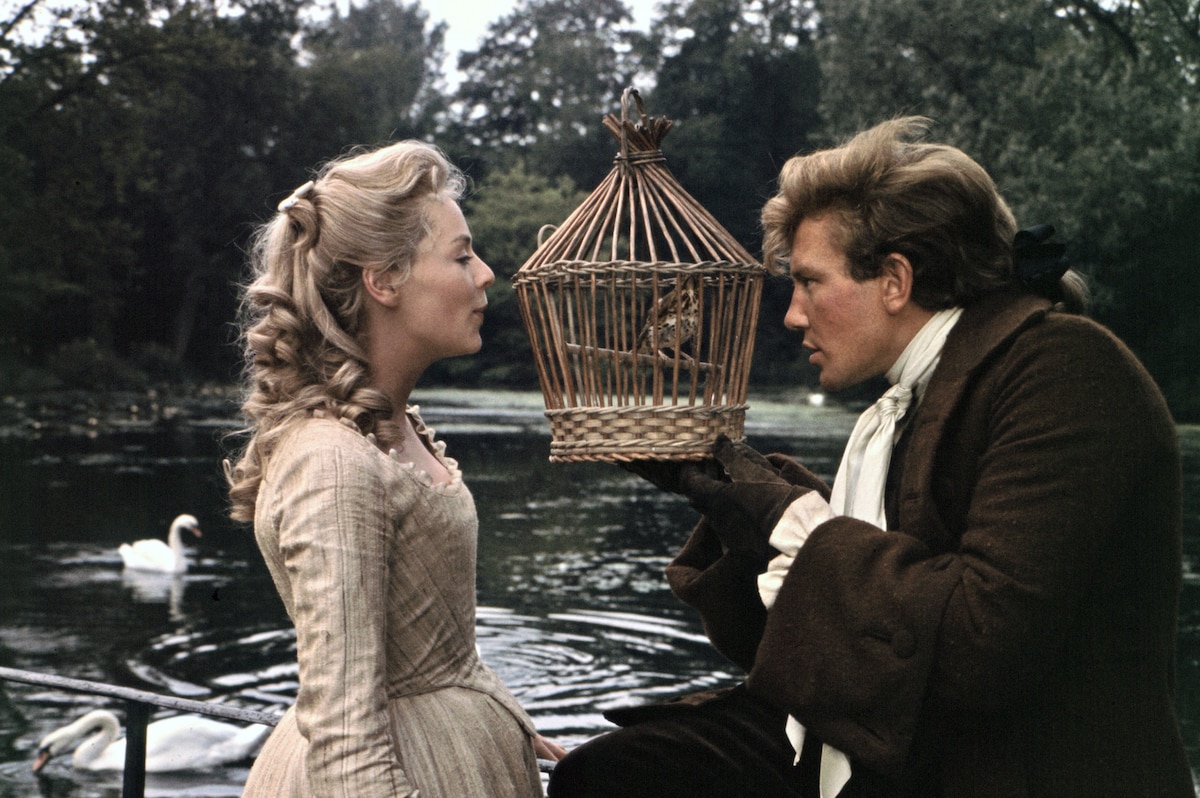
After helping create the English Free Cinema movement with such acclaimed "kitchen sink" dramas as Look Back in Anger (1958) and The Entertainer (1960), both adaptations of John Osborne plays, director Tony Richardson was looking for a change of pace when he hit on the idea of filming Henry Fielding's novel. Helping arouse his interest was the opportunity it offered to work in color for the first time and the suitability of the title role to rising young star Albert Finney, who had played a small role in The Entertainer.
After directing Osborne's plays on stage and in their screen adaptations, Richardson and the playwright worked more collaboratively on Tom Jones. The director outlined the scenes, characters and events he wanted to include from Fielding's sprawling novel, then Osborne turned that into a screenplay. When Richardson complained that there were details missing from the narrative, Osborne did one re-write. Then the director did the final re-writes, even reshaping the script during production. When Osborne published "his" screenplay, it actually was the cutting continuity created from the film's edited version.
Richardson originally wanted to use cinematographer Oswald Morris, who had shot his Look Back in Anger, but their approaches to the material were too different. Instead, Richardson hired Walter Lassally, a German-born cinematographer with whom he had worked on A Taste of Honey (1961) and The Loneliness of the Long Distance Runner (1962).
Richardson's Woodfall Films struck a deal with British Lion and Columbia to finance Tom Jones, but the studios, particularly Columbia, were reluctant to commit to the full budget required for a period film. As production plans proceeded, Richardson began to worry that he would have to risk bankruptcy to get the picture made. Then his agent put him in touch with David V. Picker, who had just been named head of production for United Artists. Picker liked Richardson and the script and committed to finance the film, at which point Columbia complained that they would have underwritten the budget had Richardson just been patient.
After signing to play the film's title role, Albert Finney complained about his character. To keep him happy, Richardson offered him a chance to serve as associate producer, to which the actor agreed. He would later trade the producing credit for a share of the film's profits, which proved to be a very wise move on his part.
Having recently wed actress Vanessa Redgrave, Richardson made Tom Jones a family affair by casting her sister, Lynn, in her screen debut, and her mother, Rachel Kempson, as Squire Allworthy's sister.
by Frank Miller
SOURCES:
Tony Richardson, The Long-Distance Runner: A Memoir
Susan Sackett, The Hollywood Reporter Book of Box Office Hits
IMDB
The Big Idea - Tom Jones
by Frank Miller | June 01, 2009
SIGN UP FOR OUR NEWSLETTERS

CONNECT WITH TCM