While working at the Los Angeles Times, Leonard Wibberley was so struck by the peace treaty between the U.S. and Japan that ended World War II he wrote an editorial suggesting that Japan's peace settlement suggested it was more profitable to lose a war than to win. He expanded on his idea in a serial, The Day New York Was Invaded published in the Saturday Evening Post in 1954. He published it in book form a year later as The Mouse That Roared.
Tyrone Power brought the novel to the attention of Columbia Pictures head of publicity Walter Shenson, who was so impressed he optioned the film rights himself in 1956. He also quit his job to devote himself full time to getting a film version made.
Shenson captured the interest of Carl Foreman, the blacklisted writer who had been working under a series of pseudonyms in England. Foreman had recently begun working under his own name again through his High Road Productions. In between films and the extensive pre-production planning on The Guns of Navarone (1961), he agreed to help get the movie made partly so he would have a project against which to charge office expenses.
Claiming he wanted to give The Mouse That Roared to an inexperienced director, Foreman offered the directing job to Jack Arnold, who had recently finished a lengthy stay at Universal International, where he directed such popular science fiction classics as It Came from Outer Space (1953), Creature from the Black Lagoon (1954) and The Incredible Shrinking Man (1957). He had not directed any feature comedies, however, but that didn't pose a problem for Foreman.
Shenson turned the script over to Roger MacDougall, who had written the stage and screen versions of the British comedy classic The Man in the White Suit (1951), and Stanley Mann, primarily a television writer at the time. Shenson and Foreman revised the screenplay, and then allowed Arnold to make his own changes.
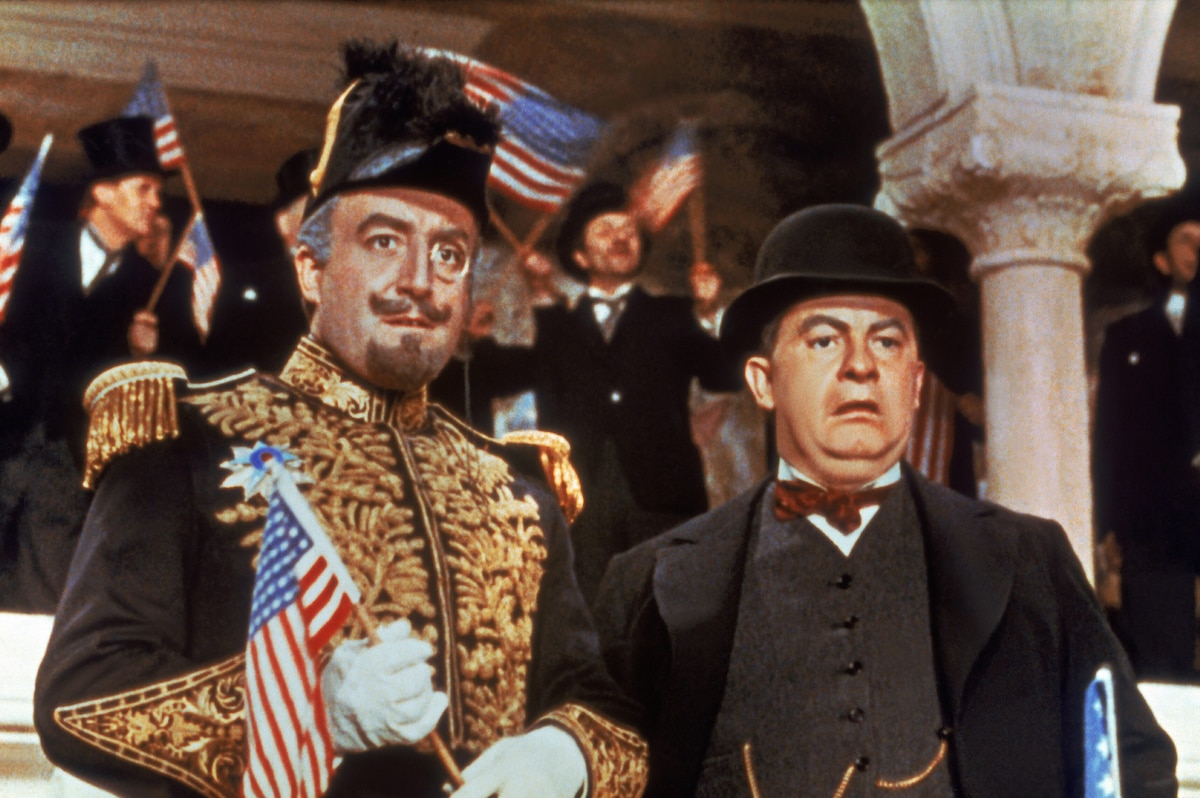
Sellers was eager to take on three roles in one film. His hero was Alec Guinness, who had played eight roles in the classic comedy Kind Hearts and Coronets (1949).
Columbia executives insisted that Arnold cast Jean Seberg in the female lead. Even though she had only made two other films (Saint Joan in 1957 and 1958's Bonjour Tristesse), both of which had bombed, they insisted The Mouse That Roared needed a box-office name.
by Frank Miller
The Big Idea - The Mouse That Roared
by Frank Miller | June 01, 2009
SIGN UP FOR OUR NEWSLETTERS

CONNECT WITH TCM