Billy Wilder got the idea for The Fortune Cookie when he saw a fullback fall on a spectator during a football game. According to Jack Lemmon, he said to himself, "That's a movie, and the guy underneath is Lemmon!"
After the box office failure of Kiss Me, Stupid (1964), which critics had branded crude and tasteless, Wilder needed a project with more commercial appeal. Describing his new film to Lemmon, he said, "It's about greed, love, compassion, human understanding but not about sex."
Wilder had hoped to follow Kiss Me, Stupid with his personal take on Sherlock Holmes, but he had trouble finding bankable stars (he wanted Peter O'Toole as Holmes and Peter Sellers as Watson). When Lemmon became available in late 1965, Wilder put The Fortune Cookie into production instead. He wouldn't make The Private Life of Sherlock Holmes until 1970, when he cast Robert Stephens and Colin Blakely as Holmes and Watson, respectively.
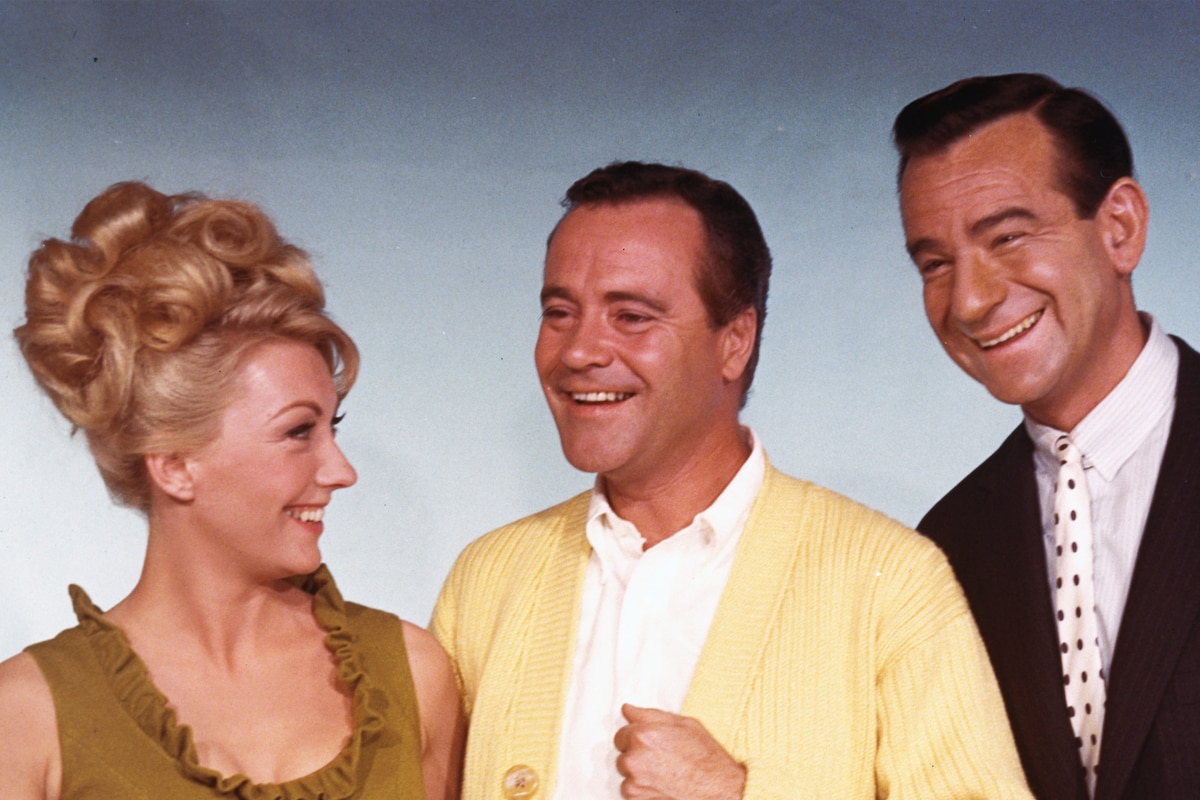
Wilder wrote the role of Willie Gingrich for Walter Matthau. He had wanted to give him the lead in The Seven Year Itch (1955) after an impressive screen test, but 20th Century-Fox head Darryl F. Zanuck had insisted on casting the better known Tom Ewell, who had starred in the stage version.
By the mid-'60s, Matthau was still best known for stage work, including Tony Award-winning roles in A Shot in the Dark and The Odd Couple, creating the role of Oscar Madison in the latter. Wilder and his co-writer/co-producer, I.A.L. Diamond met him in New York to confirm his interest in the project before they started writing.
Wilder set up The Fortune Cookie as a co-production among United Artists, The Mirisch Corporation, Jack Lemmon's Jalem and his own Phalanx.
Studio executives wanted a major star like Frank Sinatra or Jackie Gleason cast as Whiplash Willie, but Lemmon insisted on sticking with Matthau.
Matthau was so eager to work with Wilder and Lemmon that he signed on for the role before reading the screenplay. When he read it, he was astonished at the size of the role. When he called Lemmon to ask why they were taking a chance on him with what was clearly the film's best role, Lemmon simply said, "Don't you think that it's about time?"
by Frank Miller
SOURCES:
Walter Matthau by Allan Hunter
On Sunset Boulevard: The Life and Times of Billy Wilder by Ed Sikov
The Big Idea - The Fortune Cookie
by Frank Miller | April 30, 2009
SIGN UP FOR OUR NEWSLETTERS

CONNECT WITH TCM