SYNOPSIS
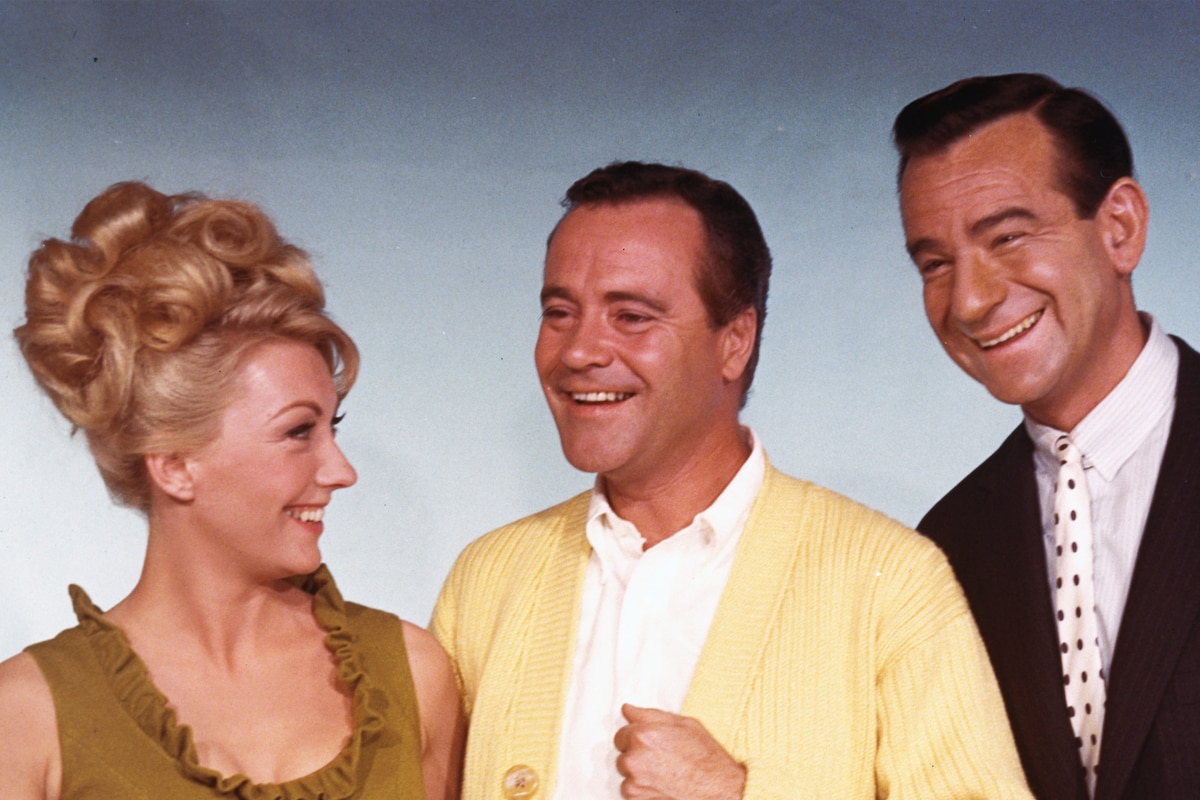
While shooting a Vikings-Browns game in Cleveland, CBS cameraman Harry Hinkle collides with an out-of-bounds player. When Harry's brother-in-law gets wind of the case, he convinces Harry to sue the network, the stadium and the team for $1 million. As the lies mount, Harry finds himself caught between his mercenary ex-wife, who wants in on the action, and the repentant football star, who wants to give up his career to nurse his "innocent victim" back to health.
Producer-Director: Billy Wilder
Producer: Wilder, I.A.L. Diamond, Doane Harrison
Screenplay: Wilder & Diamond
Cinematography: Joseph LaShelle
Editing: Daniel Mandell
Art Direction: Robert Luthardt
Music: Andre Previn
Cast: Jack Lemmon (Harry Hinkle), Walter Matthau ("Whiplash" Willie Gingrich), Ron Rich (Luther "Boom Boom" Jackson), Cliff Osmond (Mr. Purkey), Judi West (Sandy Hinkle), Lurene Tuttle (Mother Hinkle), Les Tremayne (Thompson), Marge Redmond (Charlotte Gingrich), Noam Pitlik (Max), Ann Shoemaker (Sister Veronica), Ned Glass (Doc Schindler), Sig Ruman (Prof. Winterhalter), Archie Moore (Mr. Jackson), Howard McNear (Mr. Cimoli), William Christopher (Intern), Judy Pace (Elvira), Keith Jackson (Football Announcer), Robert DoQui (Man in Bar), John Anderson (Abraham Lincoln), Jim Brown (Running Back -- Number 32).
BW-126m. Letterboxed.
Why THE FORTUNE COOKIE Is Essential
The Fortune Cookie was the first film to team Jack Lemmon with his ideal male counterpart, Walter Matthau. Most often cast as neurotic everyman and stolid grouch, the two would re-team for nine more films, including The Odd Couple (1968), The Front Page (1974) and Grumpy Old Men (1993). In addition, Lemmon would direct Matthau to an Oscar® nomination in Kotch (1971) and Matthau's son Charles would direct them both in The Grass Harp (1995).
After years of bad timing, turning in highly praised supporting performances in films that didn't take off at the box office (Lonely Are the Brave, 1962), or were dominated by star performers (Elvis Presley's King Creole, 1958), Matthau shot to stardom overnight, after almost 20 years in the business, with the role of "Whiplash" Willie Gingrich.
The Fortune Cookie marked the fourth teaming of Lemmon with Billy Wilder, one of the most successful actor-director team-ups in Hollywood history. Their previous films together had been Some Like It Hot (1959), The Apartment (1960) and Irma La Douce (1963). They would later join forces for Avanti! (1972), The Front Page and Buddy Buddy (1981), the latter two co-starring Matthau. In most of their films, Wilder uses Lemmon as an average Joe, but with a distinctly modern, edgy sensibility.
This was the seventh of 12 films co-written by Wilder and I.A.L. Diamond, including Love in the Afternoon (1957), Witness for the Prosecution (1957), Some Like It Hot, The Apartment and Irma La Douce. They also functioned as co-producers, as they had since making Some Like It Hot. Their partnership lasted for over 20 years. Critics have suggested that Diamond's talent for writing acid dialogue freed Wilder to explore his more romantic side.
The Fortune Cookie marked the second time Wilder had dealt with insurance fraud. Unlike his film noir classic Double Indemnity (1944), The Fortune Cookie attempts to balance cynicism with a more romantic view of human relationships as exemplified in the growing closeness between Harry Hinkle (Lemmon) and Luther "Boom Boom" Jackson (Ron Rich). Critics have seen this thread of romanticism running through later works such as The Private Life of Sherlock Holmes (1970) and Fedora (1978), which, though less successful financially and critically on their initial releases, are now being reappraised as surprisingly complex works of a maturing film artist.
Lemmon's scheming wife, played by Judi West, is one of a string of duplicitous blondes in Wilder's films that stretches back to include Jan Sterling in Ace in the Hole (1951) and Barbara Stanwyck in Double Indemnity.
The Fortune Cookie was Wilder's fourth and last film with cinematographer Joseph LaShelle, whose black and white Cinemascope work added depth to this film, The Apartment and Kiss Me, Stupid (1964). It was his third and last with composer Andre Previn, who had won an Oscar® for scoring Irma La Douce.
by Frank Miller
The Essentials - The Fortune Cookie
by Frank Miller | April 30, 2009
SIGN UP FOR OUR NEWSLETTERS

CONNECT WITH TCM